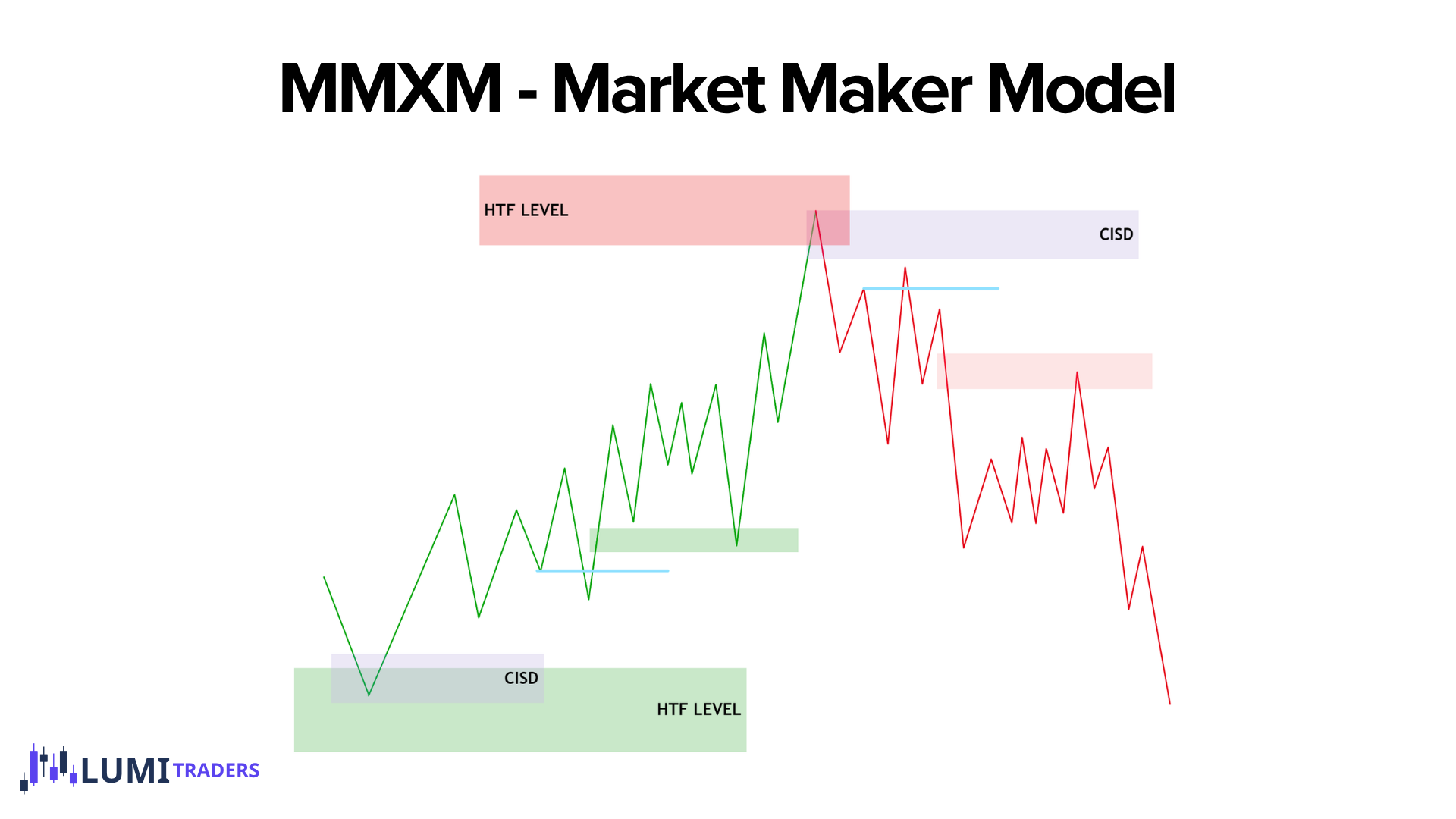
What Is MMXM?
The Market Maker Model, or MMXM, is not simply a liquidity sweep, Market Structure Shift, Order Block, or Fair Value Gap.
MMXM is the larger market structure that contains a sell program and a buy program.
Instead of looking at individual setups separately, MMXM helps us understand where those setups belong inside a complete price-delivery cycle.
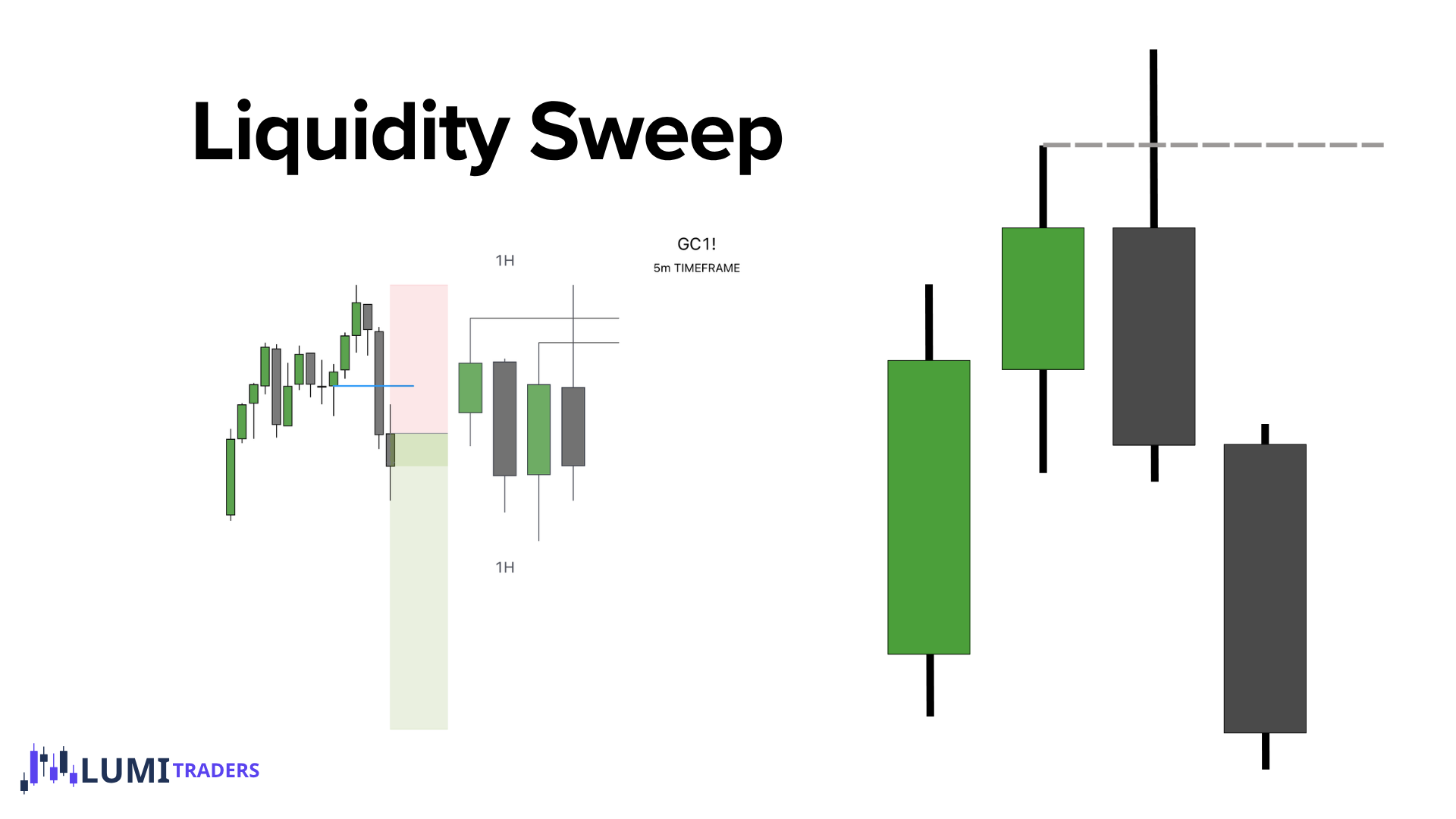
A liquidity sweep may be part of MMXM.
CISD may confirm the transition between programs.
MSS may confirm the new direction.
Turtle Soup may appear during the first stage.
Silver Bullet may appear during the second stage.
Time Distortion may develop before the final expansion.
All of these concepts can become parts of the same larger structure.
MMXM has 5 major components of the model:
Original consolidation
Stair-step delivery
Higher-Timeframe PD Array
Symmetrical return
Terminus based on a higher-timeframe level
The model places major emphasis on symmetry. One of the ways to recognize that an expected MMXM may be failing is when that symmetry breaks.
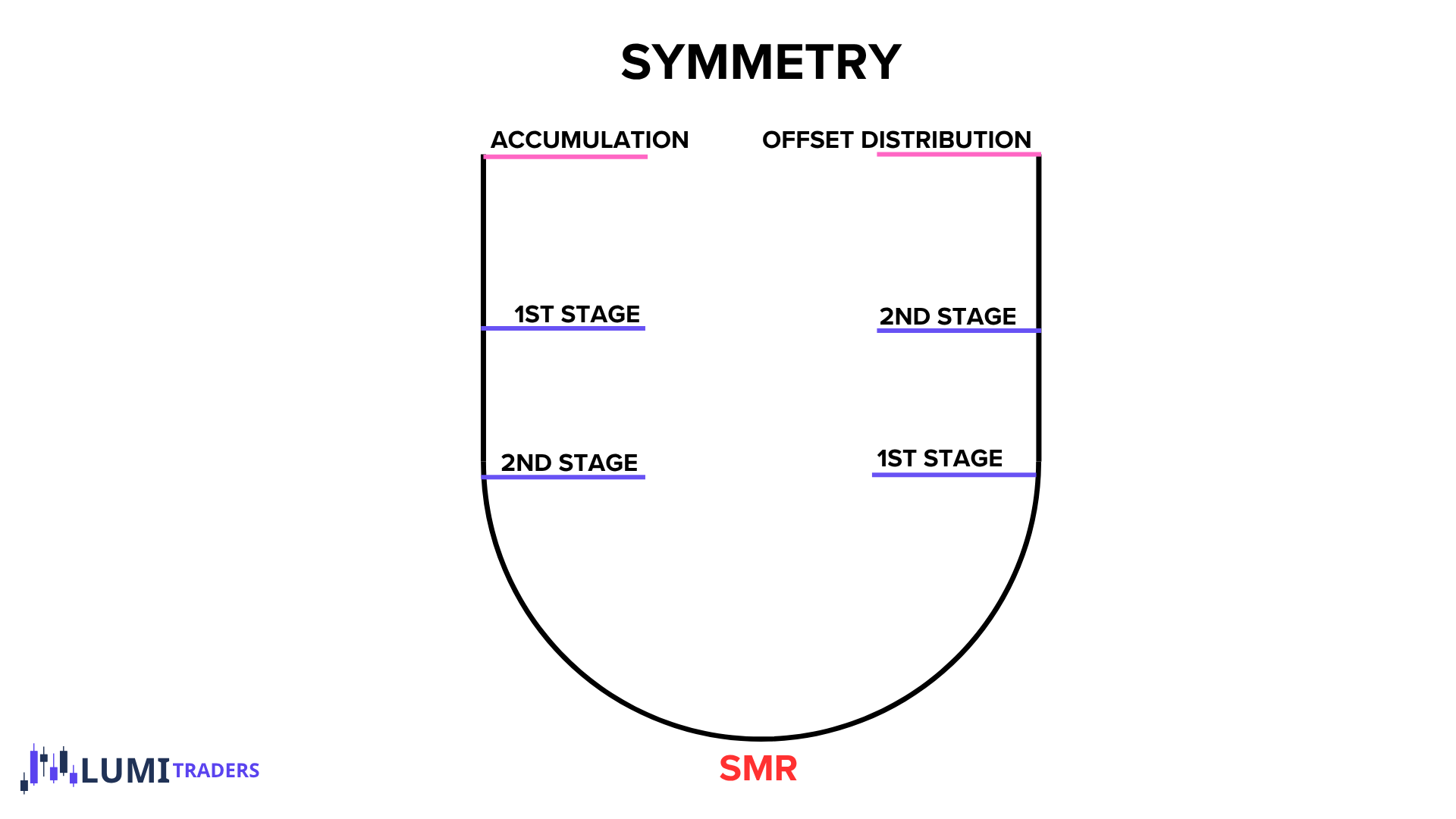
Market Maker Buy Model vs. Market Maker Sell Model
There are 2 sides of the model.
Market Maker Buy Model — MMBM
A Market Maker Buy Model represents the transition from a sell program into a buy program.
Price delivers lower, eventually reaches a meaningful higher-timeframe area, confirms a Smart Money Reversal, and begins delivering higher.
The left side of the curve represents the sell program.
The bottom represents the Smart Money Reversal.
The right side represents the developing buy program.
Market Maker Sell Model — MMSM
A Market Maker Sell Model represents the transition from a buy program into a sell program.
Price delivers higher, reaches a meaningful higher-timeframe area, confirms the reversal, and begins delivering lower.
Everything in the MMBM is mirrored in the MMSM.
This symmetry is a central part of how I presentsMMXM. Levels created during the left side of the model can later support or resist price during the opposite program on the right side.
The Shape of MMXM
Think about MMXM as one large curve.
For an MMBM:
Sell Program → HTF Level → Smart Money Reversal → Buy Program
For an MMSM:
Buy Program → HTF Level → Smart Money Reversal → Sell Program
Inside that curve, price does not normally move in one straight line.
It stair-steps.
That stair-step structure creates:
Accumulation
Re-accumulation
Distribution
Re-distribution
Intermediate-term highs and lows
Protected highs and lows
FVGs
Order Blocks
Liquidity sweeps
Time Distortion (2nd stage of MMXM)
The purpose of the model is to understand where we are inside the curve.
That question is more useful than simply asking:
“Is price bullish or bearish?”
Instead ask:
“Which program am I currently inside, and which stage of that program is developing?”
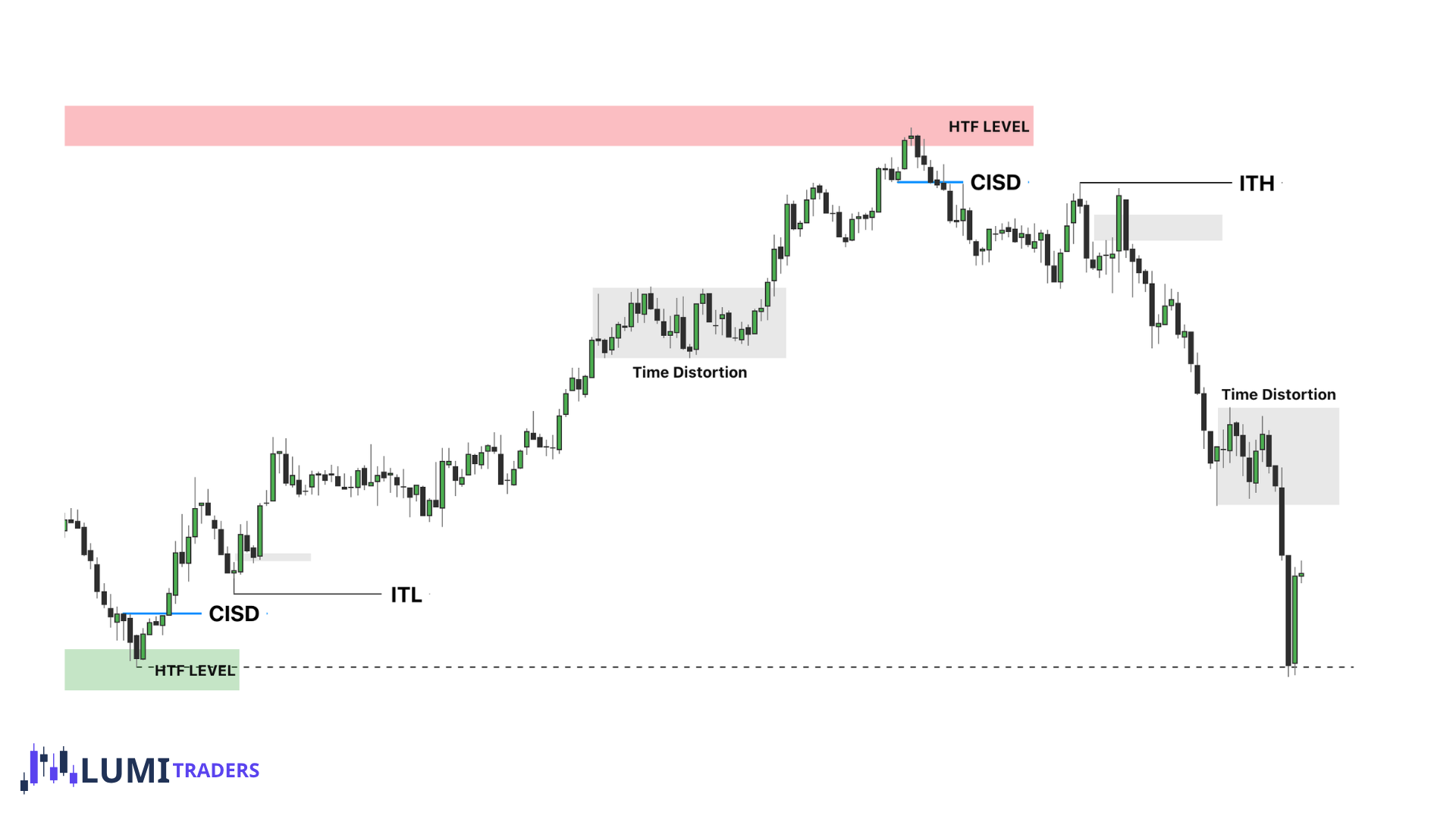
Original Consolidation
The model begins with an original consolidation.
This is the area from which the first major program begins to deliver.
Price eventually moves away from this consolidation and begins stair-stepping toward the higher-timeframe level where the program may terminate and reverse.
Later, the opposite side of the MMXM can mirror portions of the first side.
This creates the symmetry that is so important to the model.
The original consolidation therefore gives us context for the entire structure rather than simply being another random range.
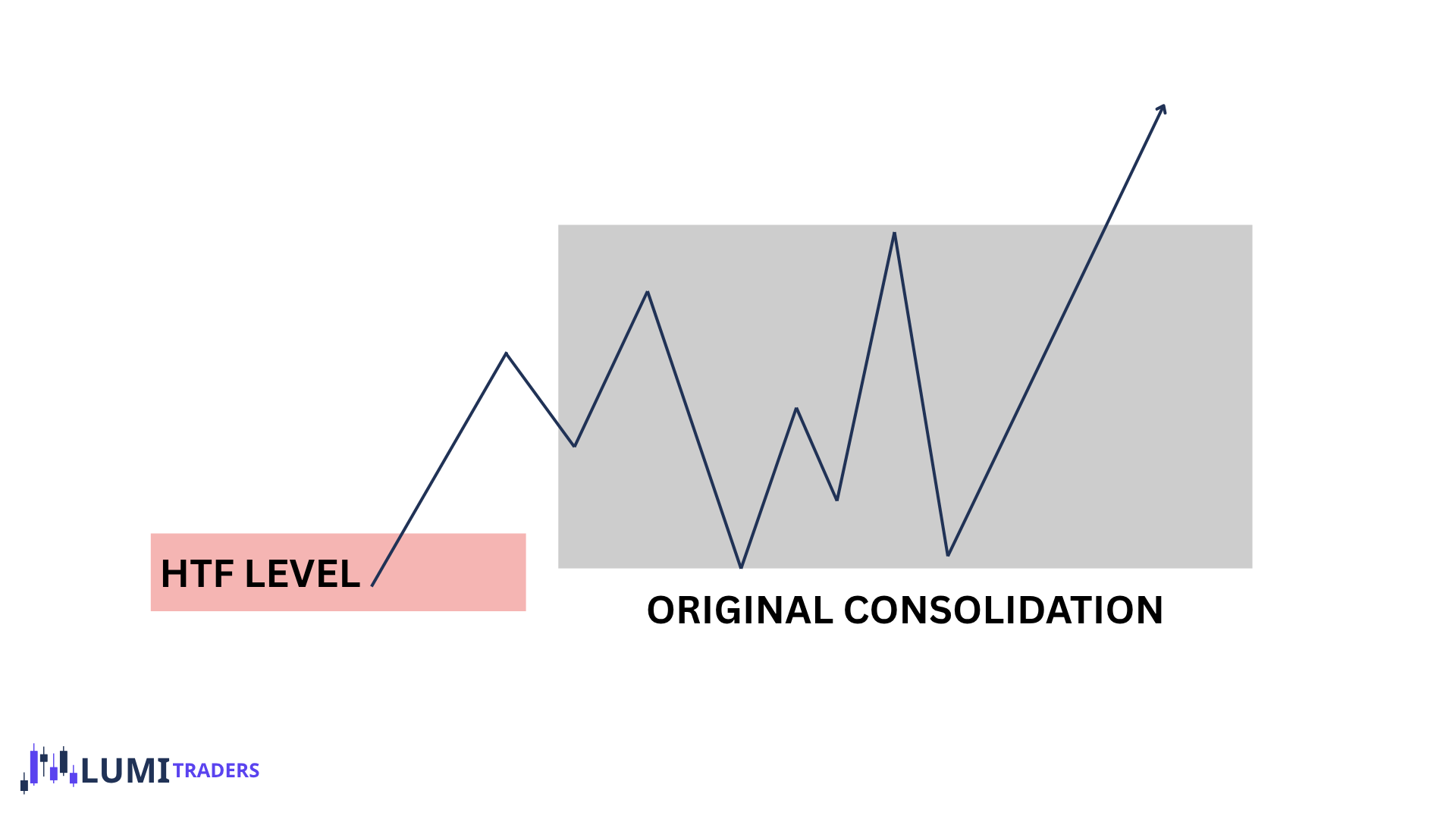
The Higher-Timeframe PD Array
MMXM becomes important when price reaches a meaningful higher-timeframe location.
HTF level can include:
Fair Value Gap
Breaker Block
Order BlocK
Rejection Block
Old High or Low
These levels provide the location where a Smart Money Reversal may occur. MMXM
This is extremely important.
We do not call every reversal MMXM.
A meaningful MMXM reversal should have a reason to occur.
That reason begins with HTF location.
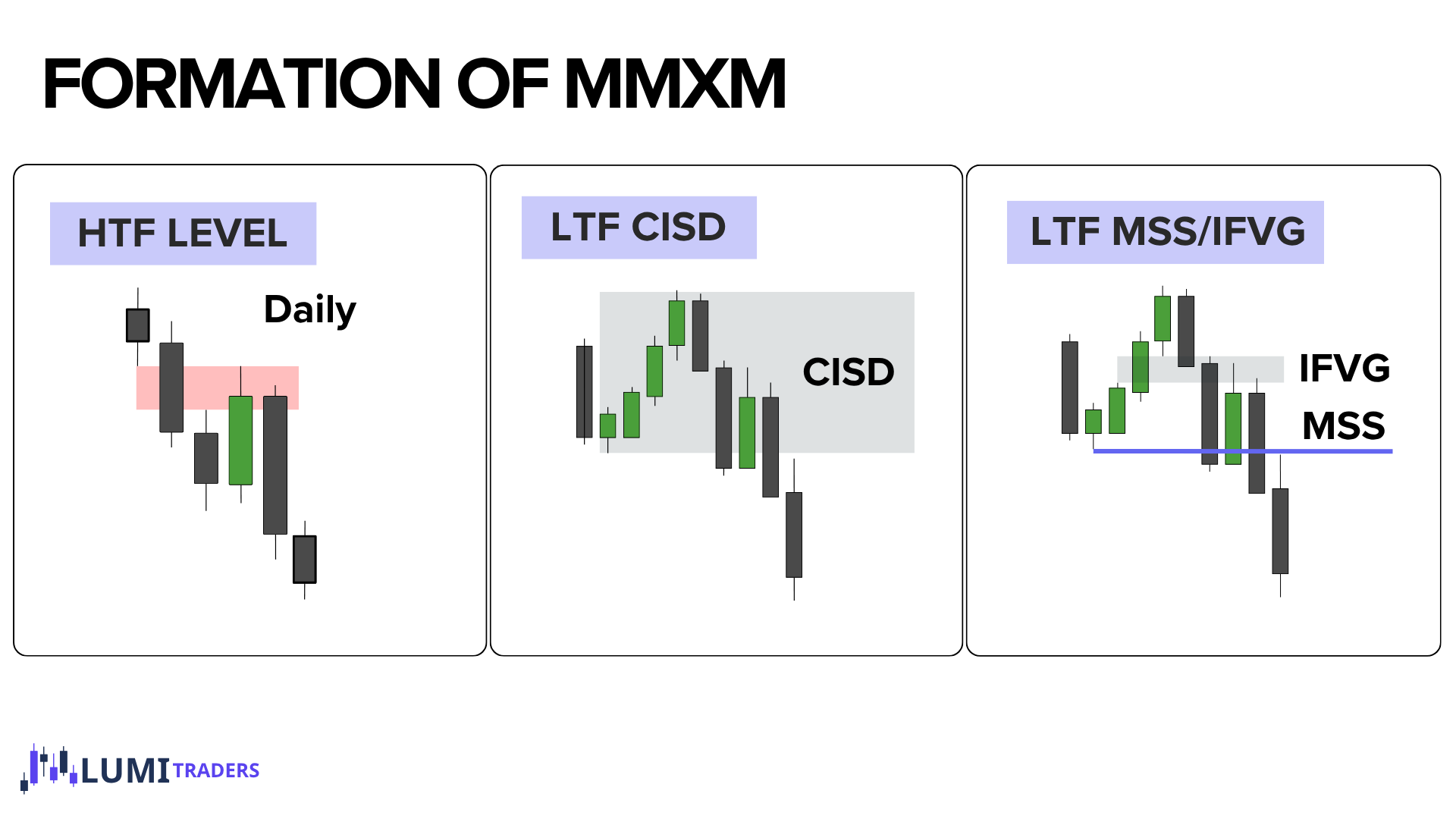
HTF PDA Does Not Mean Immediate Reversal!
If price reaches a 4-hour FVG, Order Block, old high, or another HTF PD Array, that does not mean we immediately enter.
The HTF level gives us the potential location for the transition.
Now the market needs to confirm that the previous program is actually ending.
SMR
1. HTF PDA
2. CISD
3. MSS MMXM
These three concepts form the foundation of the Smart Money Reversal.
Smart Money Reversal — SMR
The Smart Money Reversal is the transition point between the two programs.
For an MMBM:
Sell Program → SMR → Buy Program
For an MMSM:
Buy Program → SMR → Sell Program
The reversal is not confirmed just because liquidity was taken.
It is not confirmed just because price touched a HTF PD Array/level.
We want to see evidence that the previous delivery has actually changed.
HTF Level → LTF CISD → LTF MSS / IFVG.
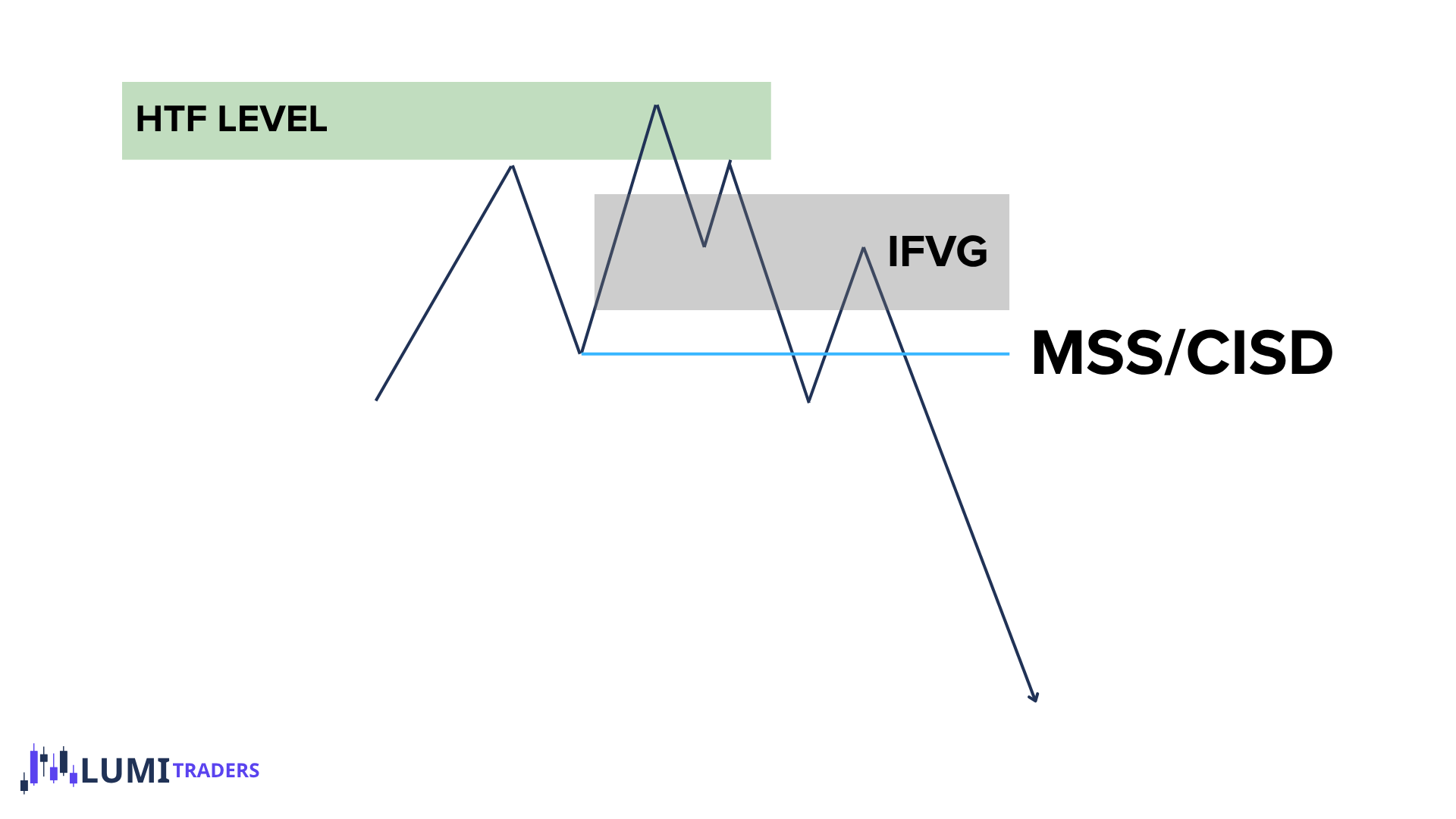
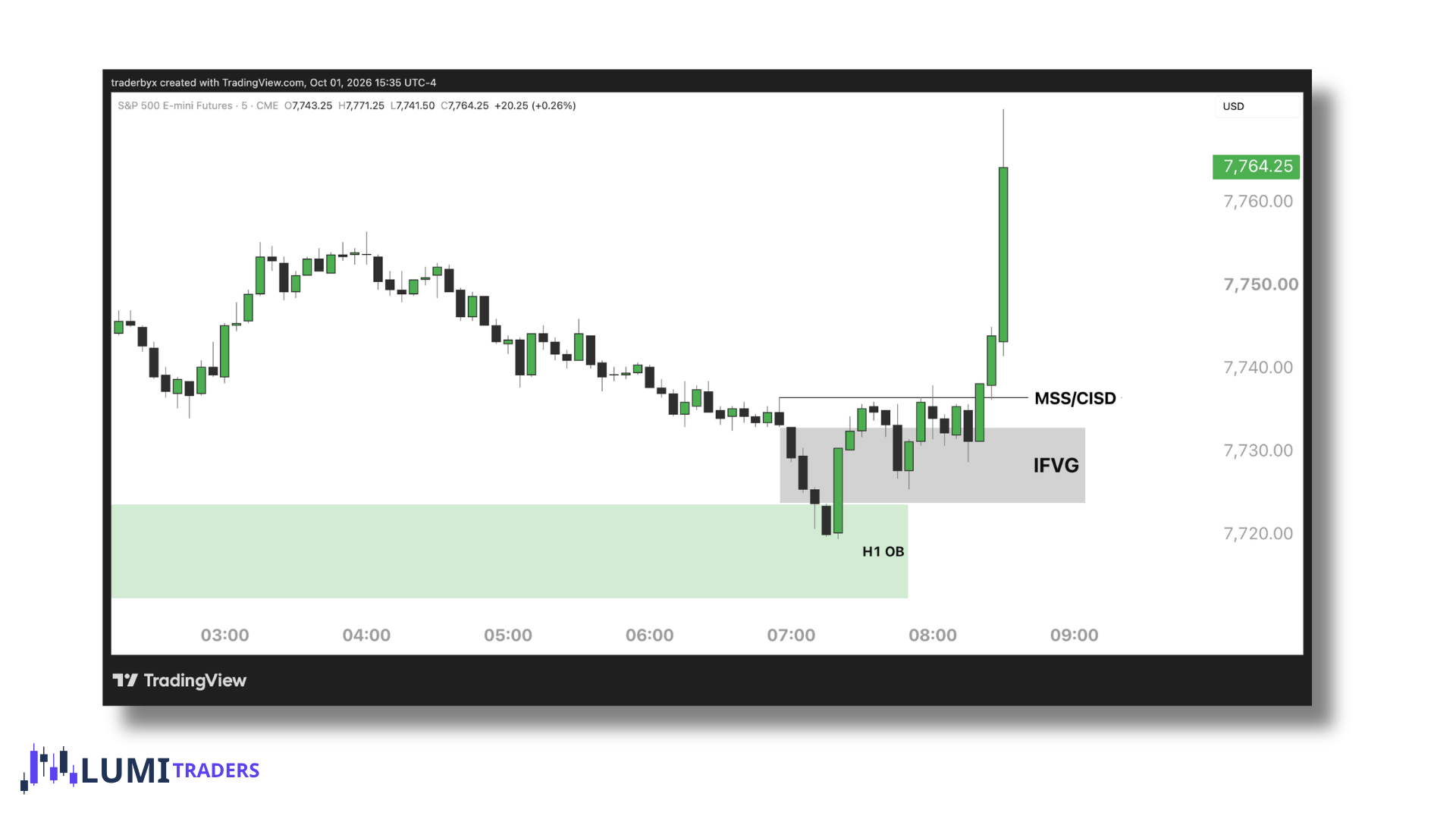
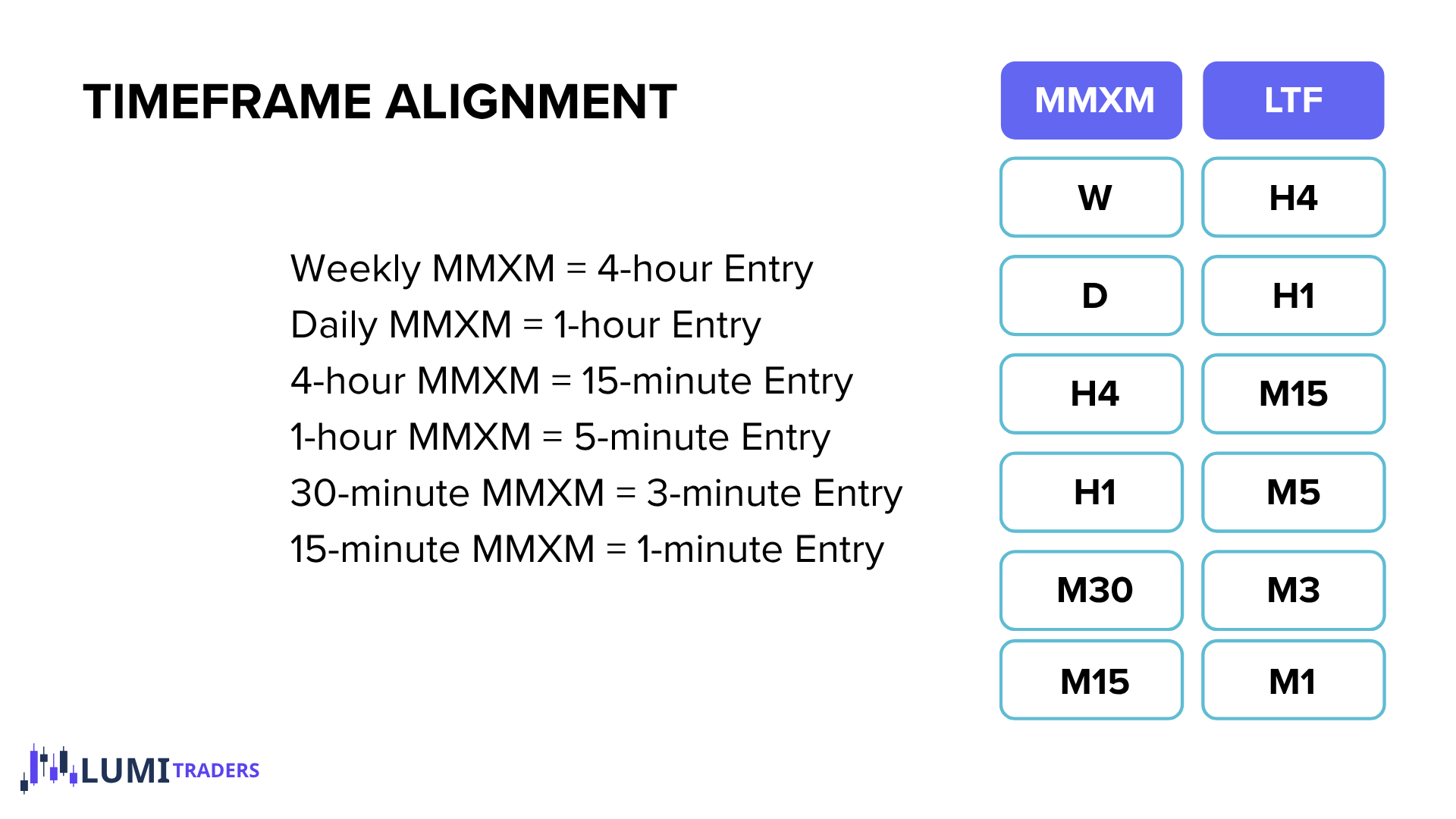
Timeframe Alignment
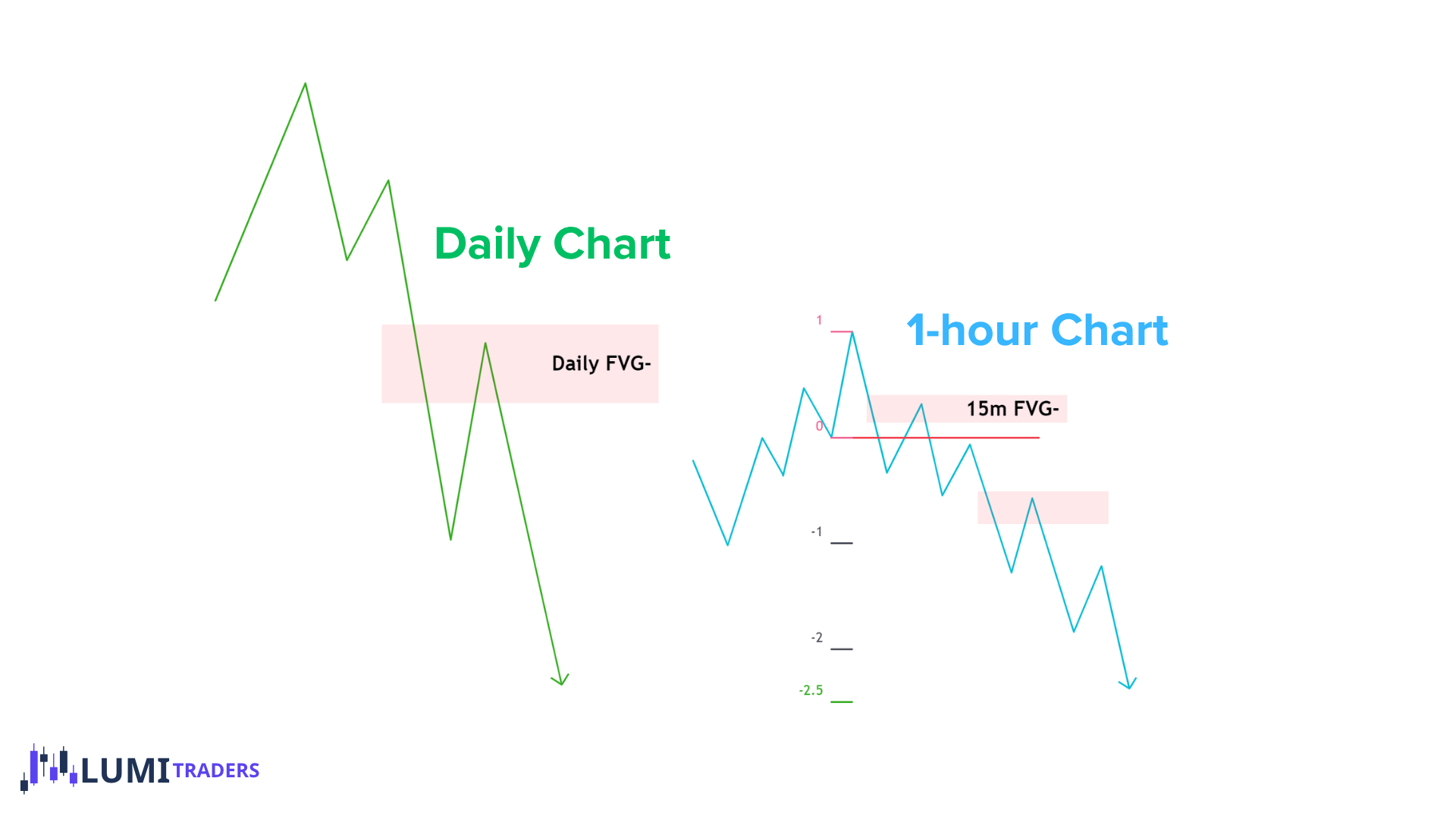
Step 1: HTF Level
Everything begins with location.
For example, price may be delivering higher during a buy program.
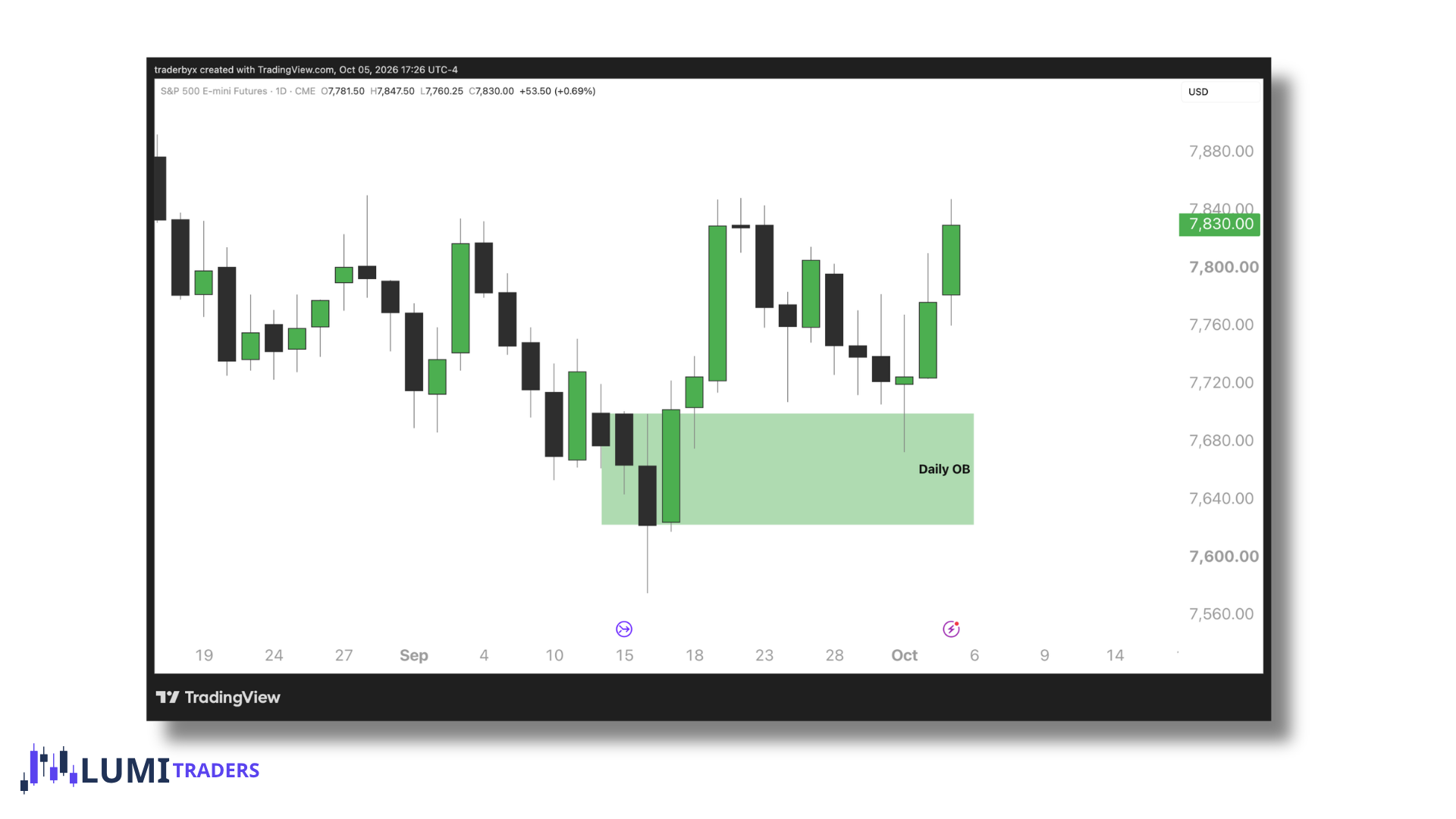
Eventually it trades into a Daily bearish FVG.
Now we have a potential location for an MMSM.
But at this point:
We do not yet have a confirmed sell model.
We only have a potential reversal location.
The same applies in reverse.
Price may deliver lower into a four-hour bullish Order Block.
That does not automatically create an MMBM.
We now watch for evidence that the sell program is actually ending.
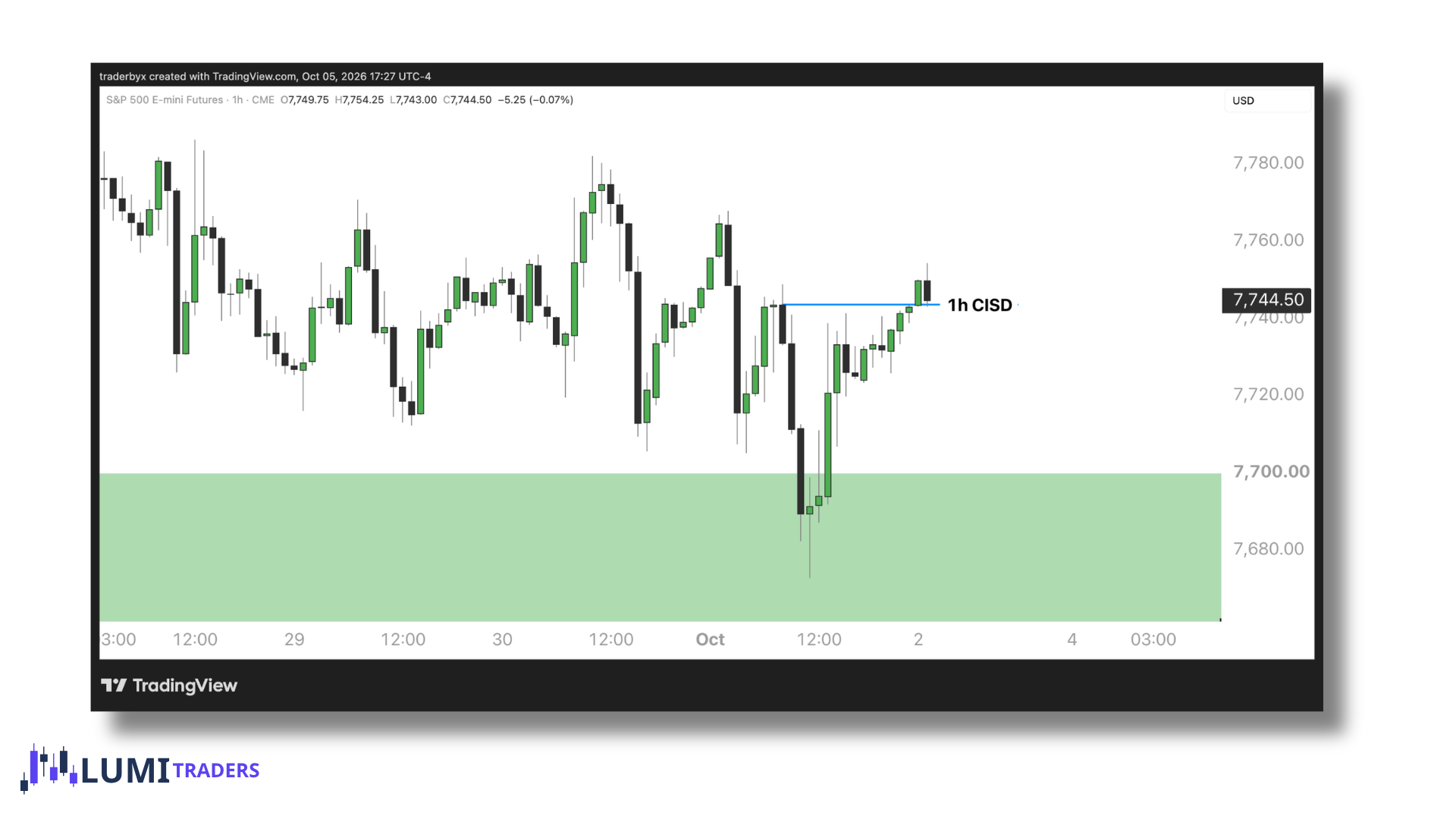
Step 2: CISD
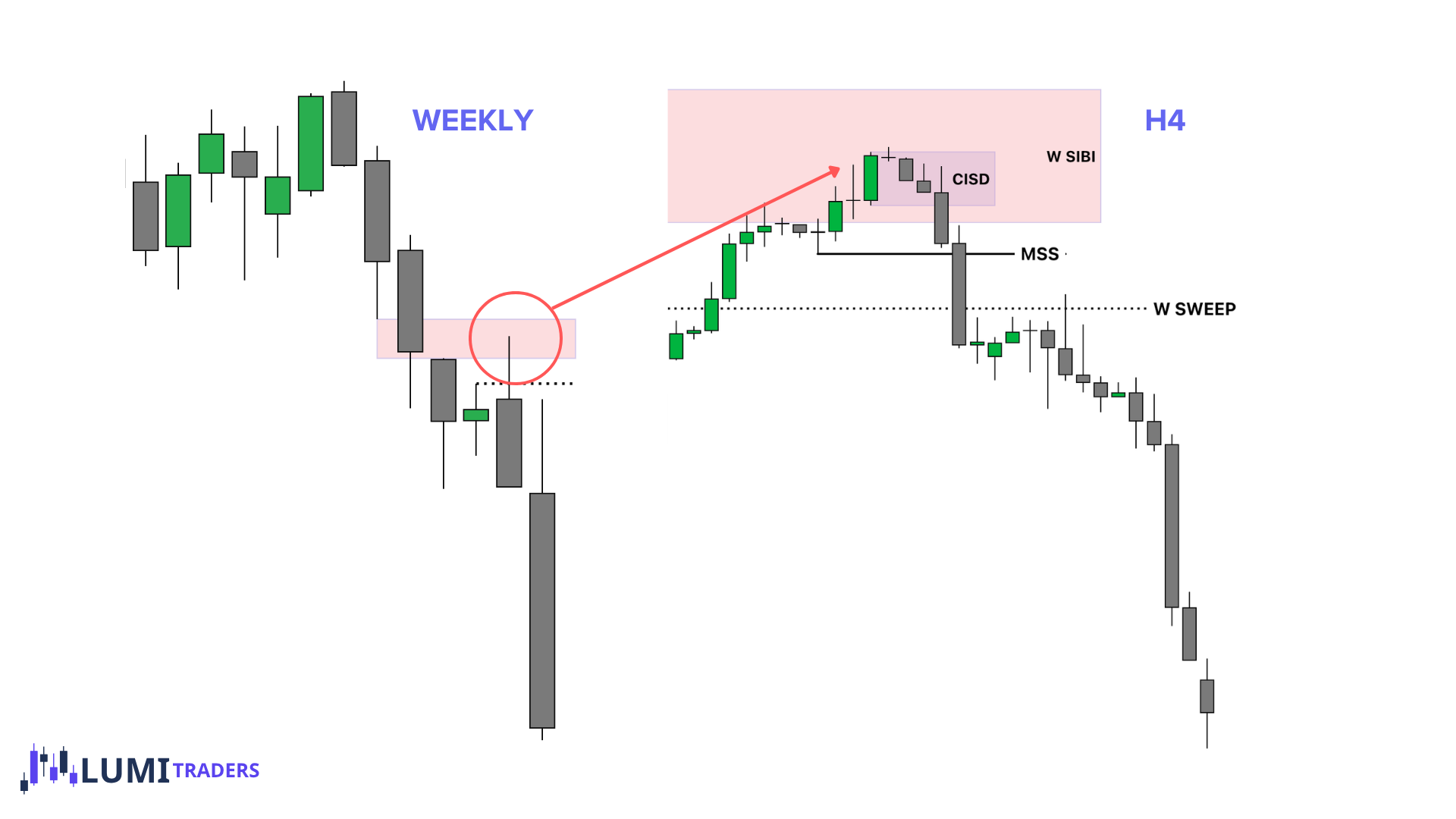
CISD means:
Change in the State of Delivery
It tells us that the delivery responsible for bringing price into the HTF level has changed.
Step 3: Market Structure Shift
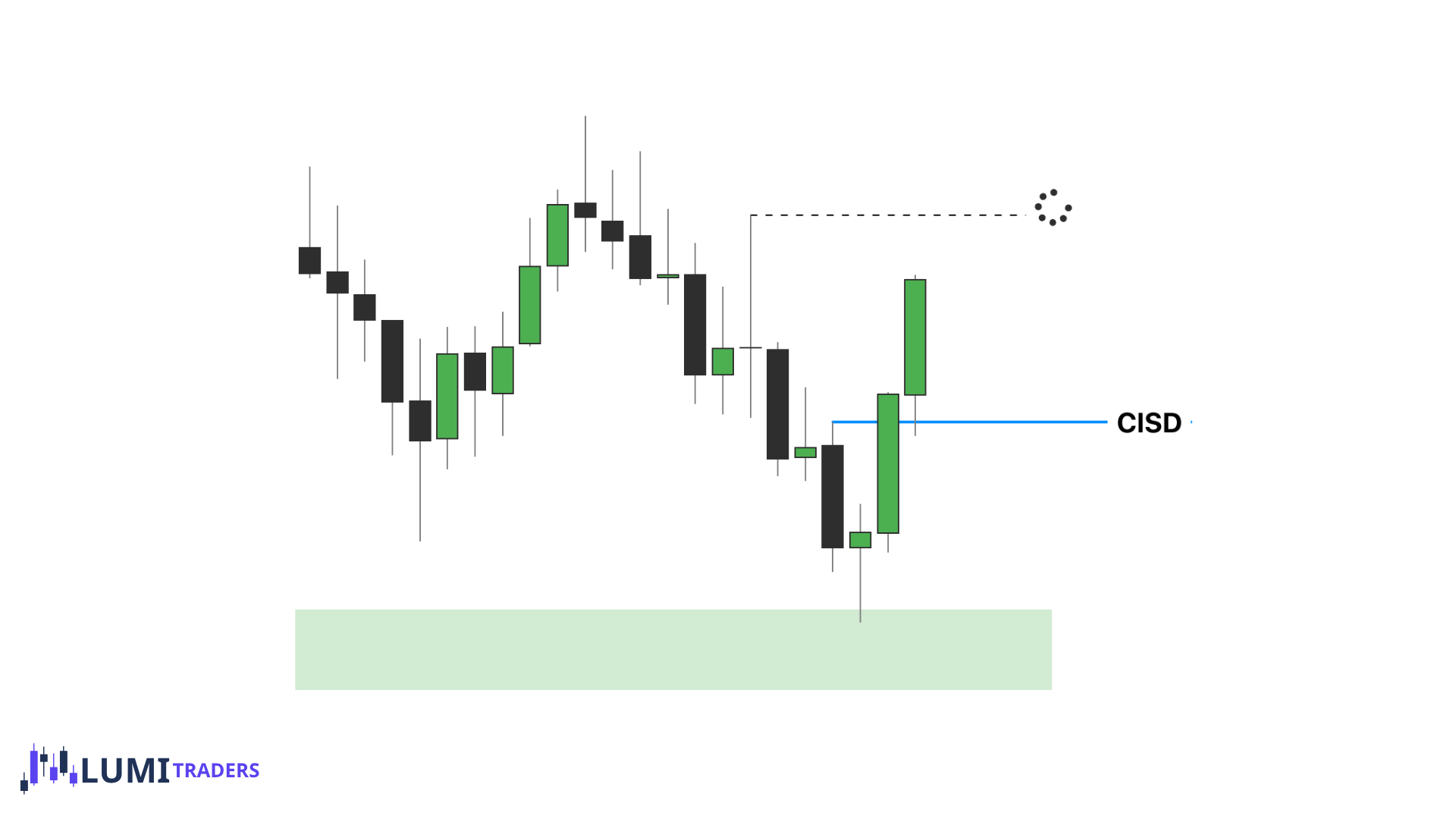
CISD tells us that delivery changed.
MSS confirms that structure has changed.
This is important because price can react temporarily from a HTF level without starting an entirely new program.
A meaningful MSS provides additional evidence that:
the previous program is ending and the opposite program is beginning.
This is what gives us the Smart Money Reversal.
The difference is simple:
CISD tells you that delivery changed.
MSS tells you that structure changed.
MSS requires price to break a meaningful structural swing.
For a bearish reversal:
Price creates a high.
Bearish delivery begins.
Price then breaks a relevant prior swing low.
That is the bearish Market Structure Shift.
For a bullish reversal:
Price creates a low.
Bullish delivery begins.
Price breaks a relevant prior swing high.
That is the bullish MSS.
Why CISD Usually Comes First?
Think about a bearish reversal.
Price is rallying into a bearish HTF level.
Step 1 — Price reaches HTF PDA
No reversal confirmation yet.
Step 2 — Bearish CISD
The bullish delivery into the level fails.
Now we have the first evidence that order flow is changing.
Step 3 — MSS
Price continues lower and breaks a relevant structural low.
Now market structure has also shifted.
So:
HTF PDA → CISD → MSS
CISD Can Exist Without MSS
This is very important.
You can have CISD without immediately getting MSS.
Example:
Price reaches a bearish HTF level.
Bearish CISD occurs.
Price starts moving lower.
But it has not yet broken the relevant swing low.
At this stage:
delivery changed, but structure has not fully shifted yet.
That can give an earlier entry, but it carries less confirmation.
The Core Smart Money Reversal Sequence
For a Market Maker Buy Model:
HTF Bullish PDA
→ HTF level
→ Bullish CISD
→ Bullish MSS
→ MMBM begins
For a Market Maker Sell Model:
HTF Bearish PDA
→ HTF level
→ Bearish CISD
→ Bearish MSS
→ MMSM begins
Once this sequence is confirmed, we stop treating every pullback as a possible reversal.
We now begin studying the stages of the new program.
First Stage of Accumulation / Distribution
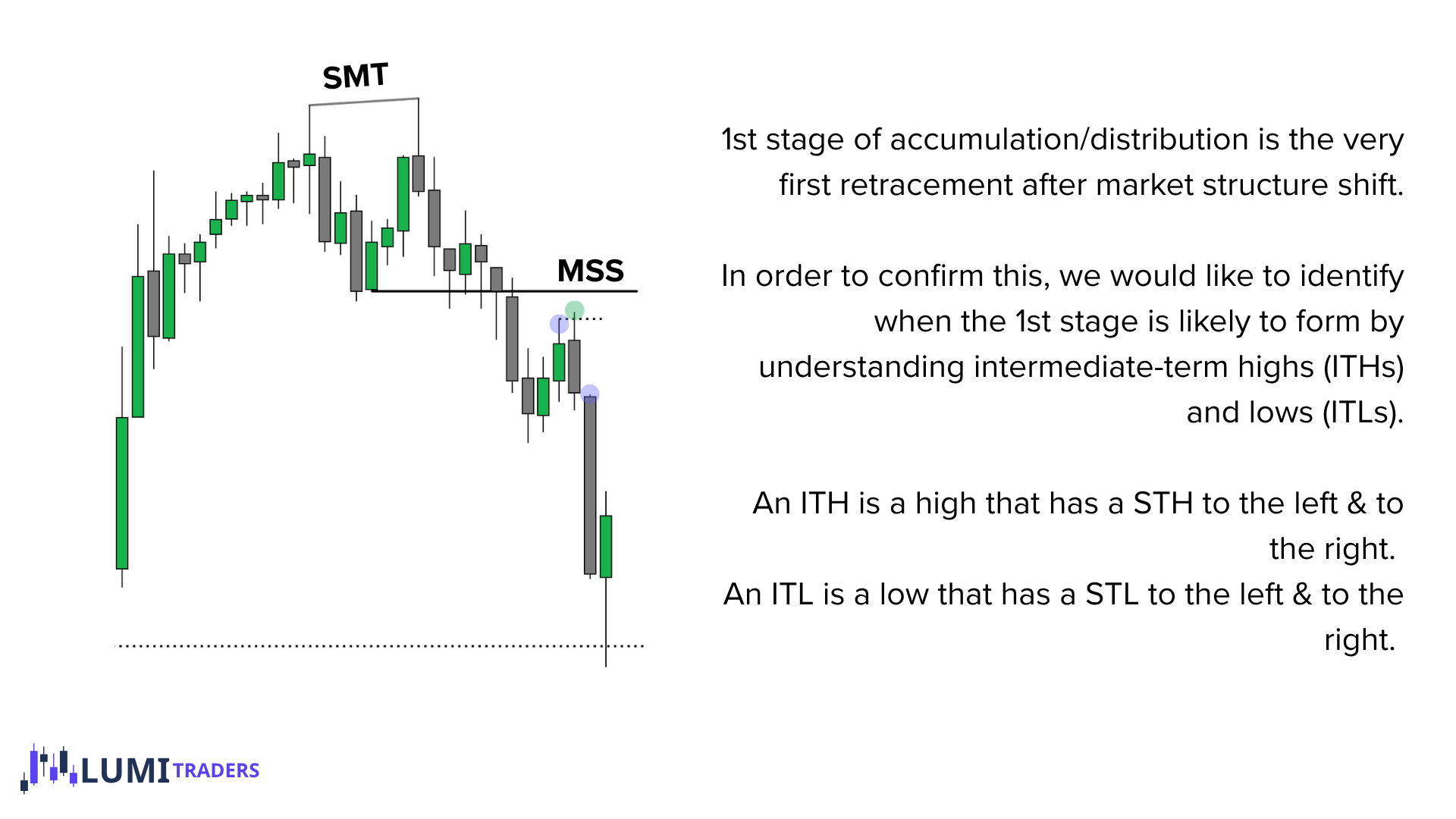
The very first retracement after Market Structure Shift.
Once SMR and MSS confirm the new program, we wait for the first meaningful retracement.
That retracement begins defining the first stage.
Short-Term and Intermediate-Term Structure
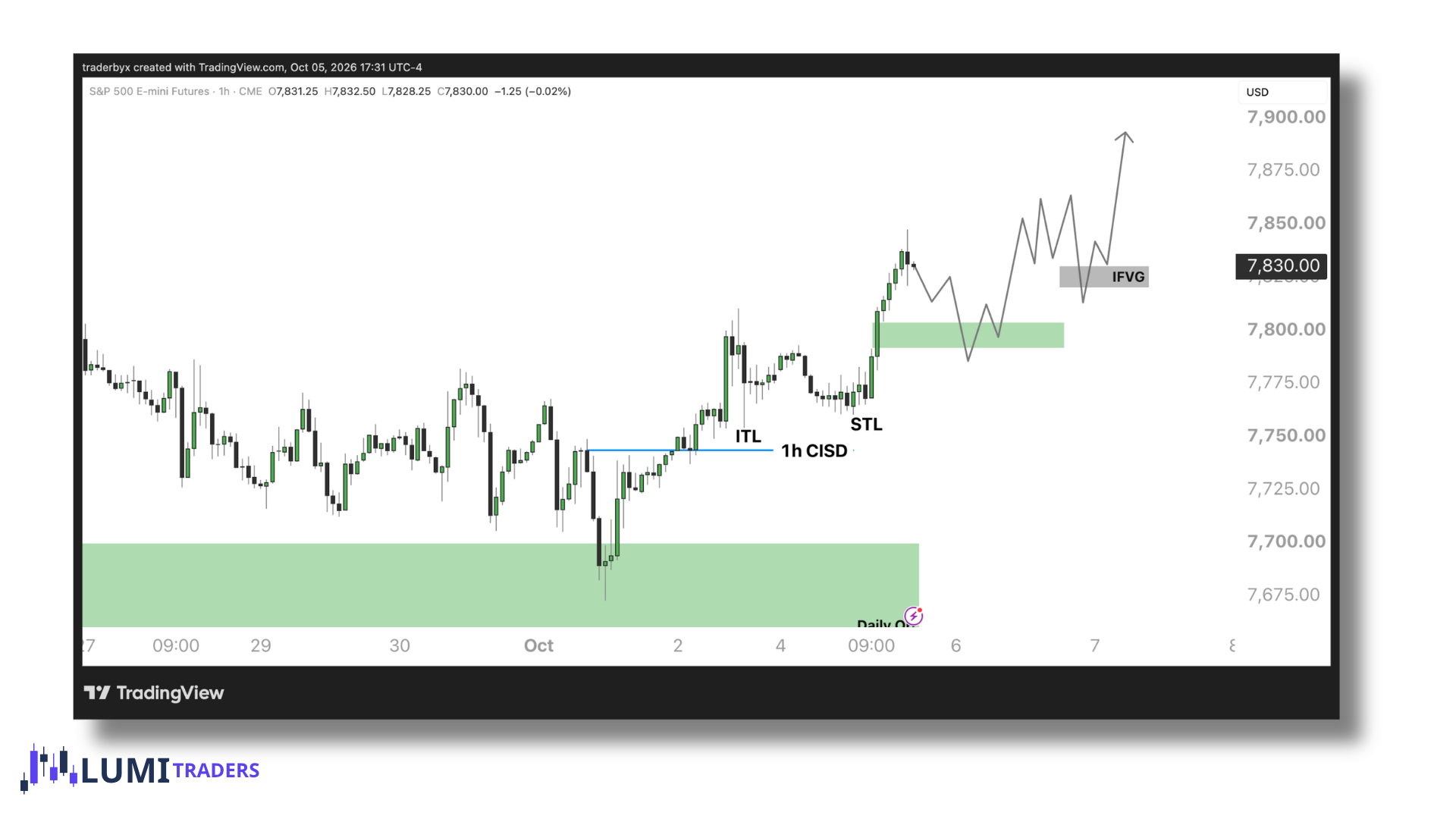
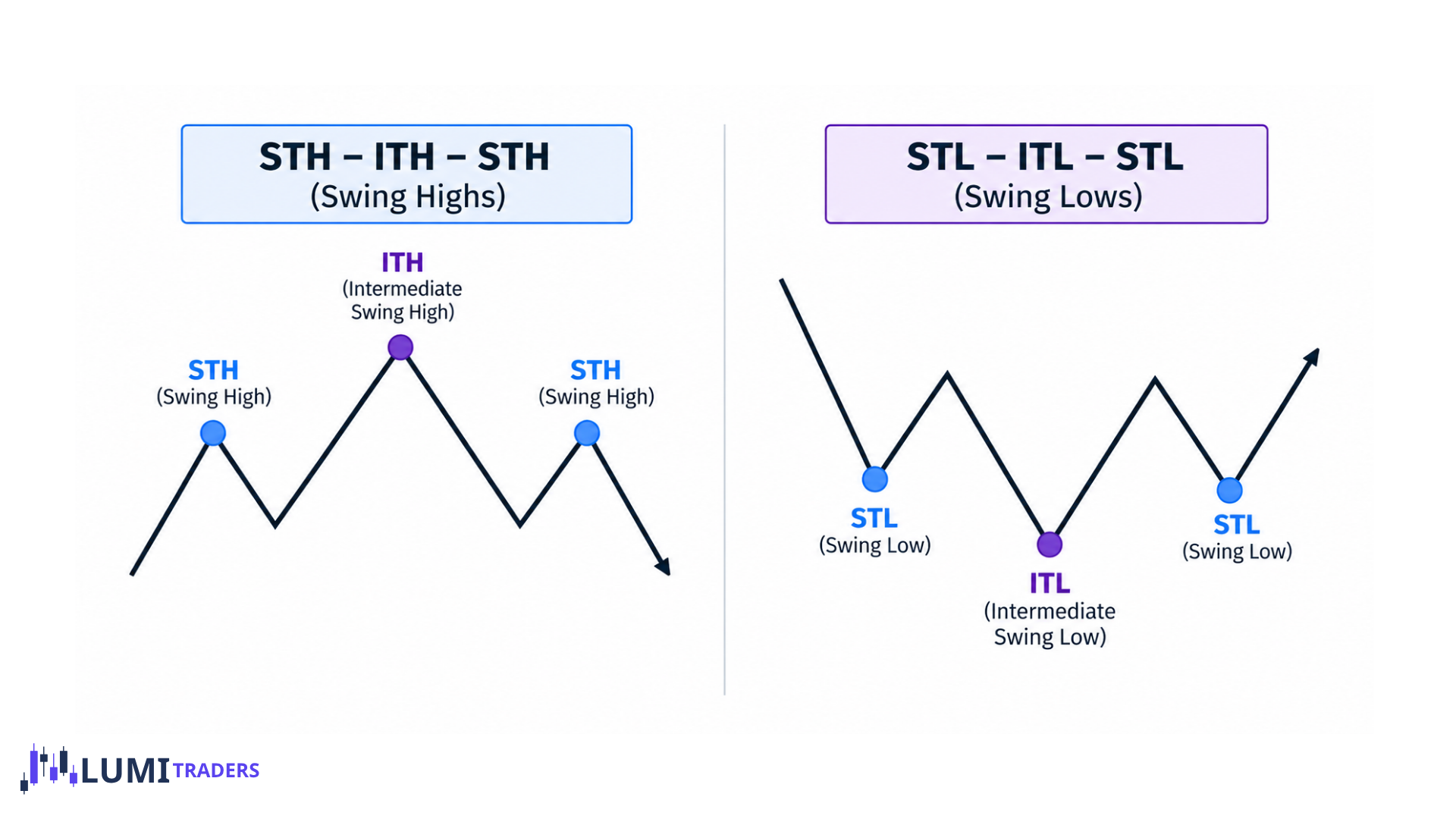
An ITH — Intermediate-Term High is a high with a Short-Term High to its left and another Short-Term High to its right.
An ITL — Intermediate-Term Low is a low with a Short-Term Low to its left and another Short-Term Low to its right.
This matters because we do not want to randomly label a retracement as first stage.
We want the proper structure to form.
Once the first stage is established, the corresponding ITL or ITH becomes a structural reference.
MMBM - The ITL becomes the protected low.
MMSM - The ITH becomes the protected high.
This protected level tells us whether the current program remains intact.
For a bullish model:
If price meaningfully violates the protected ITL, we need to question the buy program.
For a bearish model:
If price meaningfully violates the protected ITH, we need to question the sell program.
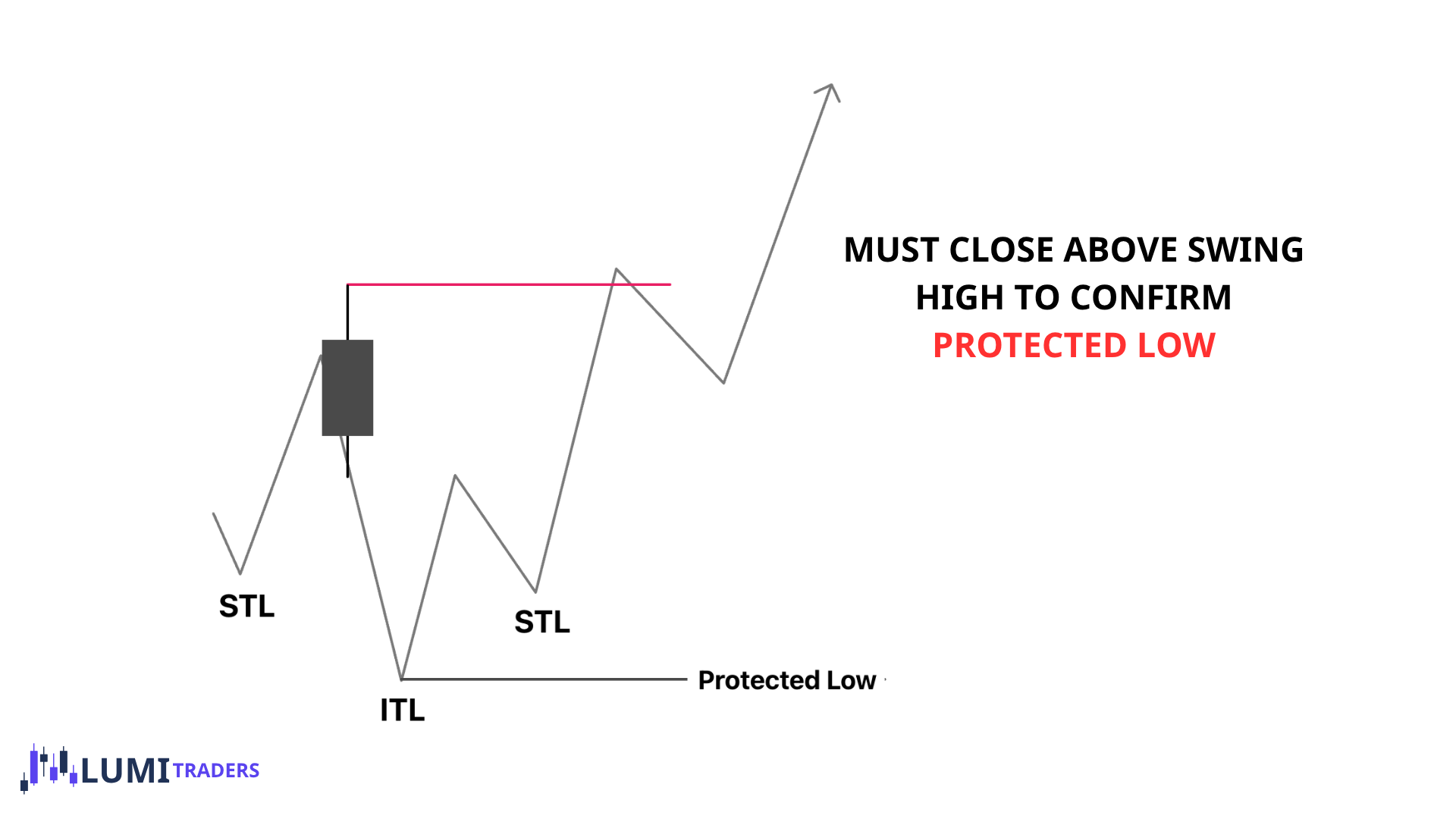
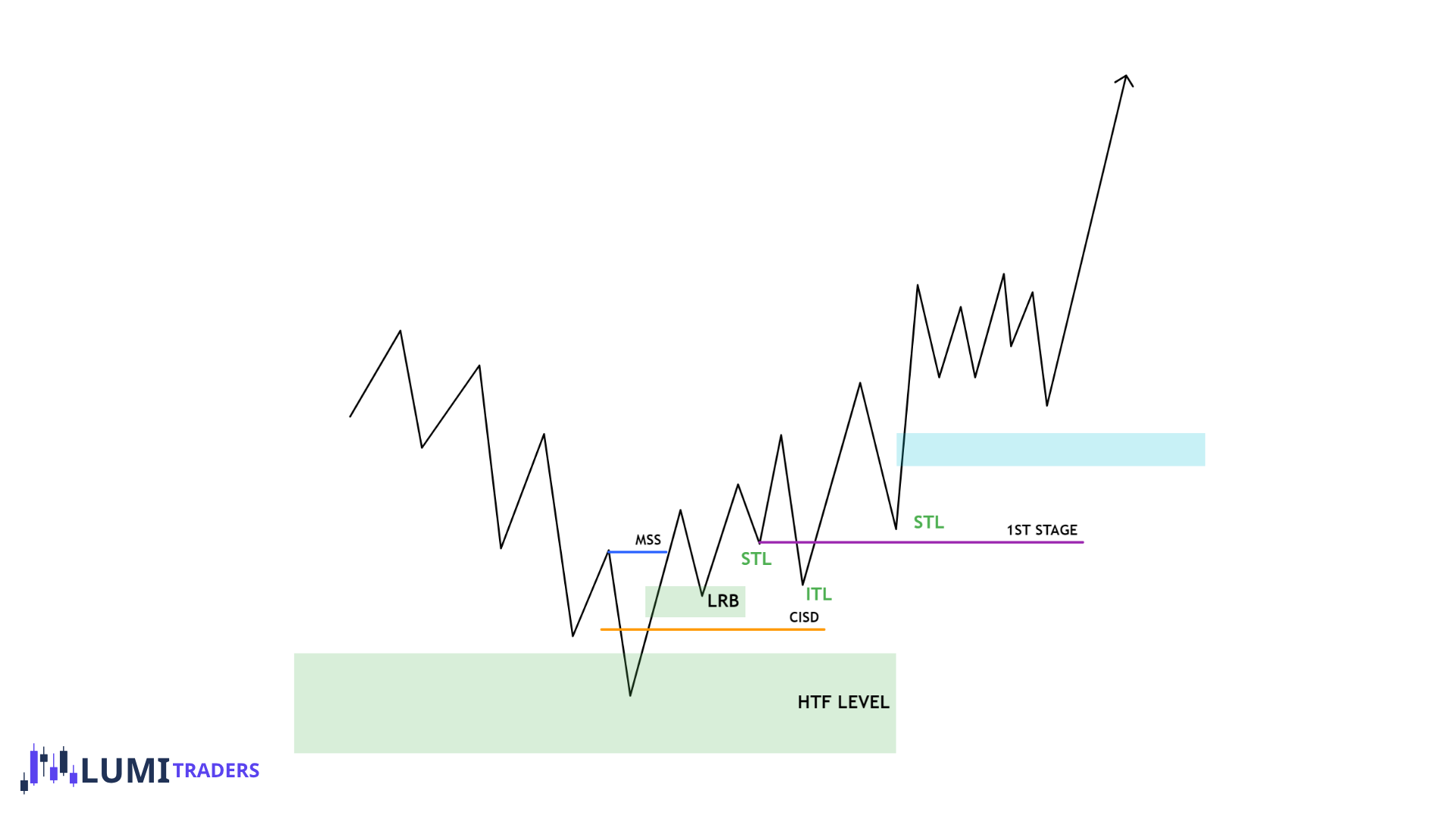
After we saw MSS, which was a low-risk buy in a market maker buy model, our focus is on the very first run on sell stops—turtle soup entry—as this marks the first stage of our accumulation.
Now, once it starts to break up further, there will be more short-term lows being formed in that whole range moving up. And we are waiting for the short-term low after the low risk buy to get raided and then we form that ITL. We expect price not to exceed this intermediate term low. We call that a protected low.
First-Stage Entry
The first stage can provide a high-probability entry because we are no longer guessing whether SMR will happen.
SMR has already been confirmed.
The sequence becomes:
Bullish
HTF PDA → CISD → MSS → first SSL run → first-stage accumulation → long
Bearish
HTF PDA → CISD → MSS → first BSL run → first-stage distribution → short
The difference from the original reversal entry is important.
At SMR we are trading the transition.
During first stage we are trading inside an already-confirmed new program.
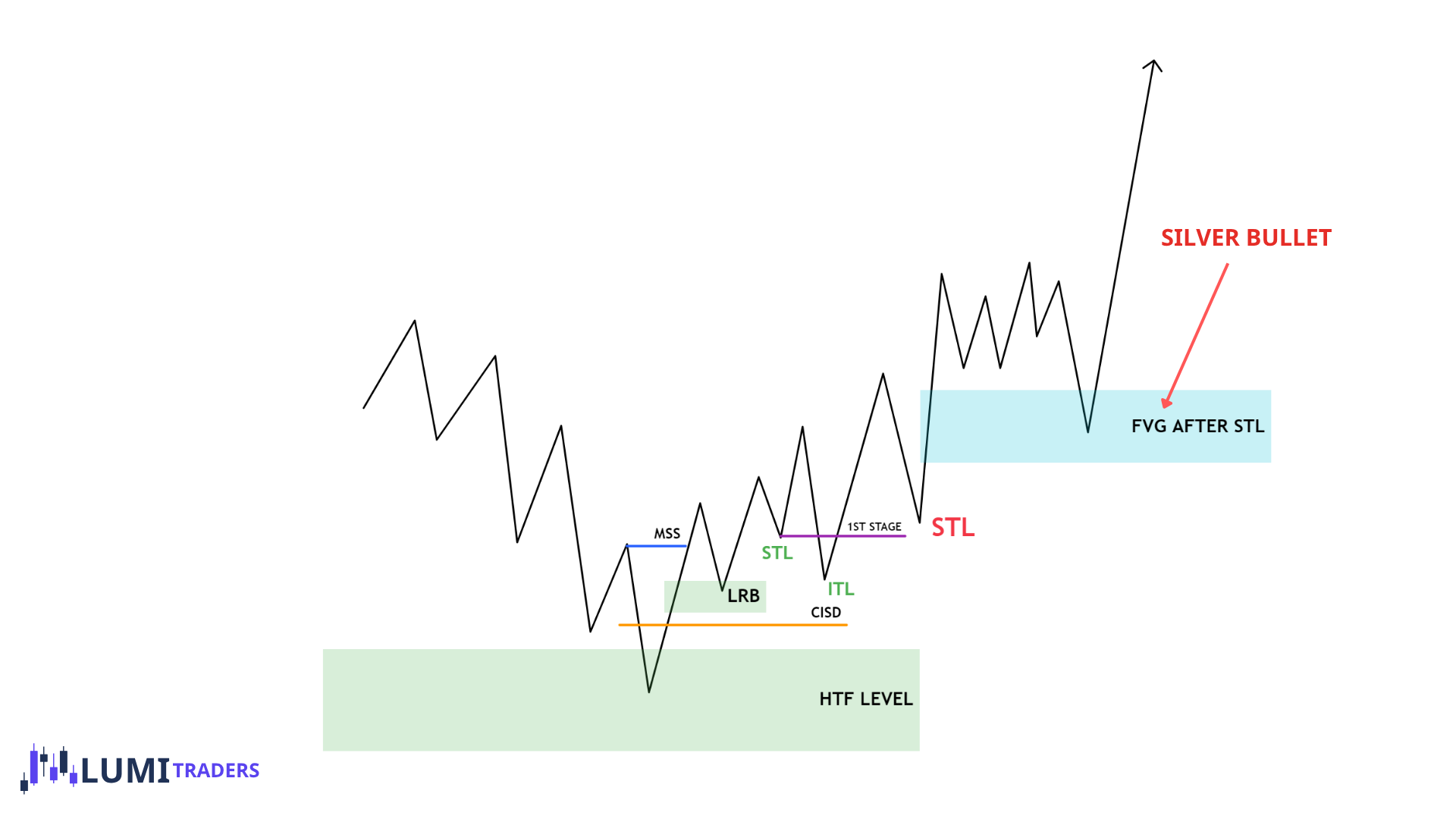
Silver Bullet
Silver Bullet becomes much easier to understand when we place it inside the larger Market Maker Model (MMXM).
First, we have the original consolidation.
Price then breaks structure and confirms the transition into a Market Maker Buy Model or Market Maker Sell Model. After this reversal is confirmed, we begin looking for the stages of the new program.
The first stage of accumulation or distribution can offer a Turtle Soup setup. In an MMBM, this is usually the first meaningful run on sell-side liquidity after the reversal. In an MMSM, it is the first meaningful run on buy-side liquidity.
However, when we are trading the Silver Bullet, we are not primarily interested in that first-stage Turtle Soup entry.
We are interested in the transition from the first stage into the second stage of re-accumulation or re-distribution.
Silver Bullet
London Session: 3 - 4 AM EST
NY AM Session: 10 - 11 AM EST
NY PM Session: 2 - 3 PM EST
MMBM Example
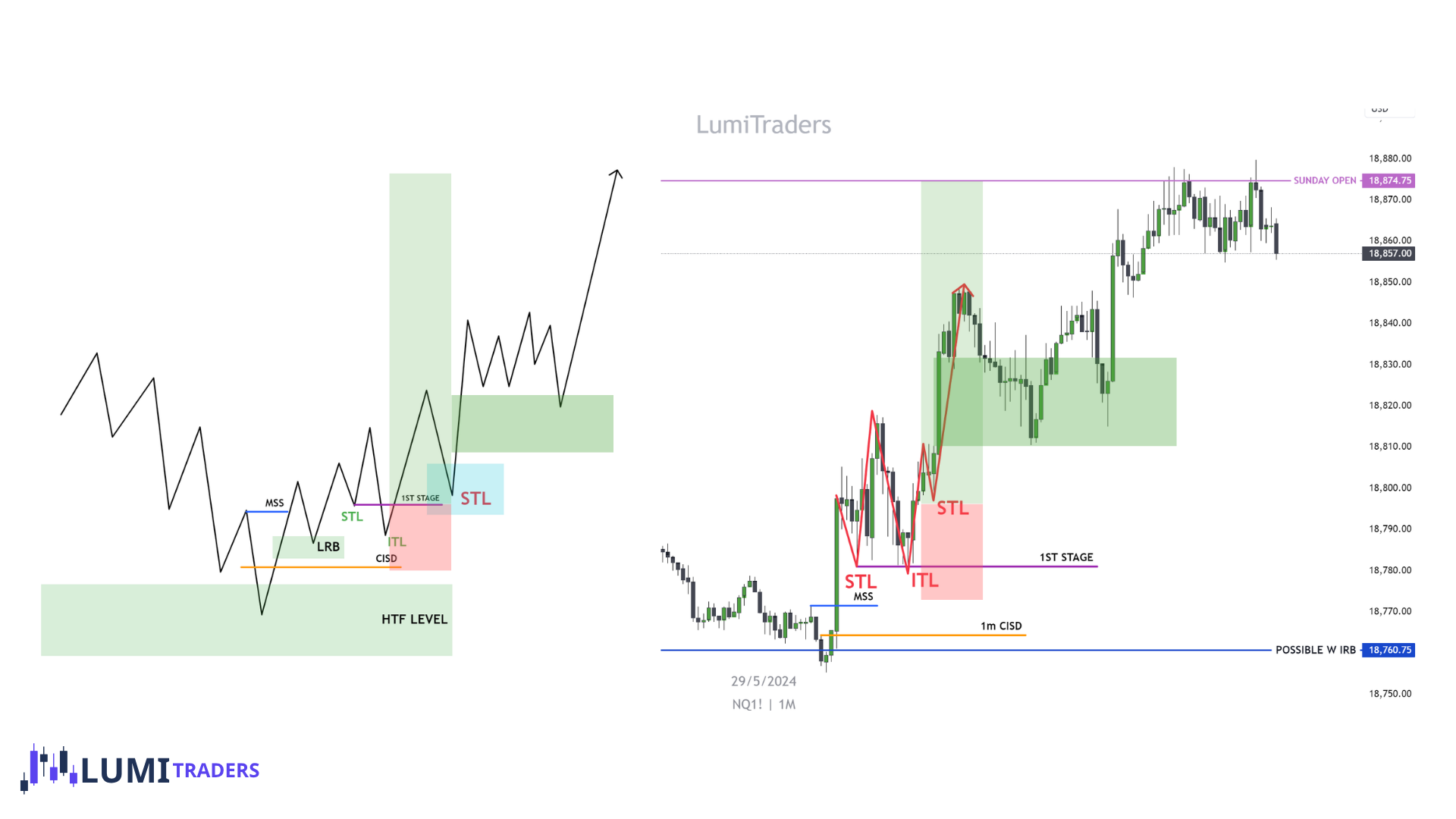
After the Smart Money Reversal and MSS, price begins delivering higher.
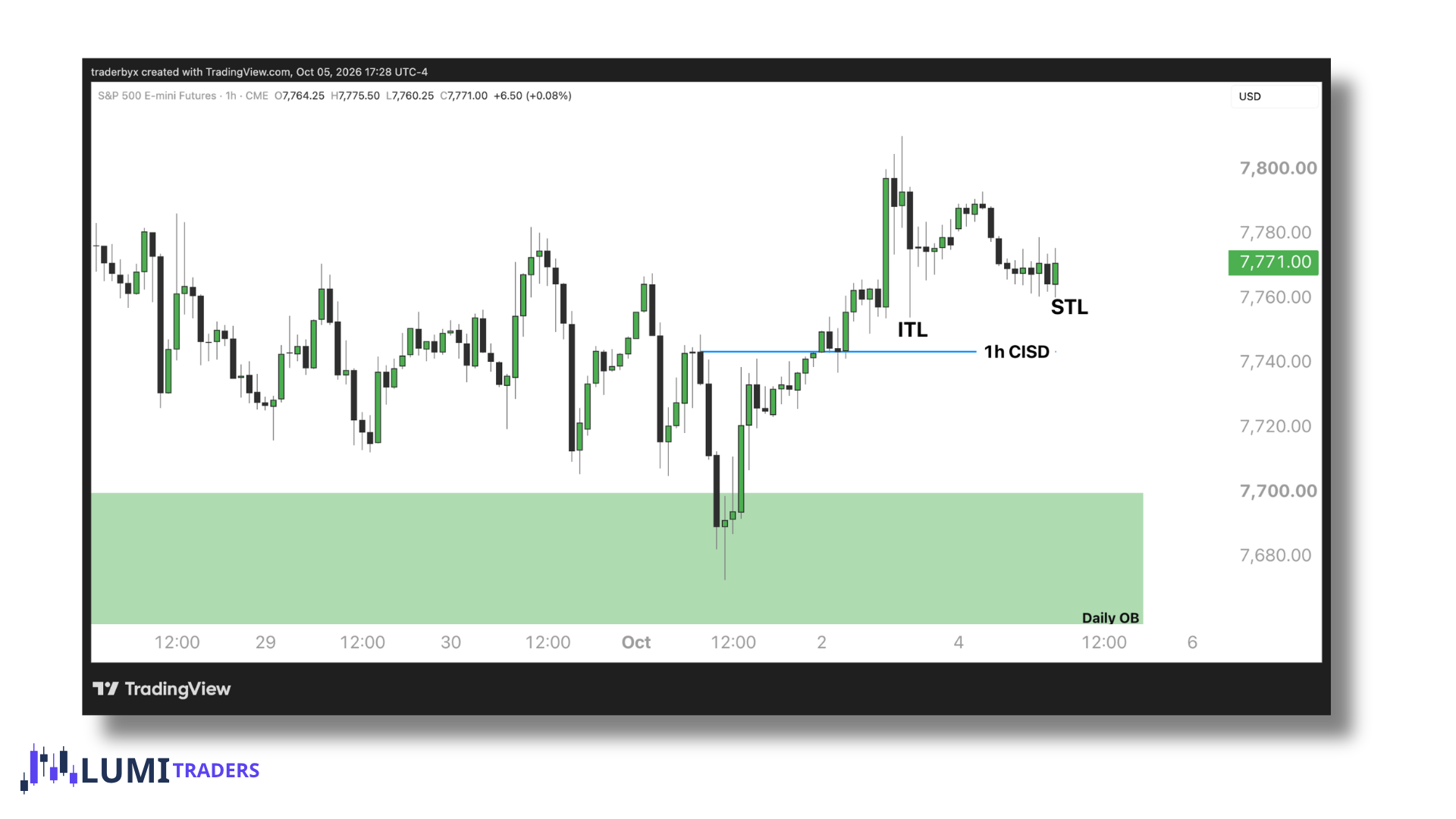
The first-stage liquidity sweep eventually helps form and confirm an Intermediate-Term Low (ITL).
Once the ITL is confirmed, we expect it to become the protected low of the developing buy program.
In other words:
Price should not trade below the protected ITL if the MMBM remains valid.
After the ITL forms, price continues higher and we wait for a new Short-Term Low (STL) to develop on the right side of the ITL.
This is the structure we want:
STL → ITL → STL
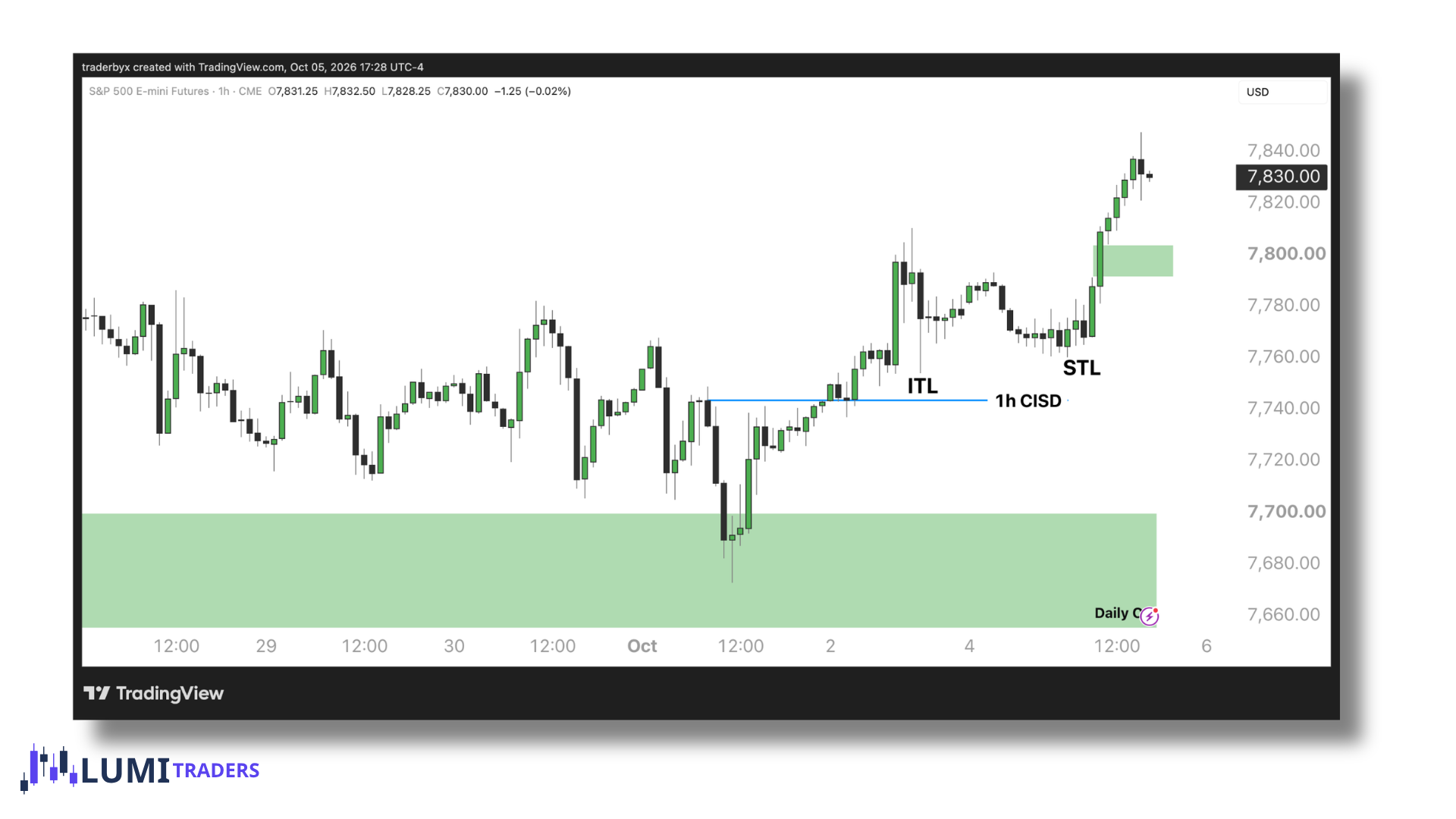
Once that second STL is confirmed, the very first FVG that forms after it becomes our Silver Bullet FVG.
That FVG represents the beginning of the second stage of re-accumulation.
So the bullish Silver Bullet structure is:
STL → ITL → STL → FVG
MMSM Example
The bearish model is the exact opposite.
After the Smart Money Reversal and bearish MSS, price begins delivering lower.
The first-stage liquidity sweep helps establish an Intermediate-Term High (ITH).
Once confirmed, that ITH becomes the protected high.
Price should not trade above that protected ITH if the sell program remains valid.
We then wait for another Short-Term High (STH) to form on the right side of the ITH.
The structure becomes:
STH → ITH → STH
Once the second STH is confirmed, the first FVG that forms after it becomes our Silver Bullet FVG and marks the beginning of the second stage of re-distribution.
So the bearish Silver Bullet structure is:
STH → ITH → STH → FVG
The Core Silver Bullet Rule
The Silver Bullet is not simply any FVG that appears during the Silver Bullet time window.
We want the FVG to form in the correct structural location inside MMXM.
Bullish MMBM
STL → ITL → STL → FVG
Bearish MMSM
STH → ITH → STH → FVG
The key is that the ITL or ITH has already been confirmed and becomes protected.
Then we wait for the next STL or STH on the right side.
The first FVG after that newly confirmed STL/STH is the Silver Bullet FVG and the transition into the second stage of MMXM.
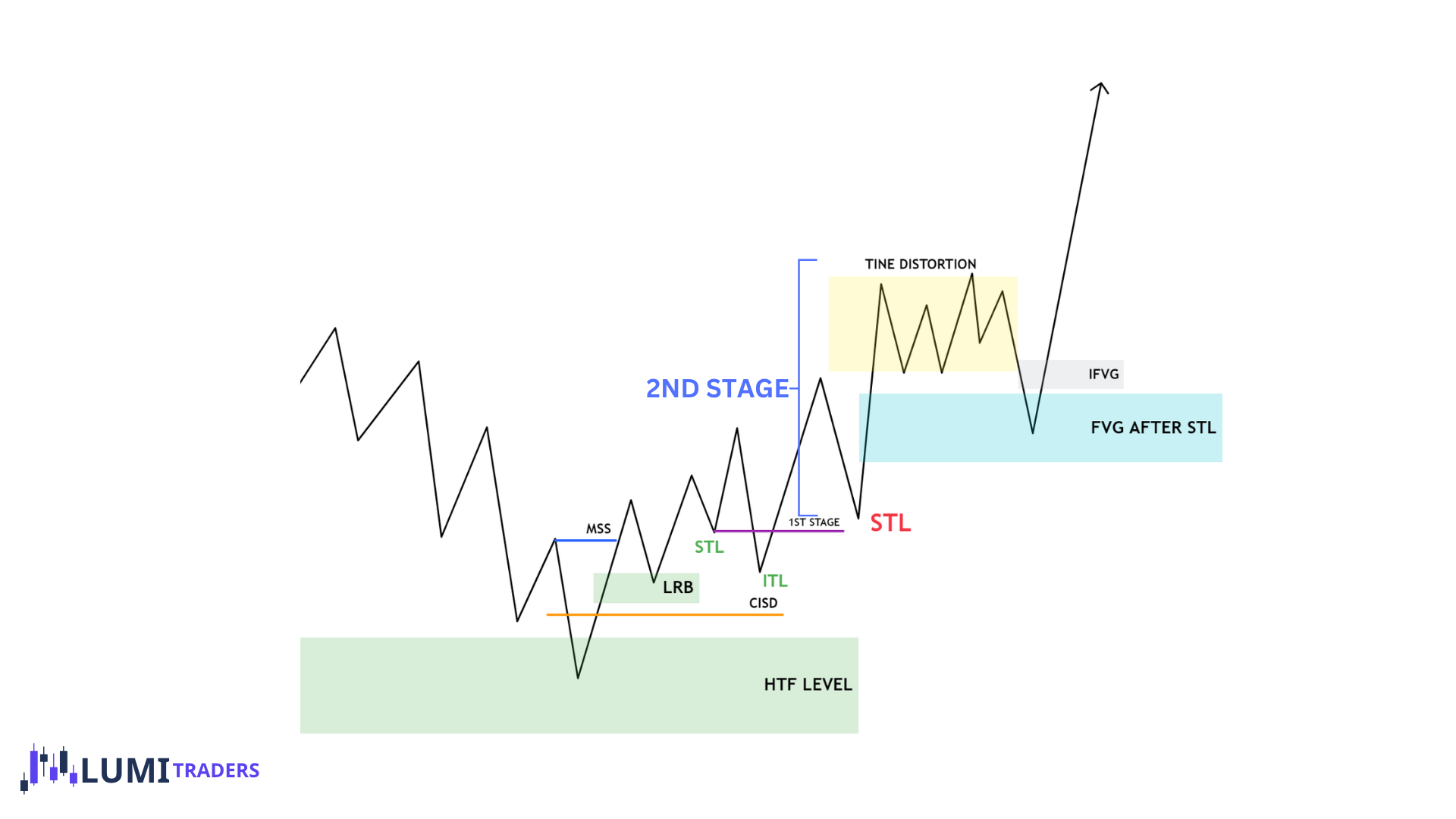
Second Stage of Re-Accumulation / Re-Distribution
The second stage frequently includes another important concept:
Time Distortion
Time Distortion is a price consolidation occurring as part of the second stage of re-accumulation or redistribution.
This consolidation can trap traders because it may appear that the market is preparing for a normal structural breakout.
Instead, MMXM tells us that the consolidation itself may be part of the final stage before the entire program completes.
Remember, we want to play the second stage of re-accumulation only after we run the distortion/consolidation low and enter at the bullish IFVG.
or
We want to play the second stage of re-distribution only after we run the distortion/consolidation high and enter at the bearish IFVG.
But where does the price usually go when it is running the distortion low/high?
Usually, the price goes right to the FVG that was formed after STL or STH on the right side of ITL or ITH.
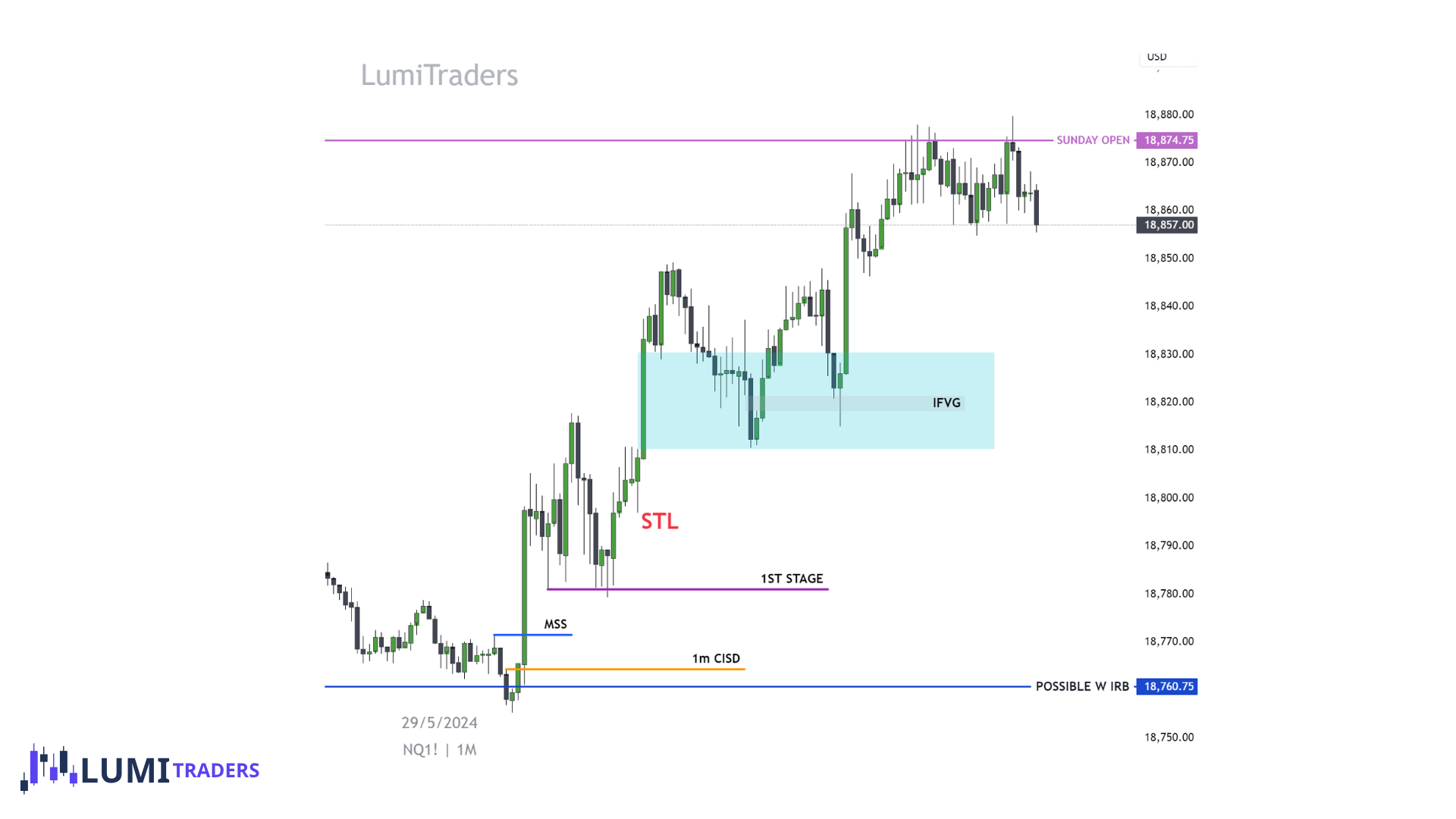
A safe entry will be after the price reaches the key FVG and immediately invalidates the bearish SIBI that formed at the leg down that broke the distortion low.
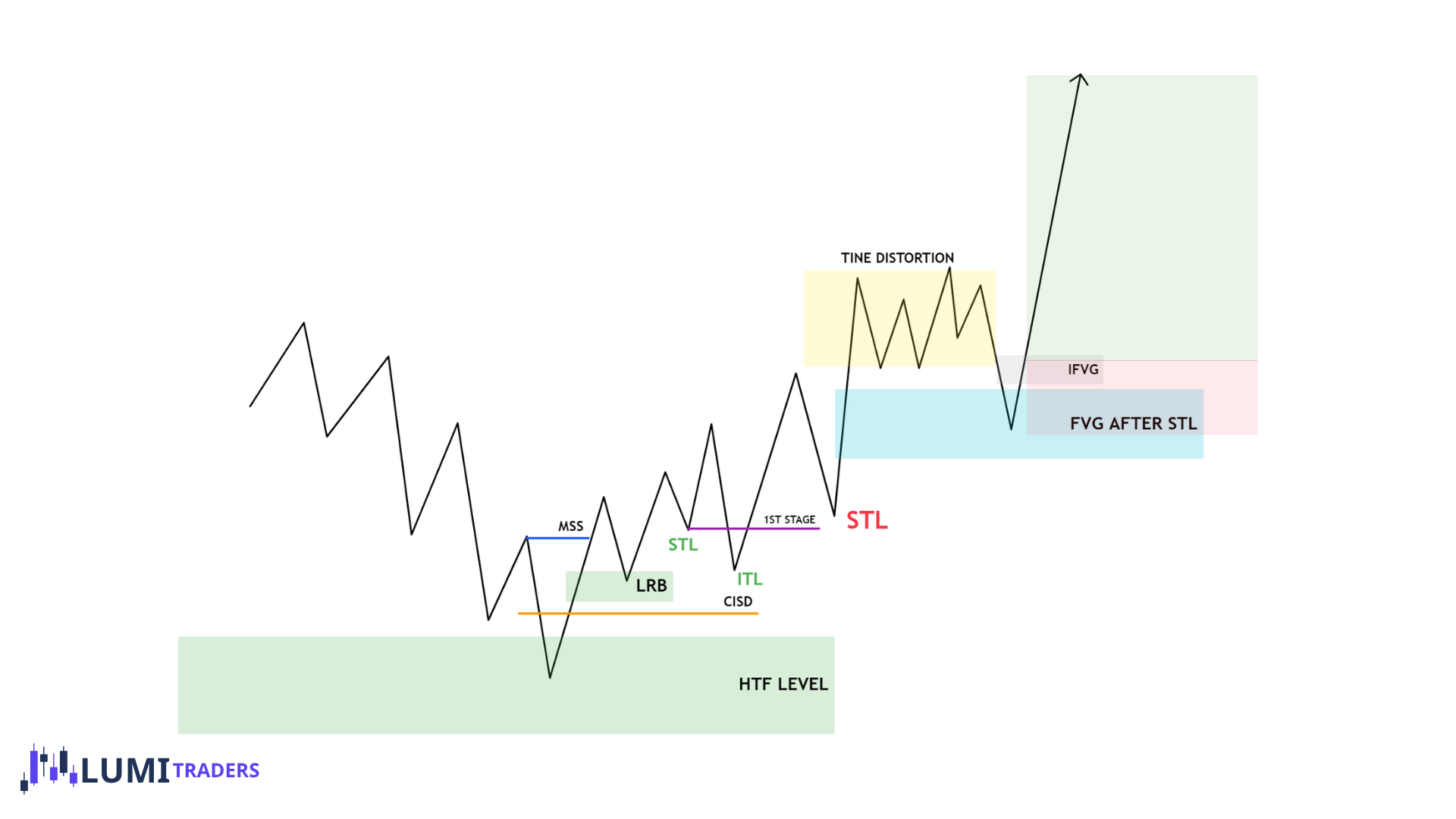
Top-Down MMXM Process
Step 1 — Identify the HTF MMXM
Ask:
What model am I currently inside?
For example:
4H MMSM?
1H MMBM?
30M MMBM?
Do not begin with the entry chart.
Begin with the larger structure.
Step 2 — Find the Relevant HTF PDA
Determine where the current program should react or terminate.
Mark:
FVG
OB
Breaker
Mitigation Block
Old high/low
Other meaningful PD Arrays
This gives us the location for the next important transition.
Step 3 — Confirm Smart Money Reversal
At the HTF level, require evidence.
Look for:
CISD
then:
MSS
IFVG can provide additional confirmation depending on the setup.
Without these, we may simply be seeing a normal reaction.
Step 4 — Determine the Stage
Once SMR is confirmed, ask:
Are we looking for first stage or second stage?
First Stage
Wait for:
first retracement after MSS
Second Stage
Wait for:
Time Distortion and the appropriate distortion sweep
This is what tells us which potential sweep matters.
Step 5 — Apply Timeframe Alignment
Examples:
1H MMXM → 5M
30M MMXM → 3M
Now the lower timeframe becomes the execution chart.