How the Weekly Candle Delivers From Monday to Friday
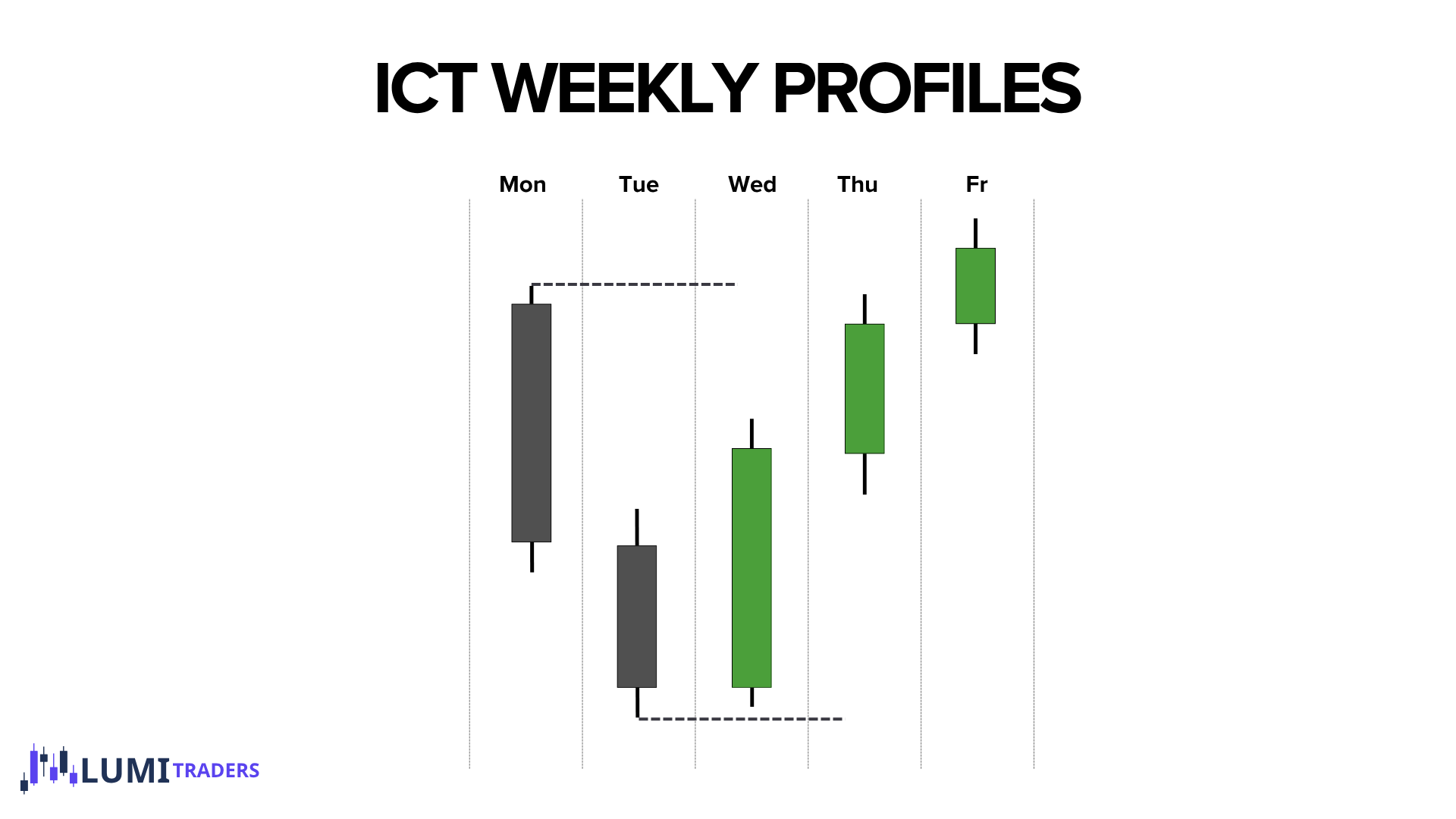
ICT Weekly Profiles are a framework for understanding how price may distribute across the 5 trading days of the week.
The purpose is not to predict on Sunday exactly what every daily candle will do.
Instead, we use the profile to continually answer:
Where is the weekly high likely to form?
Where is the weekly low likely to form?
Has the manipulation side of the weekly candle already formed?
Are we currently expanding toward the opposite side of the weekly range?
Has the weekly objective already been reached?
Should Thursday or Friday continue the move, or should we begin looking for retracement?
Think About the Weekly Candle First
Before looking at individual days, think about the final weekly candle.
A bullish weekly candle may ultimately form something similar to:
Open → Weekly Low → Weekly High → Close
A bearish weekly candle may form:
Open → Weekly High → Weekly Low → Close
The important question is:
Which day creates the manipulation wick, and which day creates the opposite extreme?
This is where Tuesday, Wednesday, Thursday, and Friday become useful.
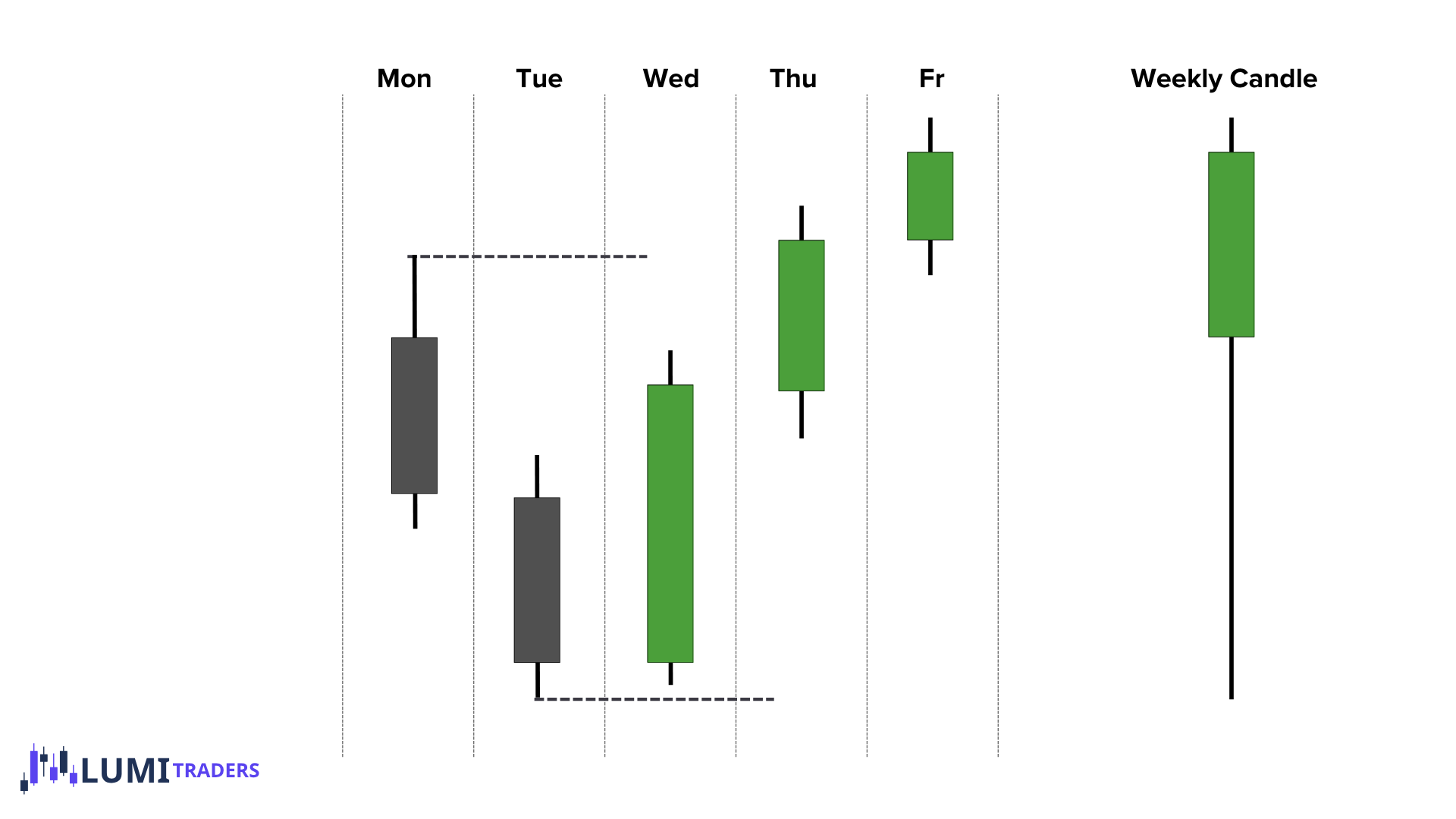
Monday — Build the Weekly Range
Monday often gives us the first important range of the week.
It creates:
Monday High
and
Monday Low
These become immediate liquidity references for Tuesday.
Monday may consolidate, move slowly toward a higher-timeframe PD Array, or begin the weekly directional move.
But in the classic Tuesday profile, Monday often does not complete the entire weekly manipulation.
Instead, Monday creates liquidity that Tuesday can attack.
So at the end of Monday, our job is not to say:
“Monday was bullish, therefore the week is bullish.”
Our job is to ask:
Where are Monday High and Low?
Where is the Weekly Open?
What HTF PD Array is price approaching?
Where is the real draw on liquidity?
Classic Tuesday Low/High of the Week
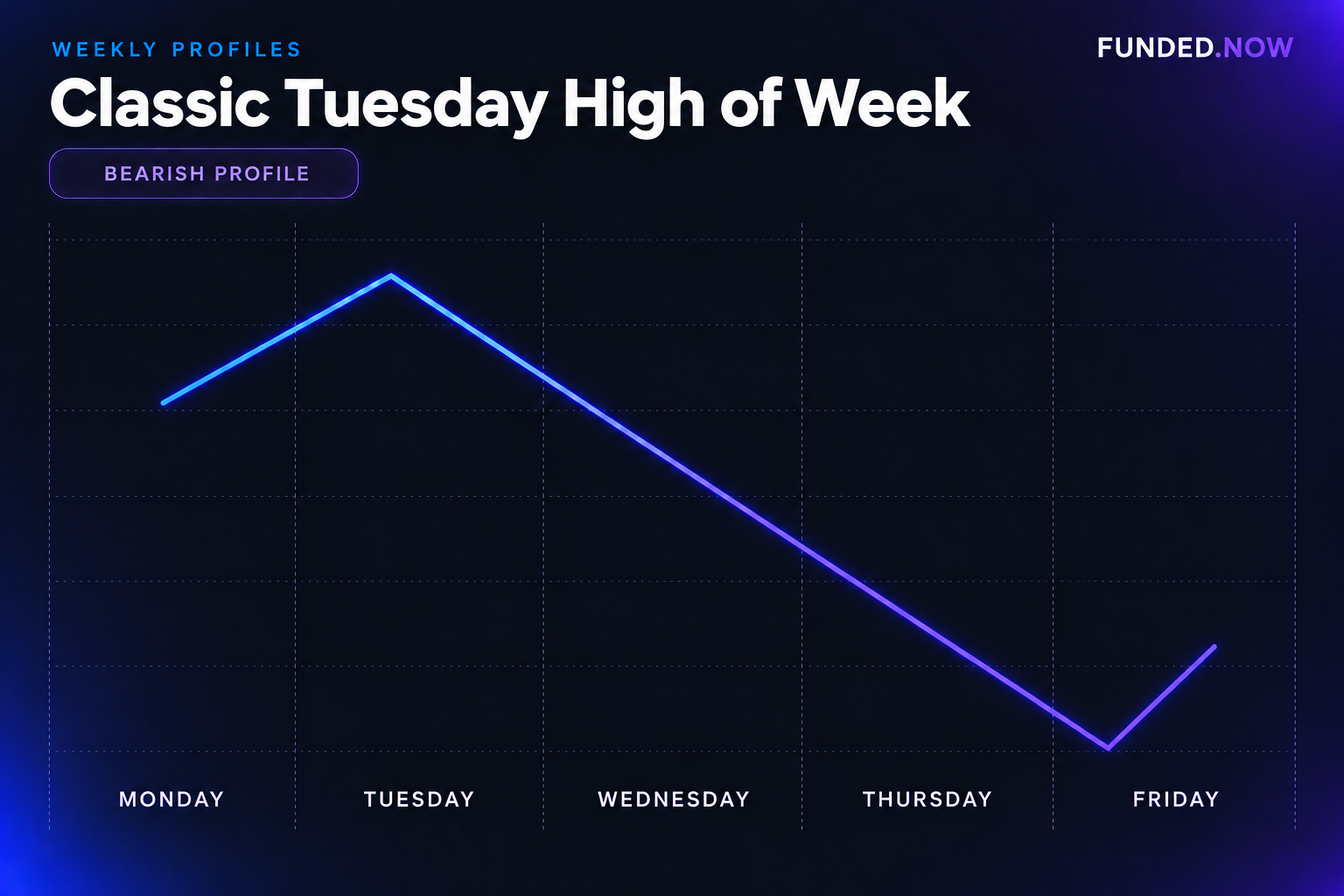
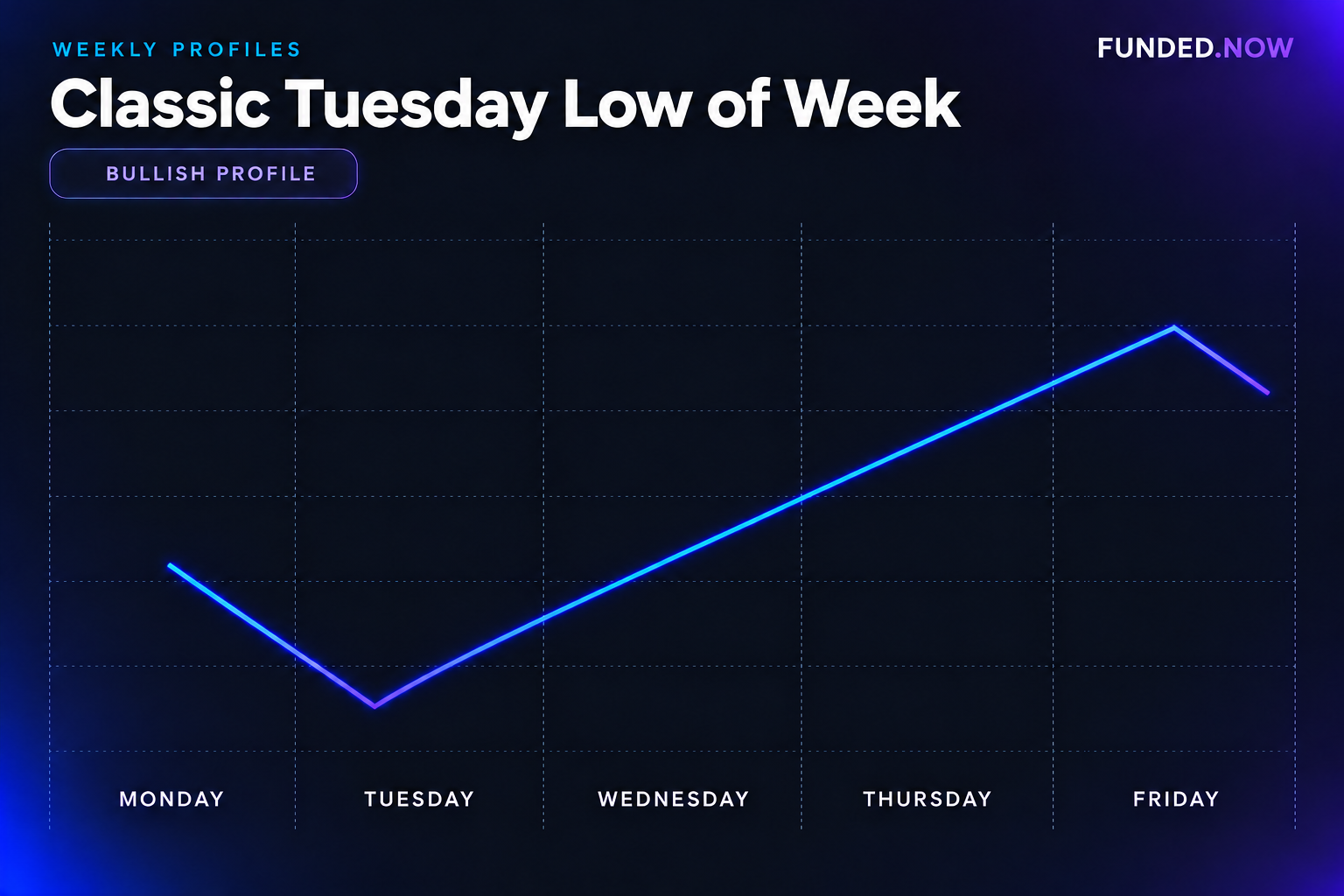
This is one of the most important bullish/bearish weekly profiles.
The higher-timeframe narrative is bullish/bearish.
Price may be trading toward a discount/premium PD Array.
Monday creates its range.
Then Tuesday trades lower/higher, takes liquidity, reaches the expected bullish/bearish location and creates the Low/High of the Week.
From there the weekly delivery changes.
Wednesday and Thursday can begin expanding higher/lower.
The opposite weekly extreme is then frequently made later in the week.
In the cleanest version:
Tuesday = Low of the Week / High of the Week
Friday = High of the Week / Low of the Week
The classic ICT Tuesday-low profile specifically describes Tuesday reaching the discount side of the HTF framework before the weekly expansion higher develops.
The classic ICT Tuesday-high profile specifically describes Tuesday reaching the premium side of the HTF framework before the weekly expansion lower develops.
Why Tuesday Low/High Matters
Once Tuesday has created the weekly low/high and that low/high remains protected, our thinking changes.
We no longer want to constantly look for new shorts/longs.
The weekly manipulation may already be complete.
Now Wednesday and Thursday can perform the distribution phase of the weekly Power of 3.
Our working model becomes:
Monday creates liquidity
→ Tuesday takes SSL/BSL and creates LOW / HIGH
→ Wednesday expands higher / lower
→ Thursday continues higher / lower
→ Friday potentially creates HIGH / LOW
This is the first major relationship students should memorize.
Not because it happens every week, but because when it does occur, it gives us a very clear weekly narrative.
Tuesday Extreme → Friday Opposite Extreme
This relationship is extremely important for how I would teach TGIF.
A very clean bullish weekly profile is:
Tuesday LOW (touched discount HTF level) → Wednesday bullish → Thursday bullish → Friday HIGH
A very clean bearish profile is:
Tuesday HIGH (touched premium HTF level) → Wednesday bearish → Thursday bearish → Friday LOW
Why is that useful?
Because by Friday the market has now traveled from one weekly extreme to the other.
The weekly range is mature.
The weekly objective may be complete.
That creates the conditions where a Friday retracement becomes much more meaningful.
This is where TGIF belongs.
What TGIF Actually Is
TGIF means:
Thank God It's Friday
But TGIF should not mean:
“It is Friday, therefore fade the market.”
That is not the setup.
The critical condition is:
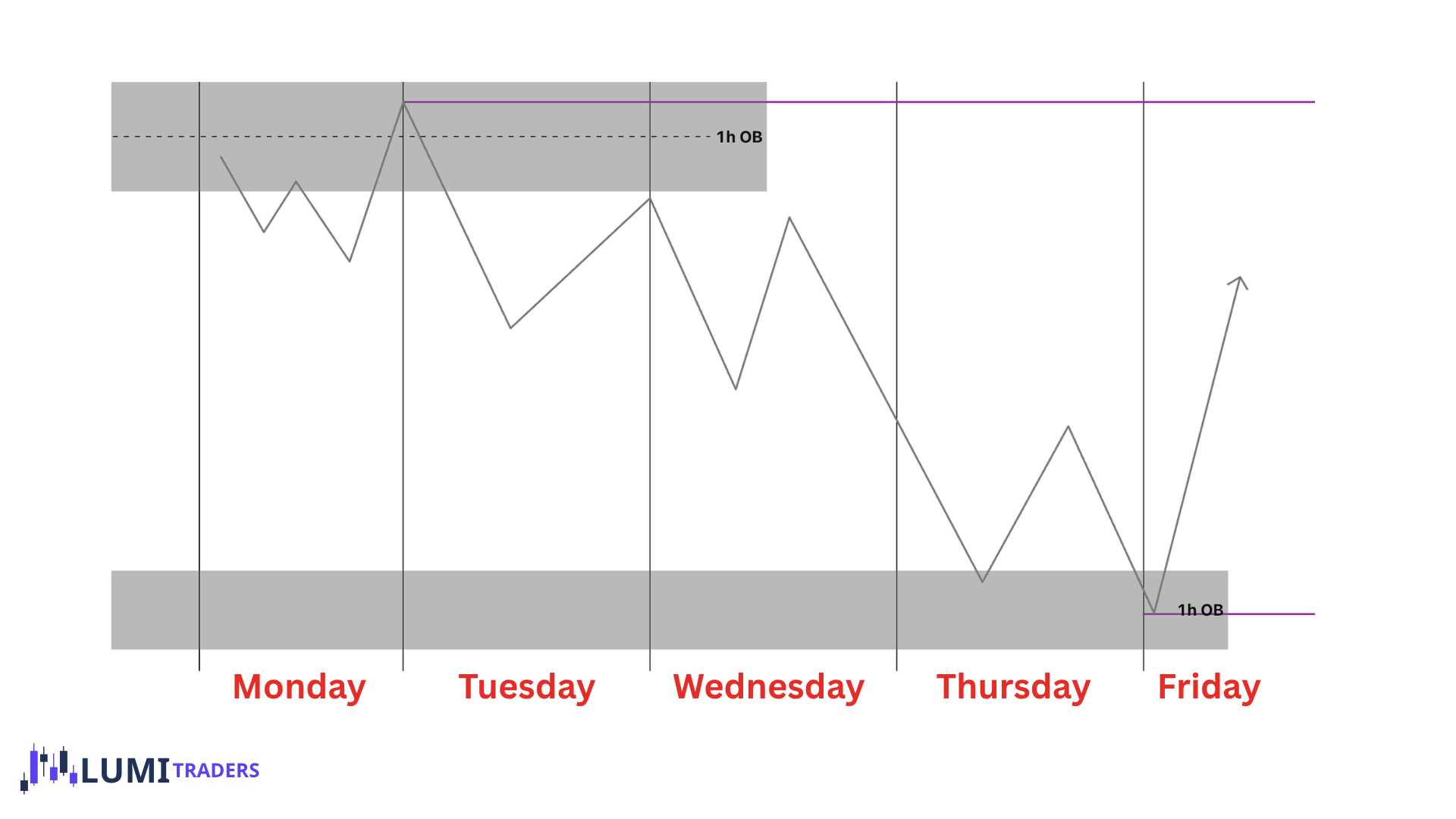
Friday must create the High or Low of the Week after reaching weekly objective.
A commonly taught TGIF framework then looks for price to retrace approximately 20–30% of the established weekly range back toward the inside of that range after Friday creates the new weekly extreme.
That condition changes everything.
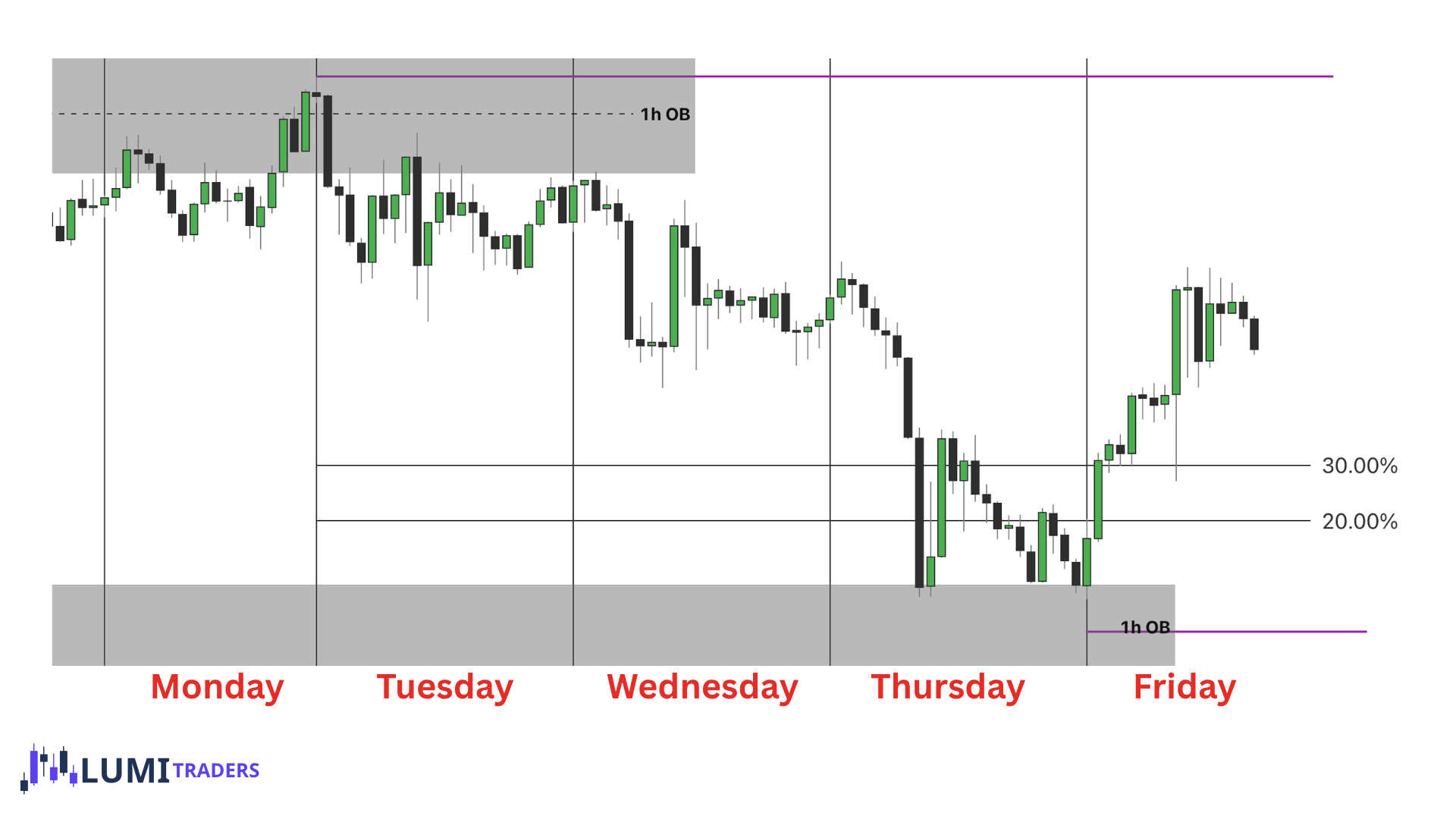
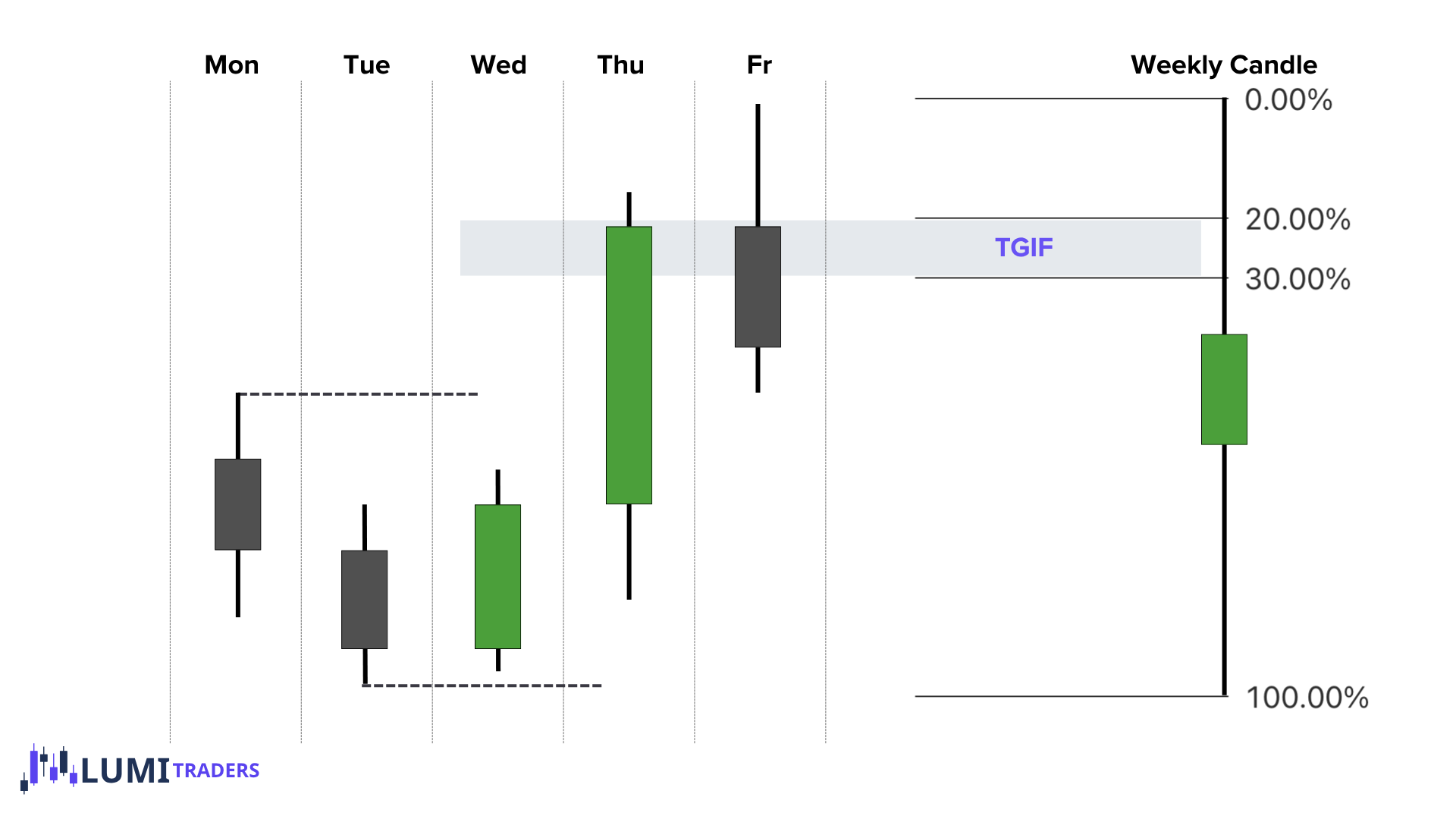
Here's how it works
1. I usually look for NQ or ES that had a very clear trend during the week.
2. After the trend is clear, and our high-timeframe (HTF) goal is reached (ideally, I want to see the weekly objective has been met on Thursday/Friday) expect the price to go back to its usual range by the end of the week.
A good general guideline is to watch for the price to go back about 20-30% of the weekly range.
Simple criteria to follow:
1. Clearly trending week.
If it is Bullish week, the low will form on Monday – Tuesday.
If it is Bearish week, the high will form on Monday – Tuesday.
If high/low was formed on Wednesday or Thursday, it will make Friday a low probability condition for return back to 20-30% of the weekly range.
2. Price expands through Thursday.
3. HTF objective is achieved.
If bullish, we want to see price tested HTF Premium Array.
If it is Bearish, we want to see price tested HTF Discount Array.
Quick tip: If all the criteria mentioned earlier are met, but the price hasn't tested 20-30% of the weekly range on Friday, expect it to happen on Sunday or during the AM session on Monday.
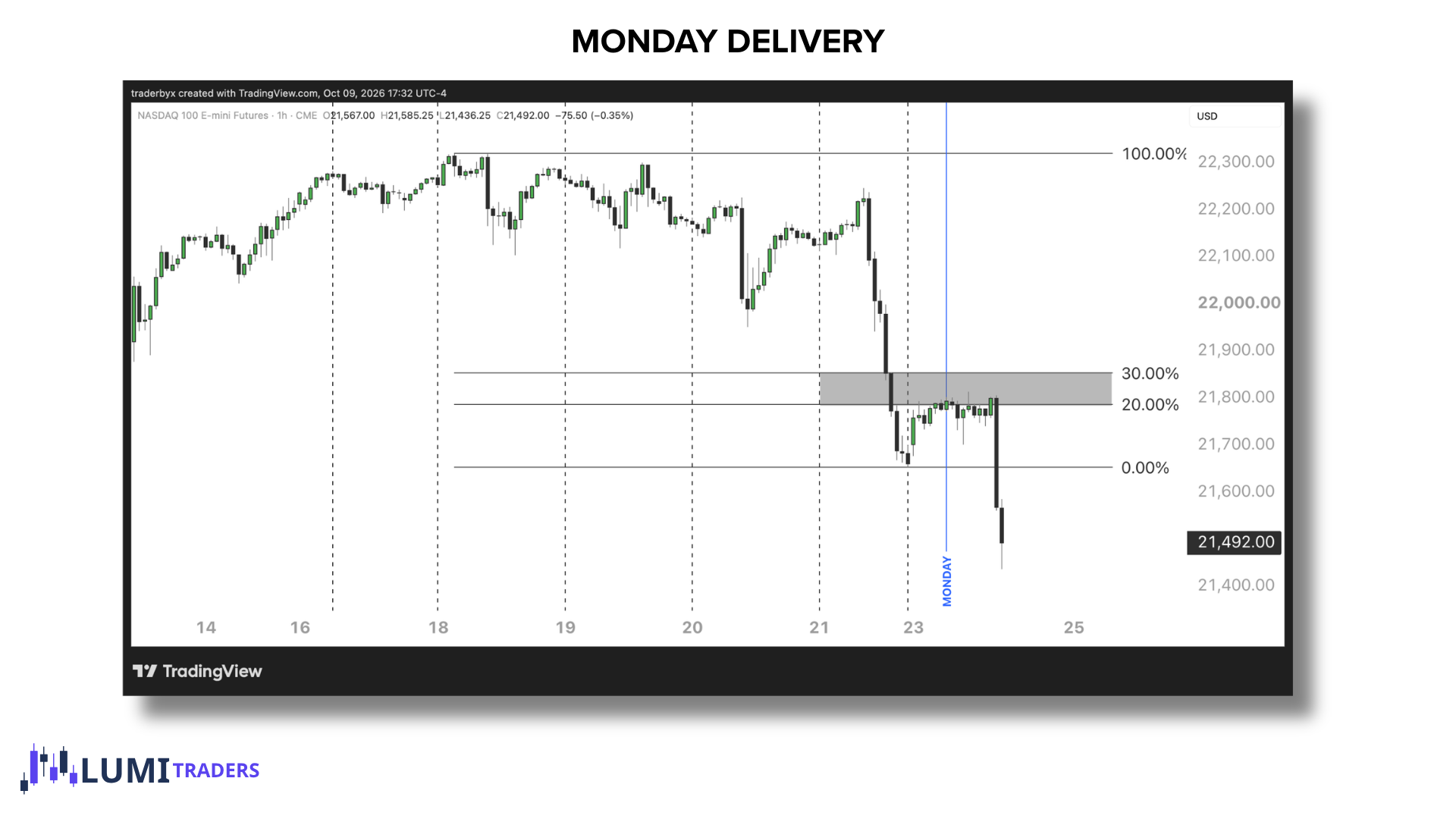
The Ideal TGIF
Suppose the higher-timeframe week is bullish.
Tuesday creates the Low of the Week.
Wednesday expands higher.
Thursday expands higher.
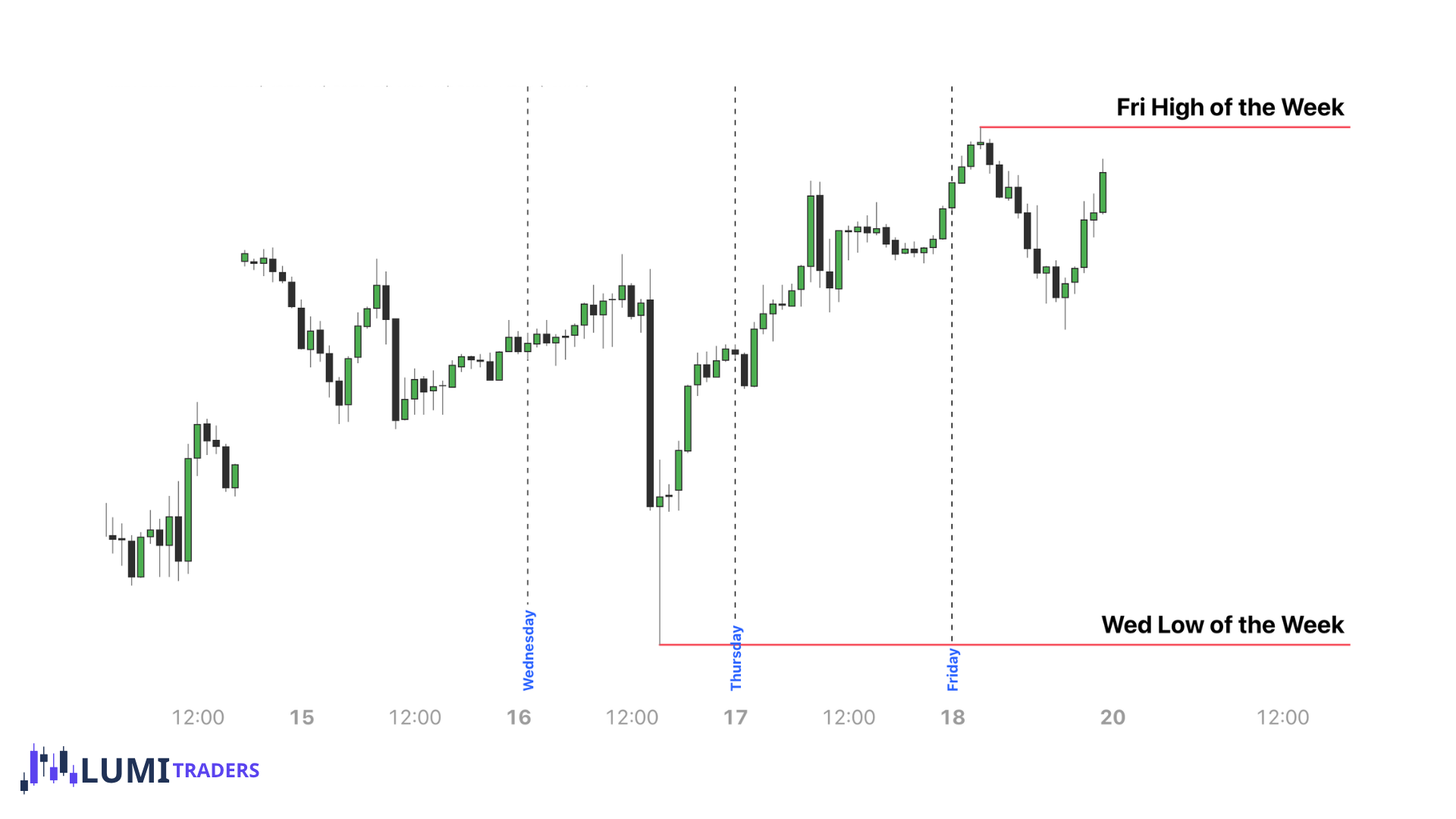
Friday continues higher and finally trades above Thursday's high, reaches the weekly objective and establishes:
Friday High of the Week
Now the week has both extremes:
Tuesday Low
and
Friday High
This is an ideal environment to start looking for a bearish TGIF retracement.
We are not necessarily calling for a new bearish weekly trend.
We are expecting a portion of the bullish weekly range to be given back.
So the complete model is:
Tuesday LOW
→ weekly bullish expansion
→ Friday makes NEW HIGH OF WEEK
→ LTF bearish reversal confirmation
→ retracement back inside weekly range
That is much more precise than simply:
“Friday after bullish week = short.”
TGIF Is Not a Full Weekly Reversal
This is another major point.
After a bullish week:
Friday can make the weekly high and retrace lower.
That does not automatically mean:
Next week must be bearish.
The Friday move may simply represent:
profit taking + weekly candle retracement
The broader bullish HTF structure can remain completely intact.
Likewise, a bullish TGIF after a bearish week can simply create the lower wick/retracement portion of the weekly candle.
So:
TGIF = retracement model
not automatically:
trend reversal model.
Wednesday High / Low of the Week
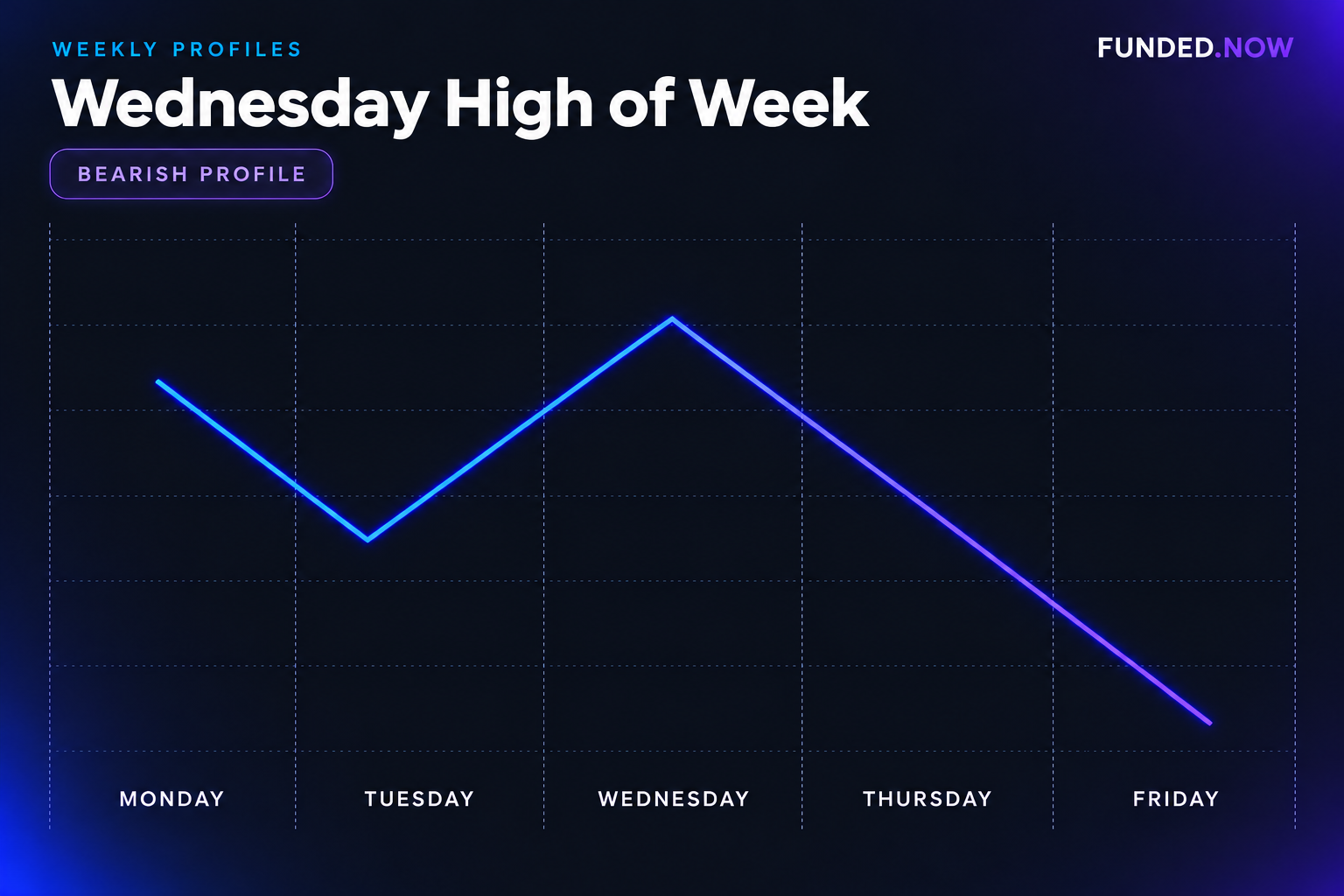
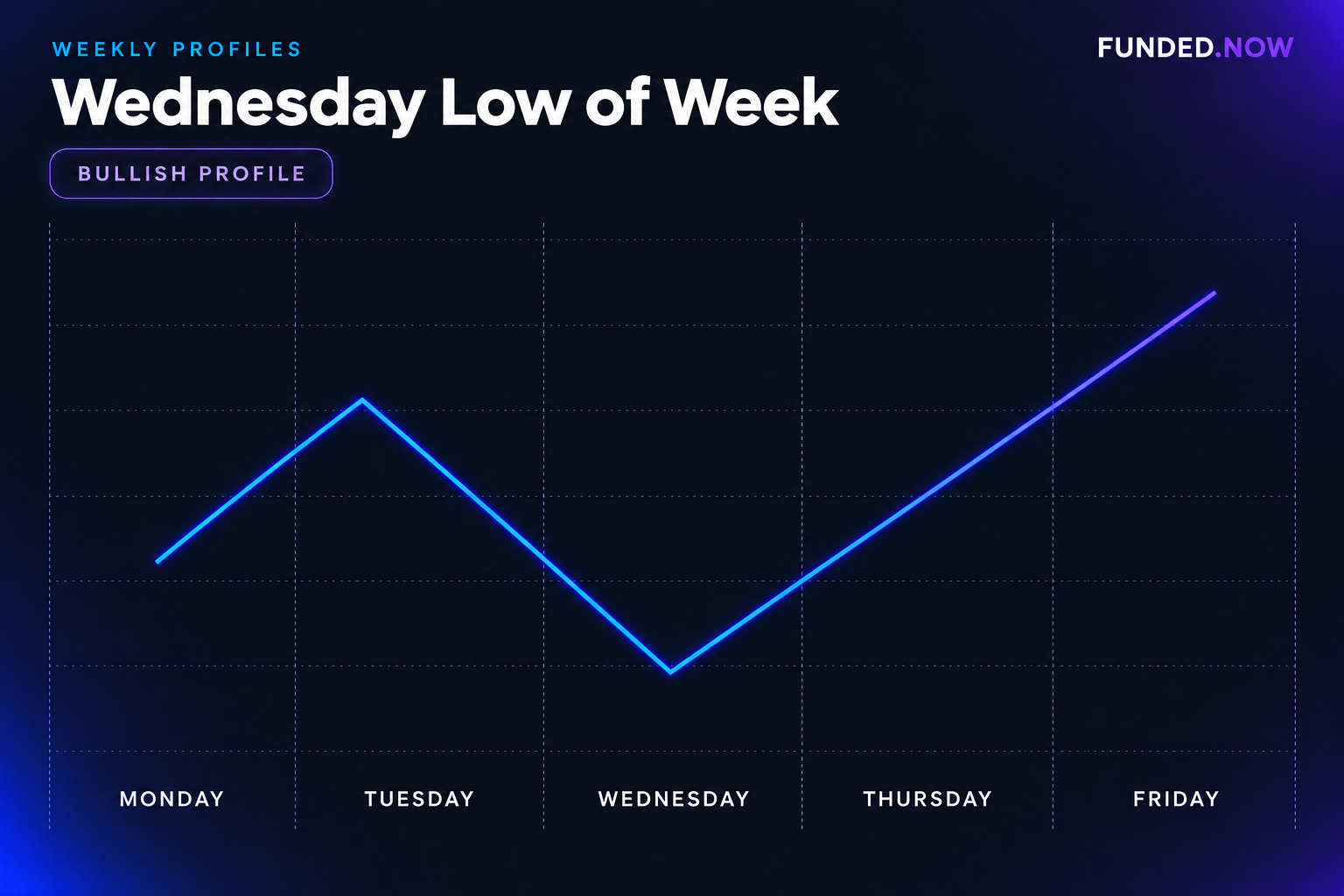
Tuesday does not always create the weekly extreme.
Sometimes Monday and Tuesday continue moving in one direction.
Example bullish scenario:
Monday closes bearish.
Tuesday closes bearish.
By Wednesday price reaches:
HTF discount / HTF level
Sell-side liquidity
Daily/Weekly bullish PD Array
Previous important low
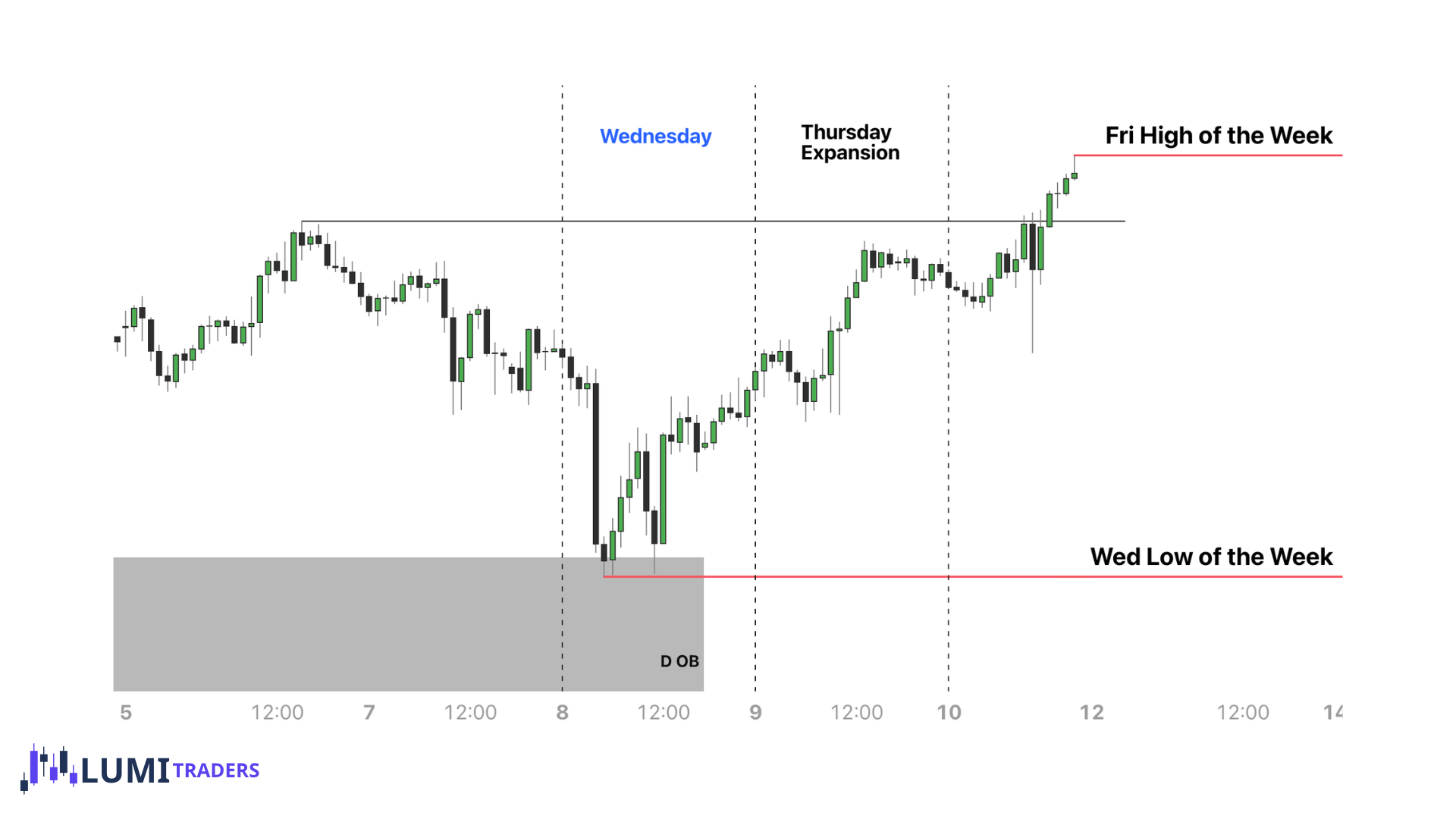
Wednesday then creates the Low of the Week.
This is a recognized ICT weekly profile—the same general bullish weekly delivery, but the extreme forms one day later.
What Usually Follows a Wednesday Low
If Wednesday forms the Low of the Week and confirms the bullish reversal, there are only Thursday and Friday left to create the opposing weekly delivery.
That means the move often needs to be more efficient.
Our working expectation becomes:
Wednesday LOW
→ Thursday bullish expansion
→ Friday continuation / potential weekly high
Compared with a Tuesday Low profile, there is simply less time available.
This is why Thursday becomes particularly important.
If Wednesday truly created the weekly low, Thursday should generally show evidence that bullish distribution has begun.
Tuesday Extreme vs. Wednesday Extreme
This is how I would teach the distinction:
Tuesday Extreme:
Weekly manipulation completes earlier
Classic Tuesday profile
Friday opposite extreme is very natural
Strong TGIF potential if Friday makes opposite extreme
Wednesday Extreme:
Weekly manipulation completes one day later
Less time for Thu–Fri distribution
Delayed weekly extreme
Thursday/Friday must deliver more efficiently
TGIF still possible if Friday creates opposite extreme
The key is:
Do not keep expecting Tuesday's profile once Tuesday has clearly failed to create the HTF reversal.
If Tuesday continues toward the HTF objective, Wednesday may simply become the correct turning day.
Wednesday Weekly Reversal
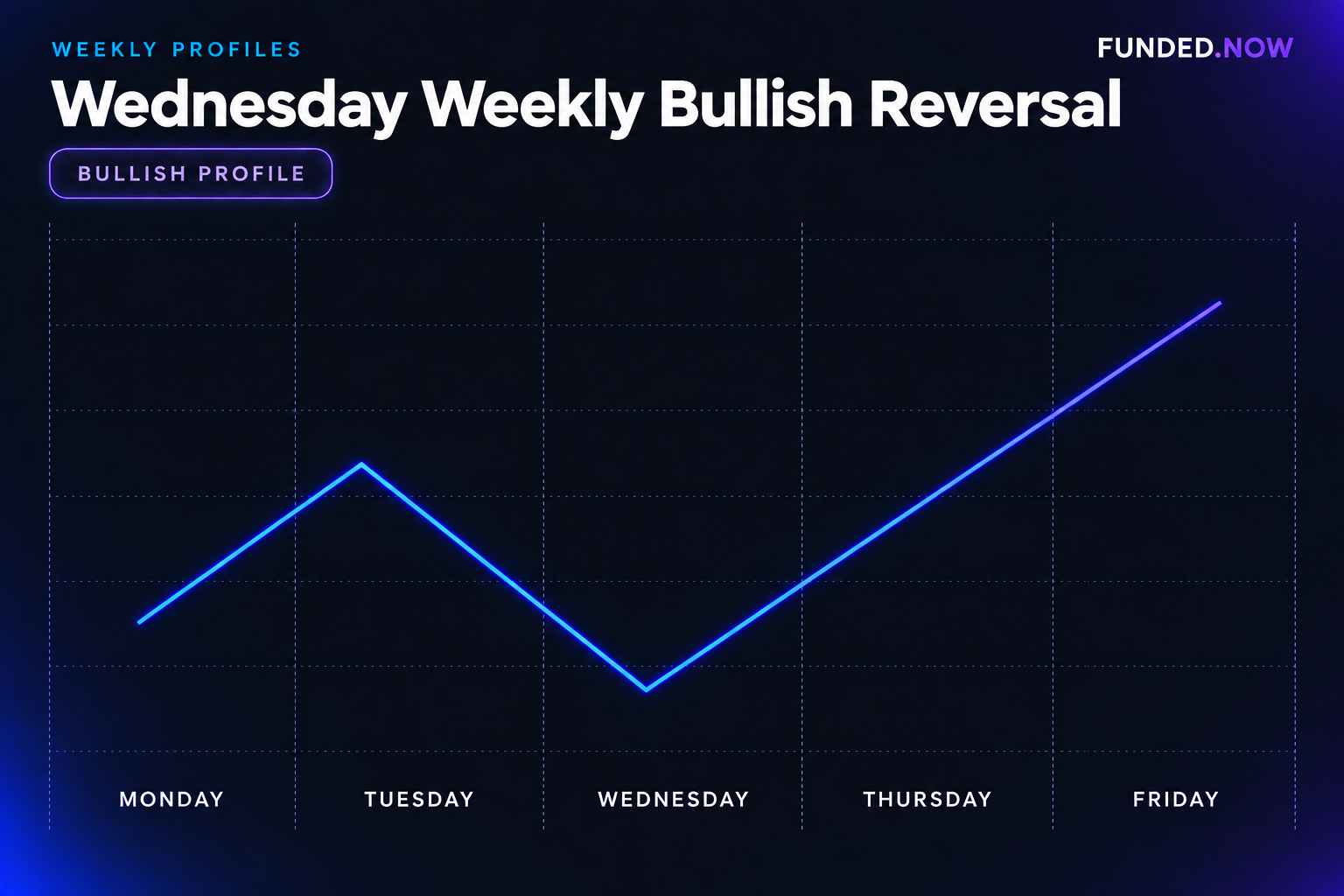
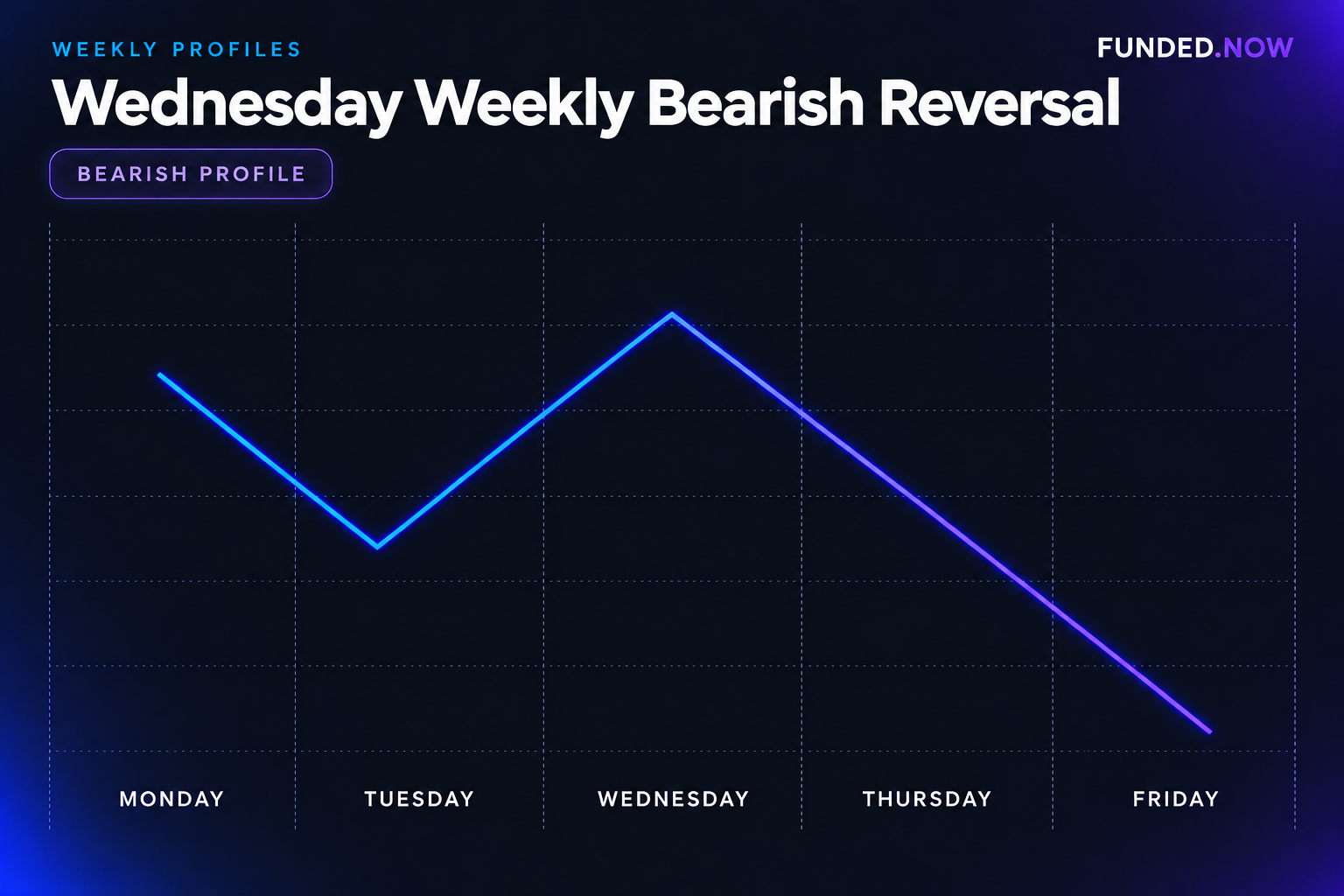
There is another Wednesday profile that is slightly different.
Instead of Monday and Tuesday simply extending toward one HTF level, they may build a two-day range or develop a directional move that is finally invalidated on Wednesday.
Then Wednesday creates the major reversal and the rest of the week moves in the opposite direction.
The ICT profile set includes a separate Wednesday Weekly Reversal family in addition to the basic Wednesday High/Low profile.
The practical lesson is the same:
By Wednesday, if the earlier weekly narrative has failed and price reaches an important HTF area, be prepared to reclassify the weekly profile.
Do not force Tuesday's idea for the rest of the week.
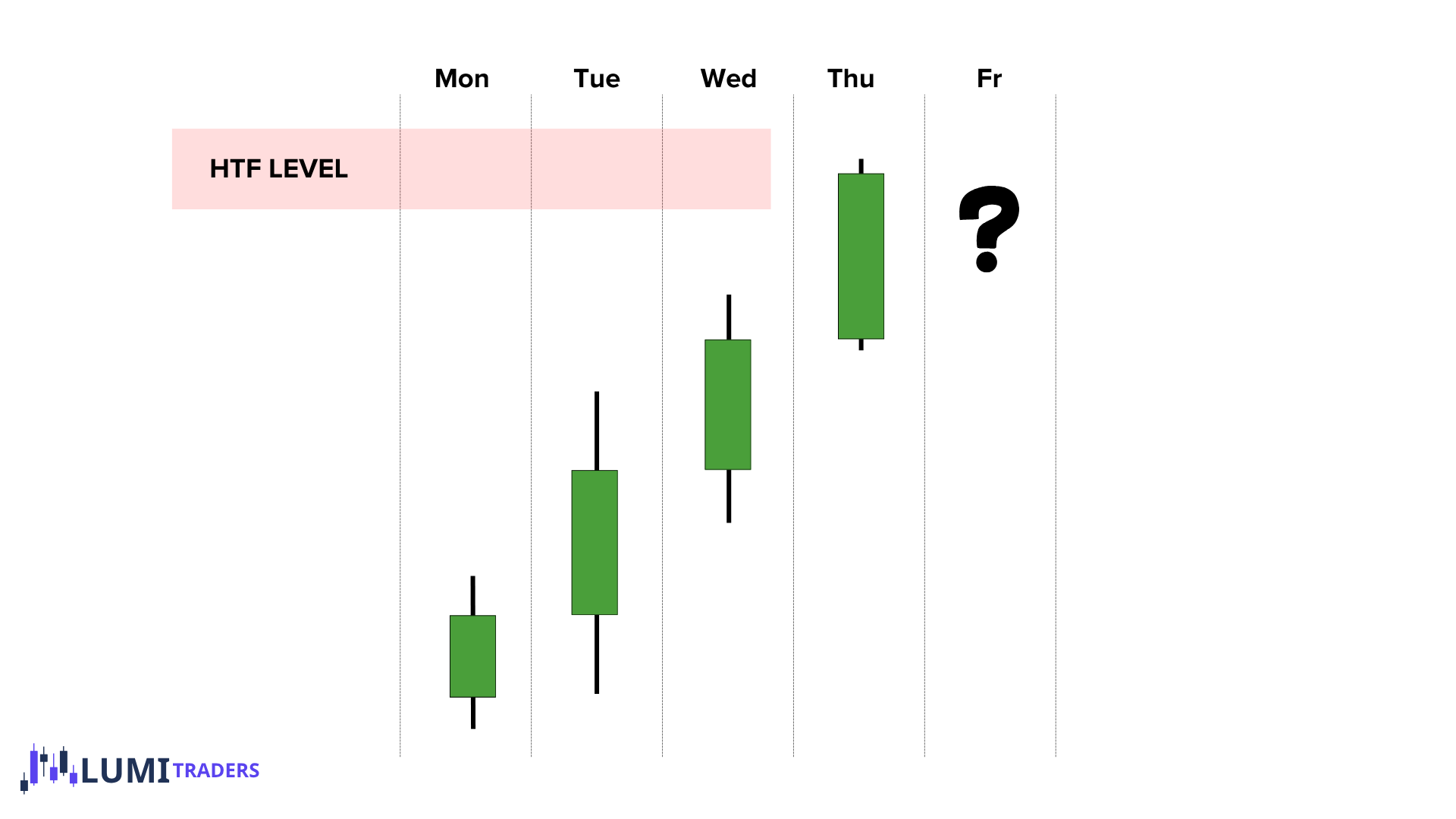
What If Monday, Tuesday and Wednesday Are All Bullish?
Same works with bearish scenario.
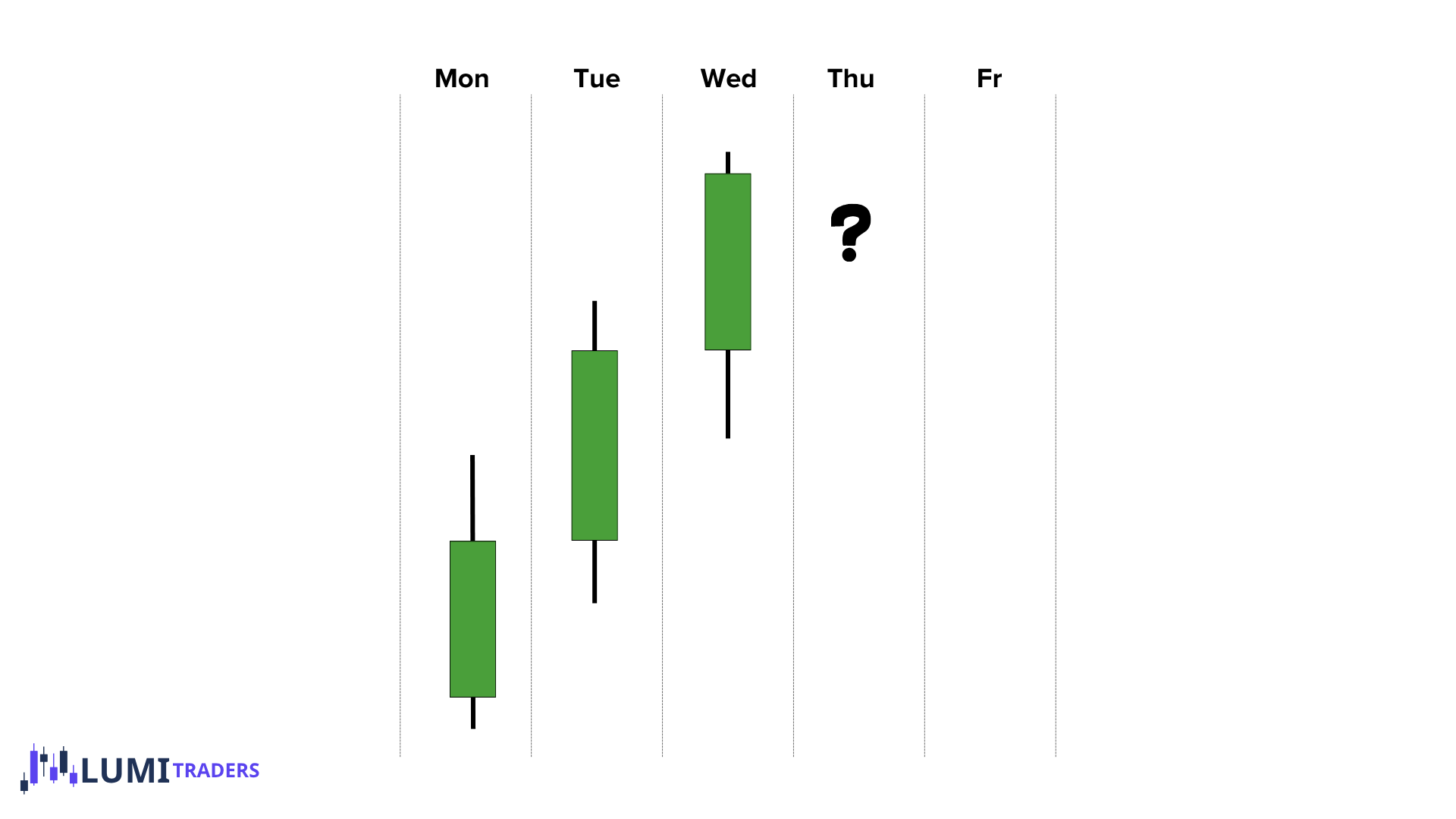
Suppose:
Monday = bullish close
Tuesday = bullish close
Wednesday = bullish close
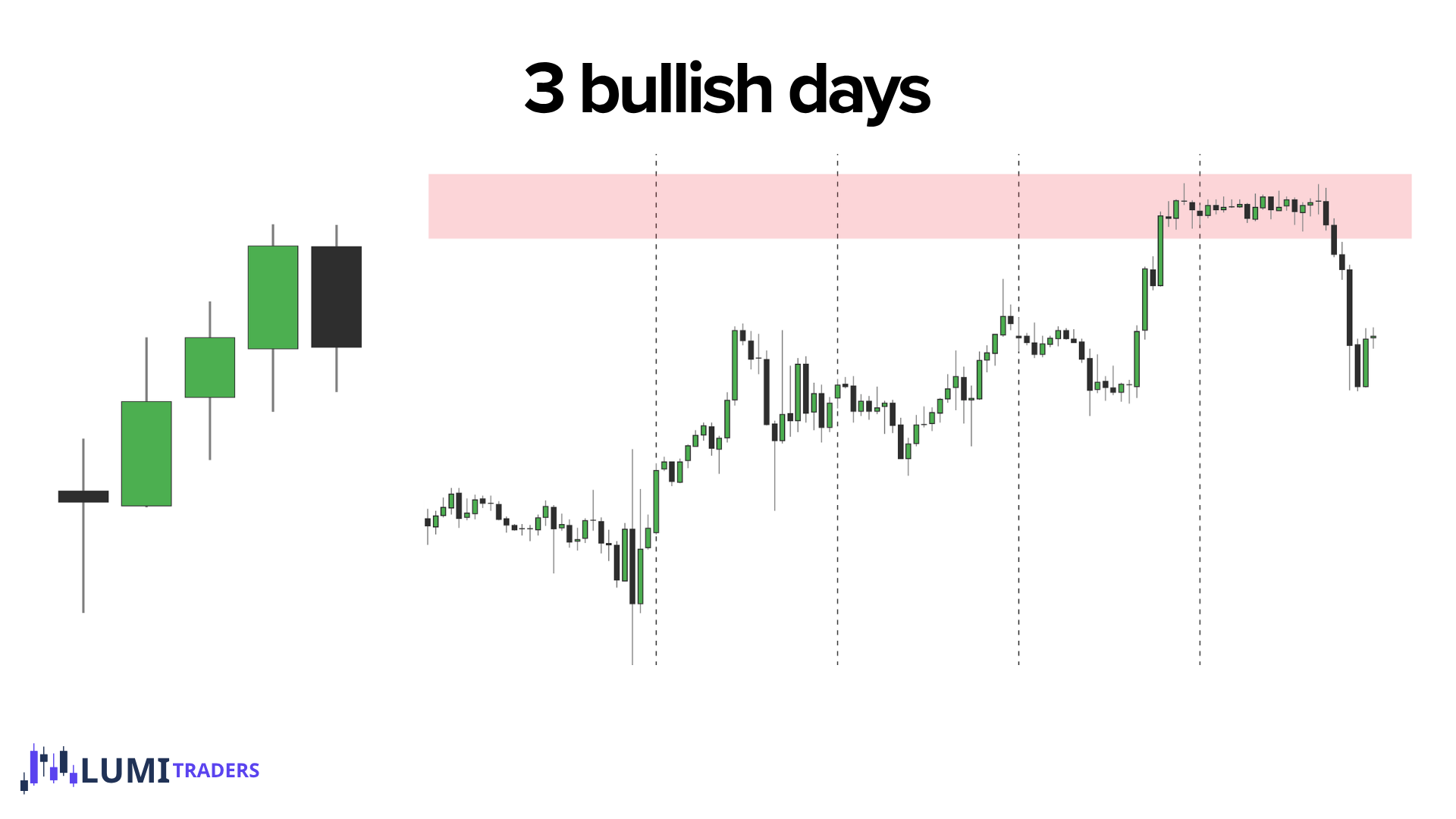
Now we enter Thursday with 3 consecutive up-close daily candles.
The wrong conclusion is:
“3 bullish days means Thursday will definitely be bullish.”
Instead, ask:
Where did those 3 candles deliver price?
If they delivered price directly into:
HTF premium
Weekly BSL
Previous Week High
Major Daily bearish FVG
Daily/Weekly bearish OB
Another important objective
then Thursday becomes a very interesting candidate for:
High of the Week + retracement/reversal
The market has already expanded for three days.
We should become less interested in chasing the same move and more interested in whether the weekly objective has been completed.
The 4th Daily Candle
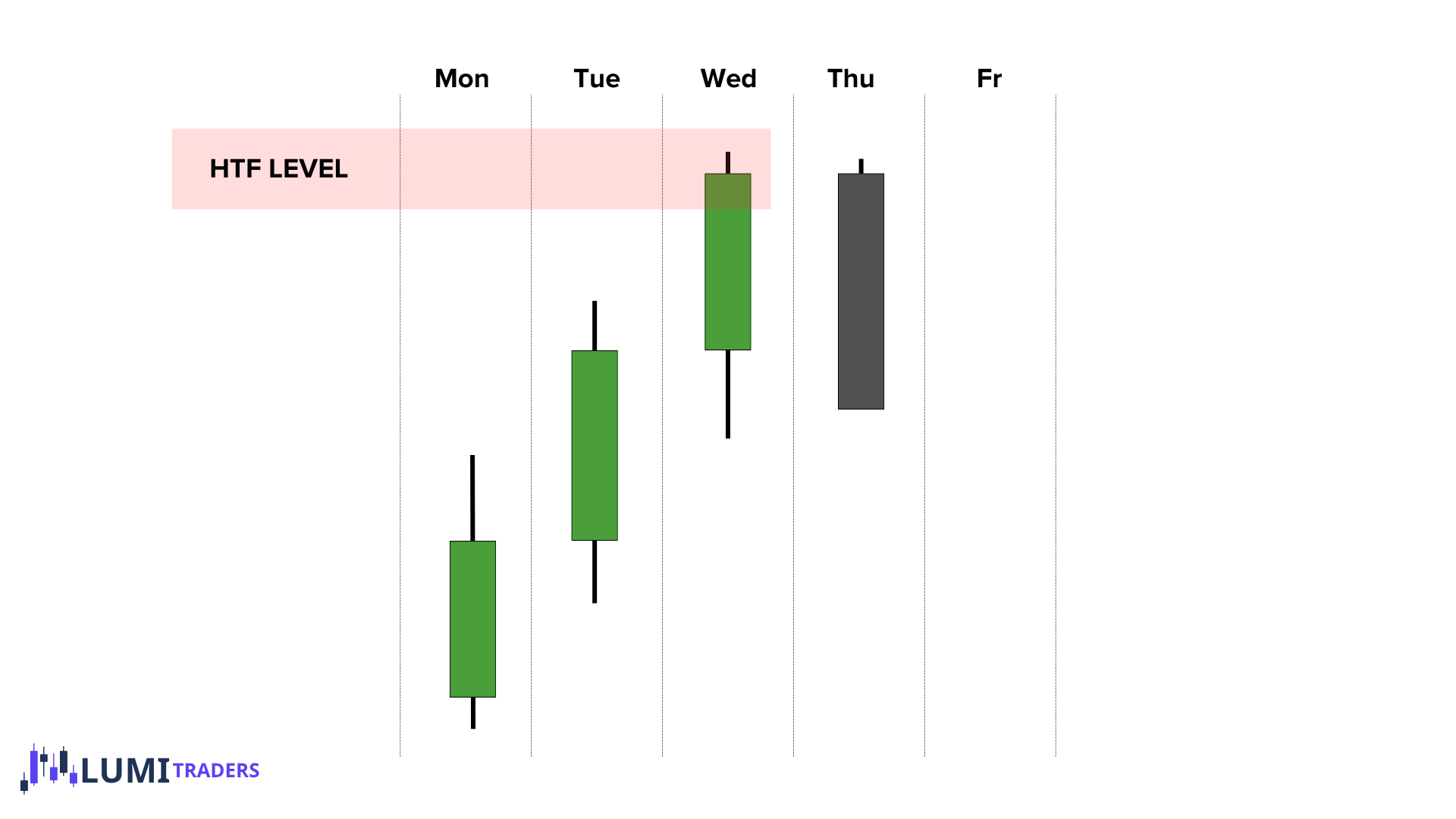
After 3 strong daily candles in the same direction, the 4th candle—usually Thursday—often deserves special attention.
The 4th candle may look different from the first three.
Instead of another full-body expansion candle, we may see:
Smaller real body
Big expansion candle towards Wednesday Low/High
Longer opposing wick
Liquidity sweep
Doji / indecision
Opposite-color close
Initial continuation followed by strong reversal
Retracement back into Wednesday's range
This is especially meaningful if Thursday reaches the week's HTF objective.
This is a working tendency/context tool, not a fixed statistical law.
What If Monday Through Thursday Are All Bullish?
Same applies for bearish scenario!
Now the condition is even more extended.
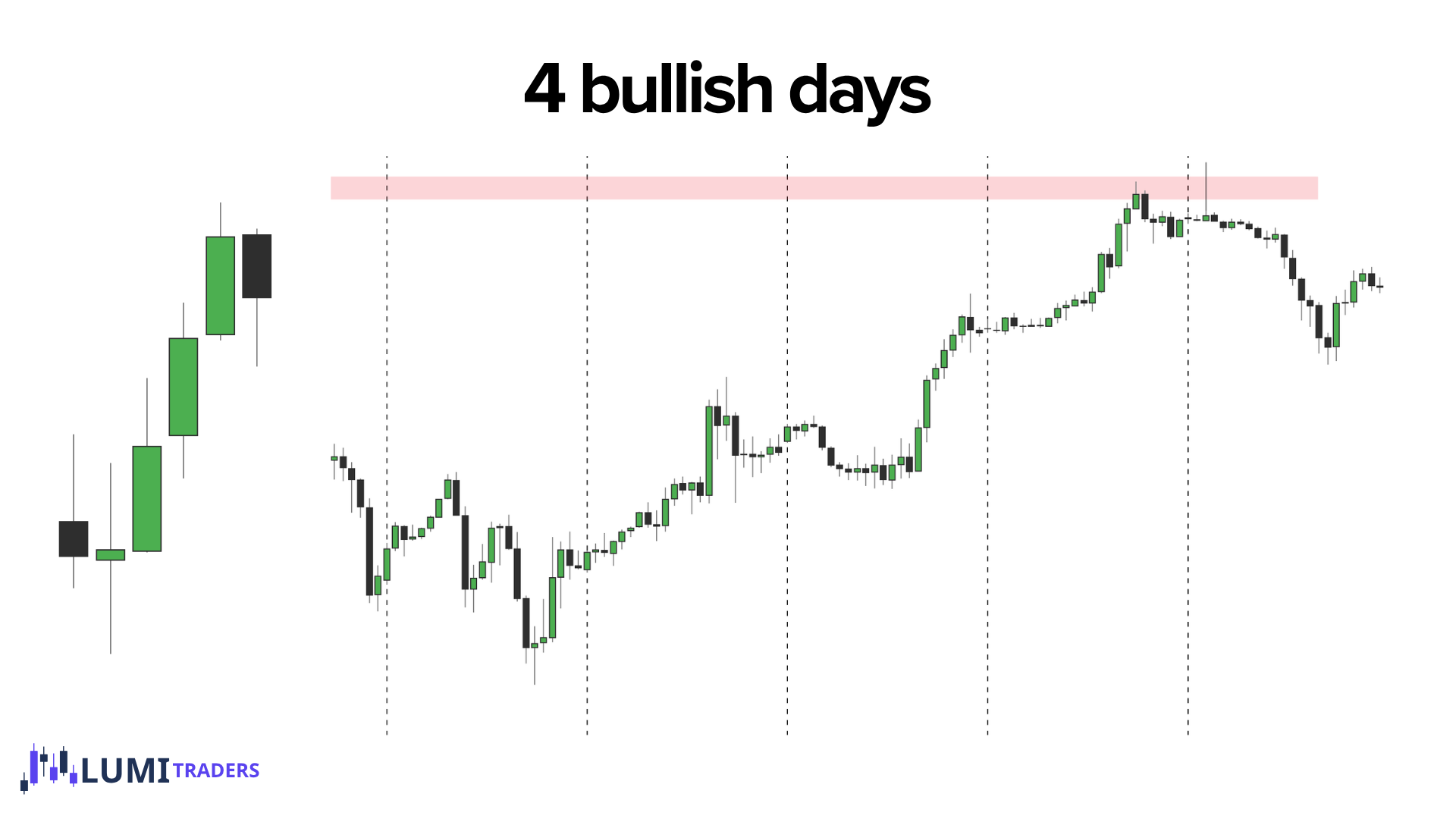
We have 4 consecutive bullish daily candles.
By Friday we should be especially careful chasing fresh longs if the weekly objective is close.
A very useful model becomes:
Monday ↑
Tuesday ↑
Wednesday ↑
Thursday ↑
Friday raids BSL and creates HIGH OF WEEK
→ TGIF retracement
This is exactly where the fifth candle can look very different from the first four.
Friday may:
Initially continue higher
Create a long upper wick
Reverse intraday
Close bearish
Or remain bullish but give back 20–30% of the weekly range intraday
The daily candle color is less important than the Friday weekly-extreme + retracement structure.
3–4 Same-Direction Days Do Not Mean Automatic Countertrend
This rule is critical.
Do not short because:
“We've had 3 green days.”
Do not buy because:
“We've had 4 red days.”
Instead use:
Number of expansion days + HTF location + weekly liquidity objective + reversal confirmation
3 bullish days with untouched BSL far above can easily become four bullish days.
4 bullish days at a completed weekly objective is a very different environment.
Consolidation Thursday Reversal
Not every Thursday reversal comes after three directional candles.
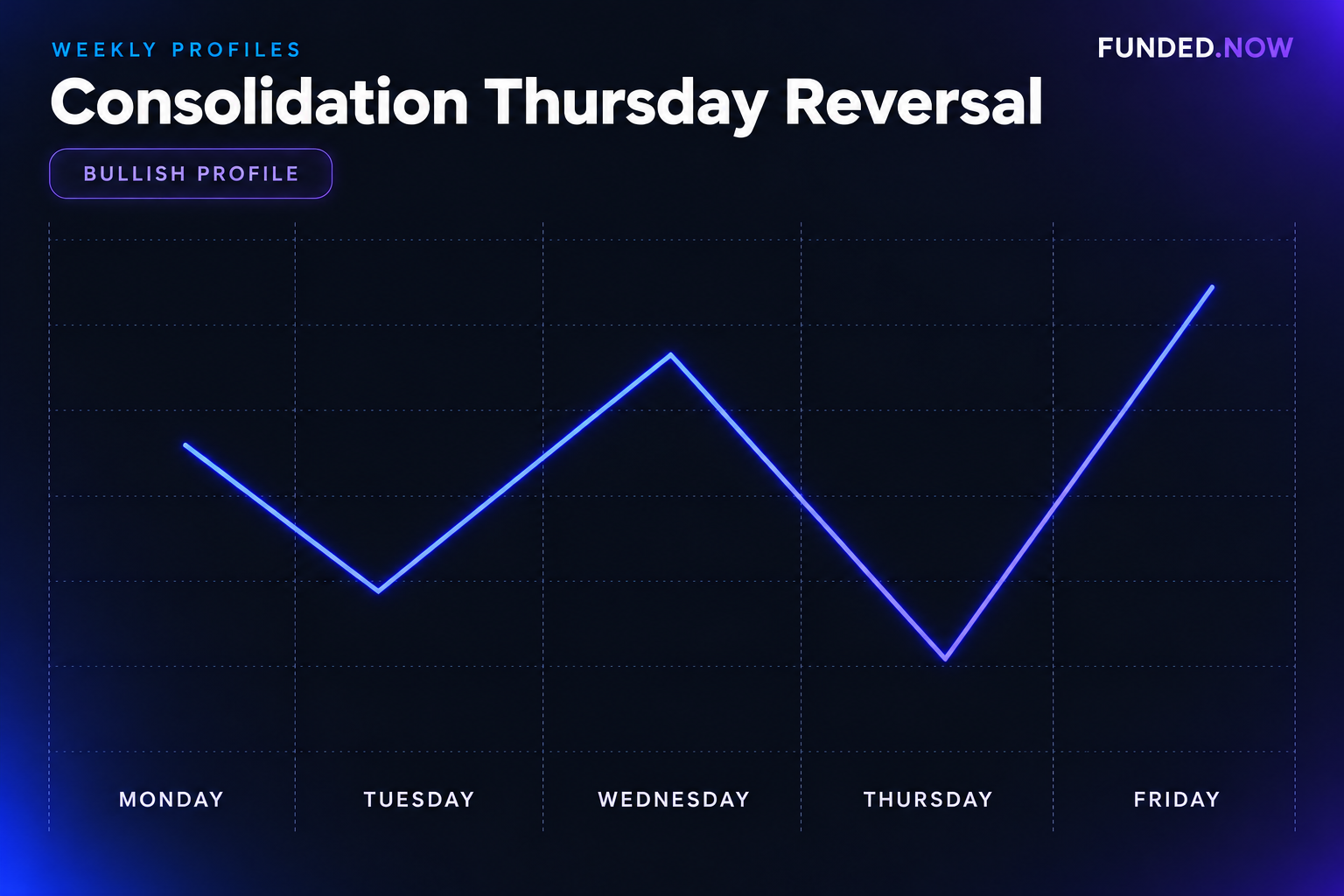
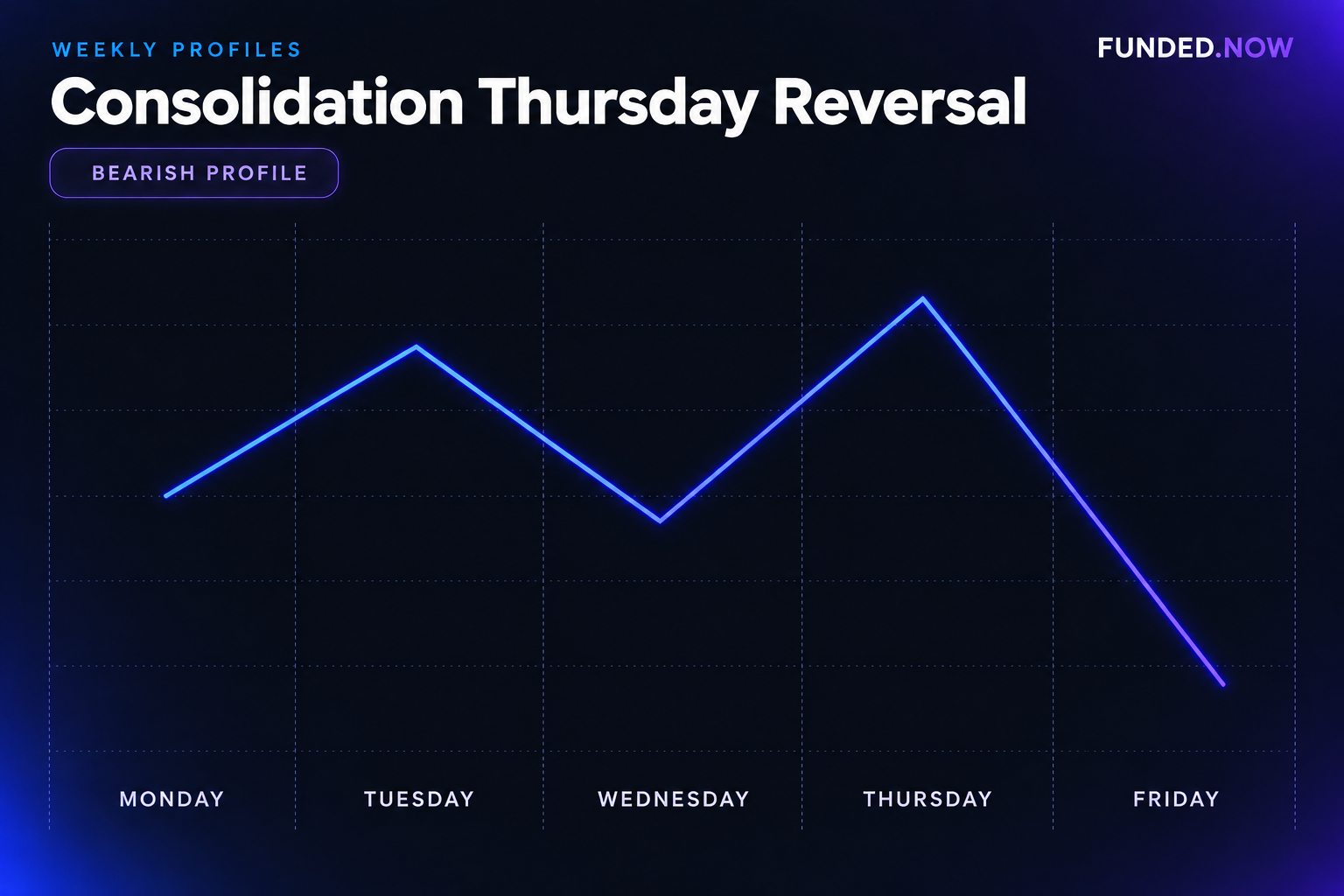
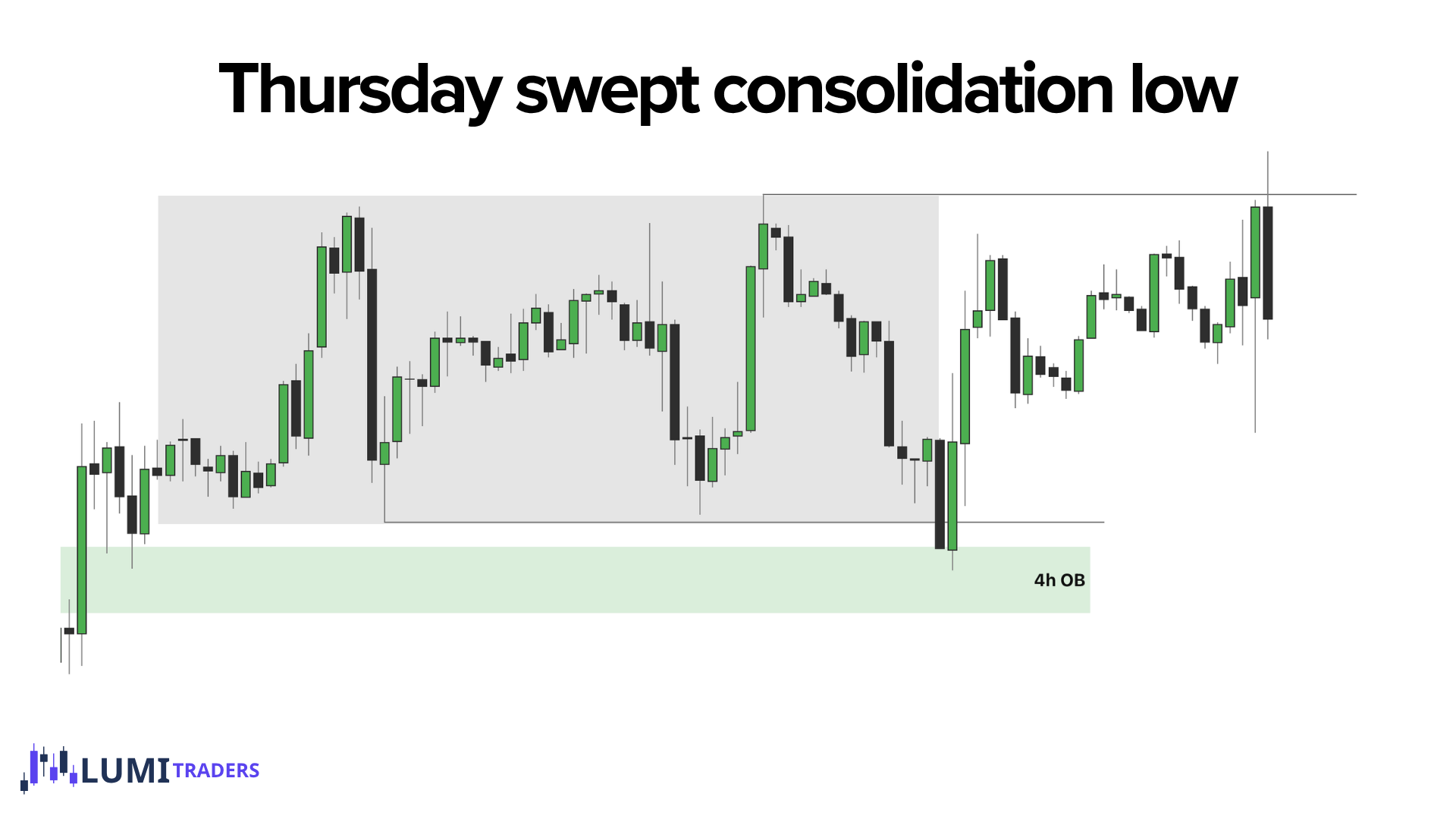
There is also an ICT weekly profile where Monday through Wednesday largely consolidate.
Then Thursday moves outside the developing weekly range, takes liquidity and reverses.
For a bullish Thursday reversal:
Mon–Wed range → Thursday sweeps the downside → bullish reversal
For bearish:
Mon–Wed range → Thursday sweeps the upside → bearish reversal
This is recognized as the Consolidation Thursday Reversal profile.
Consolidation Midweek Expansion
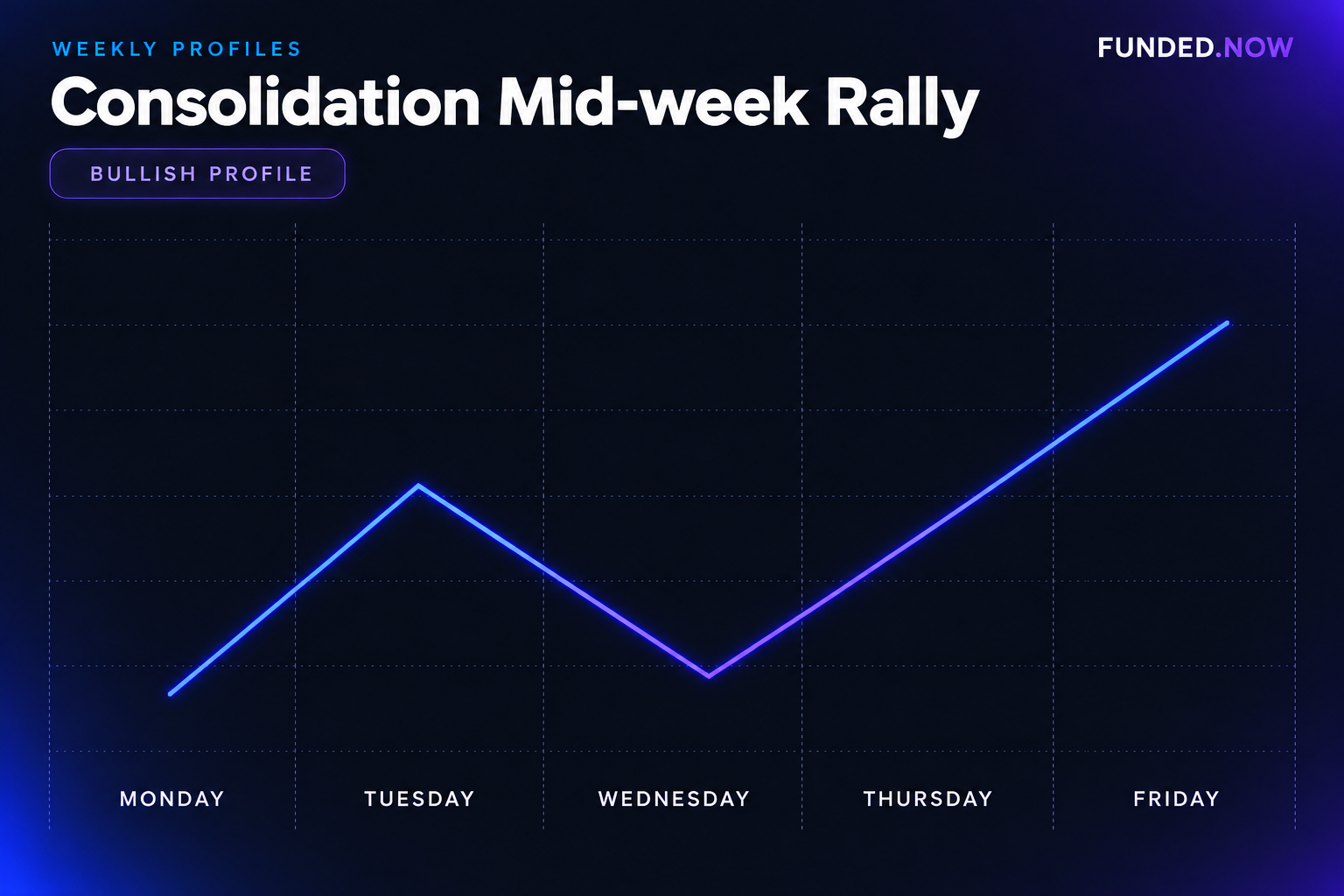
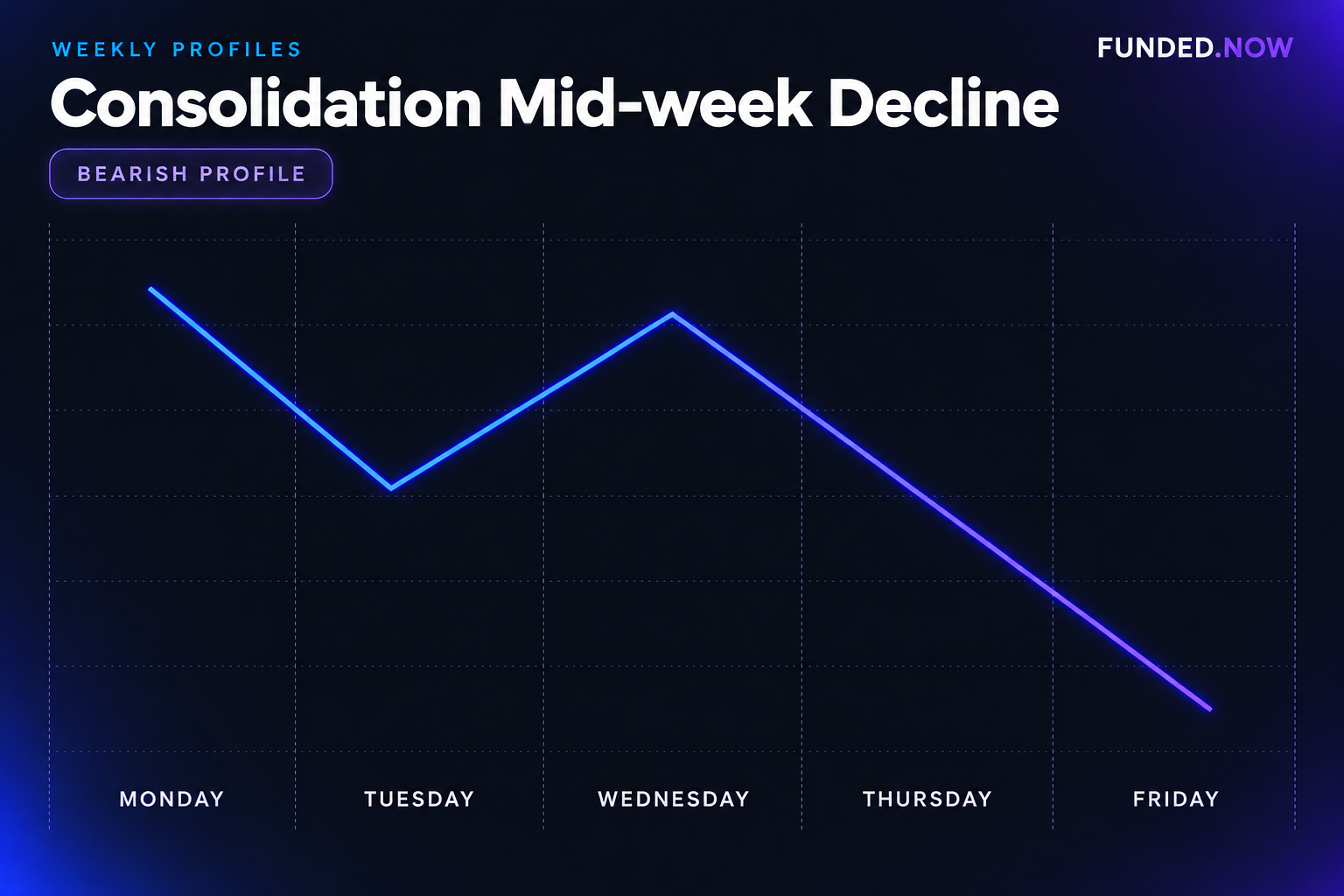
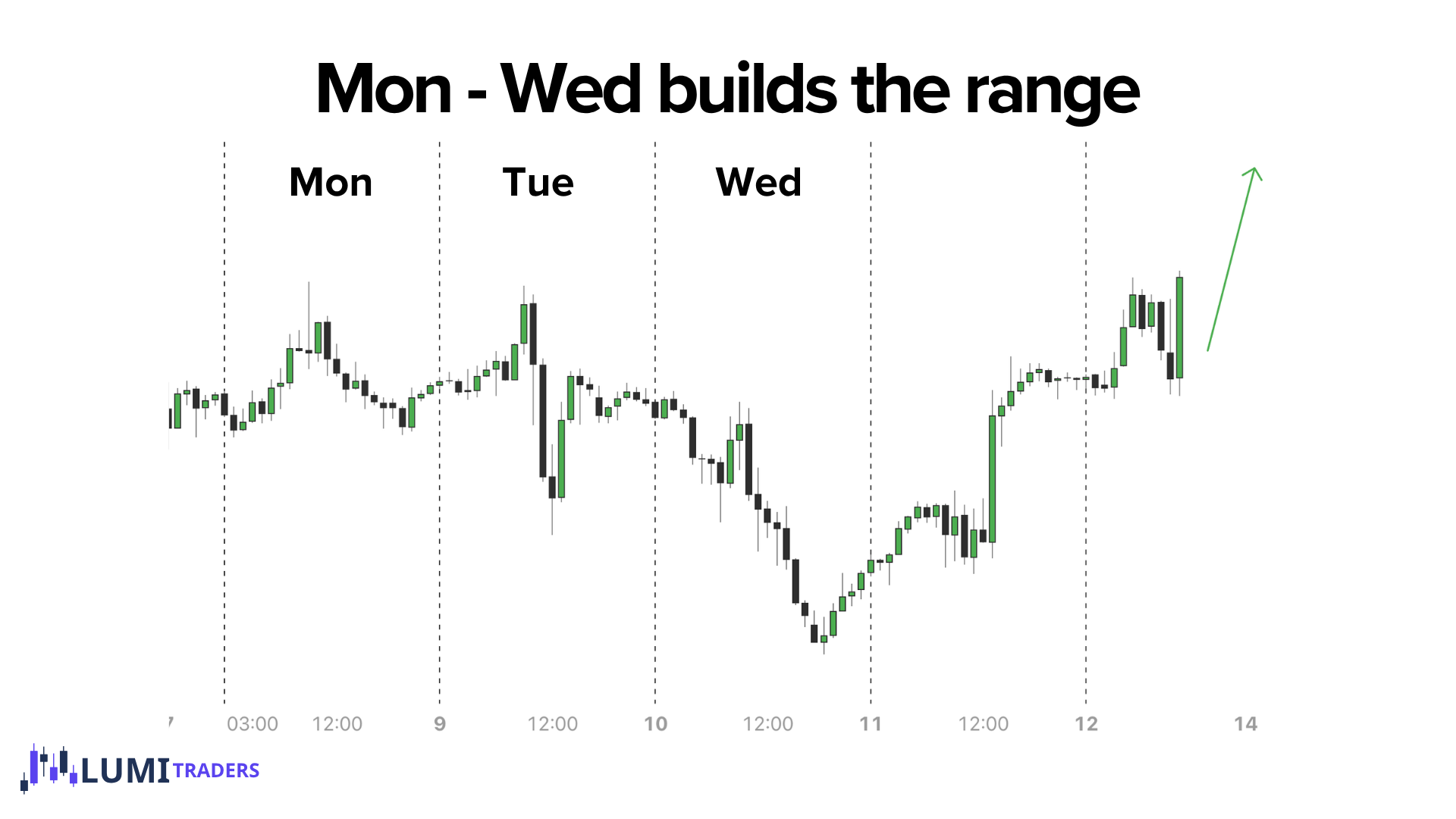
If Monday through Wednesday consolidate, Thursday does not always reverse.
Sometimes the market simply builds energy early in the week and then begins the directional move later.
Bullish:
Mon–Wed consolidation → Thursday breakout higher → Friday continuation
Bearish:
Mon–Wed consolidation → Thursday breakdown → Friday continuation
These are the Consolidation Midweek Rally / Decline profiles.
So after three days of consolidation, do not automatically fade Thursday.
The HTF draw determines whether we expect reversal or breakout.
Seek & Destroy
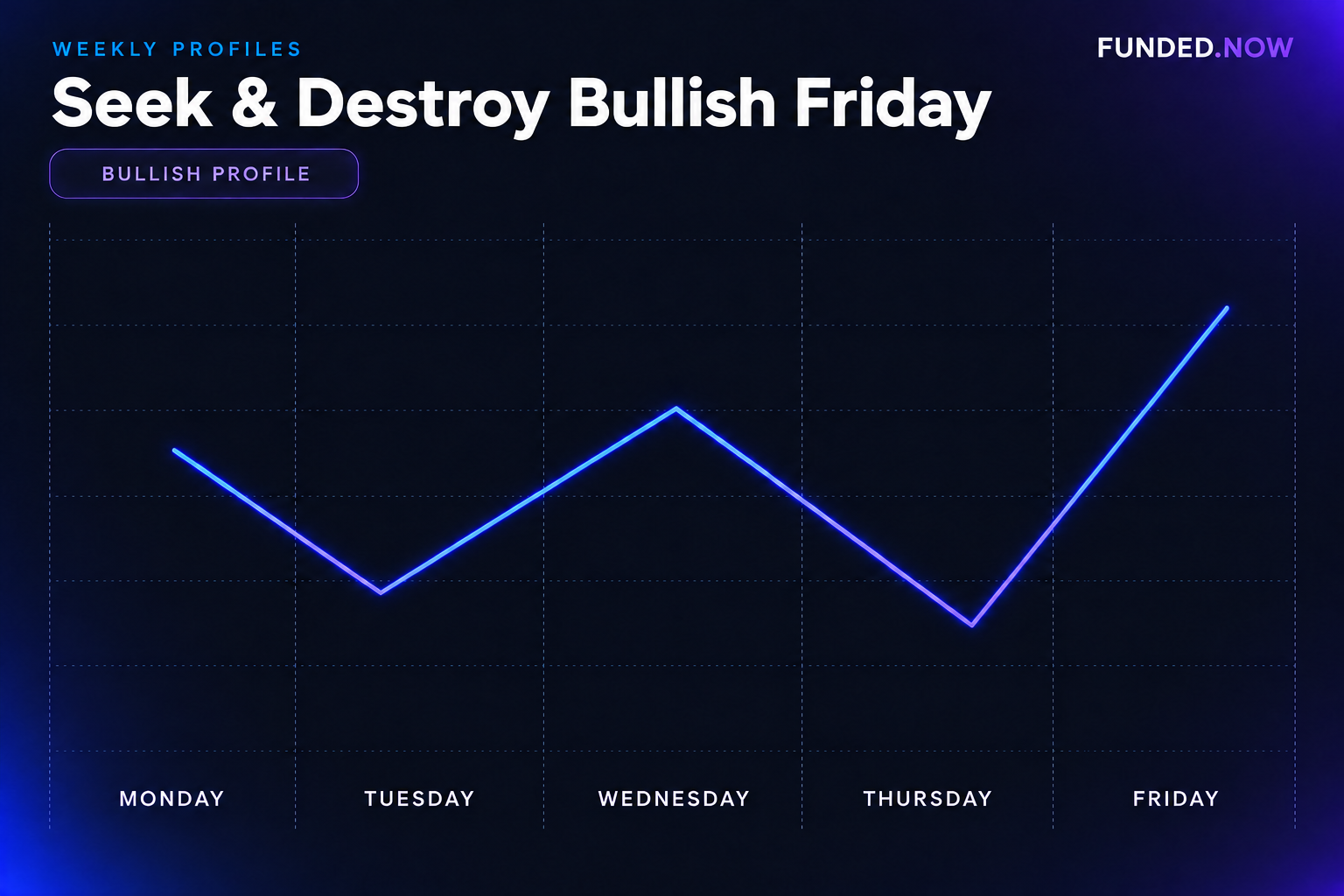
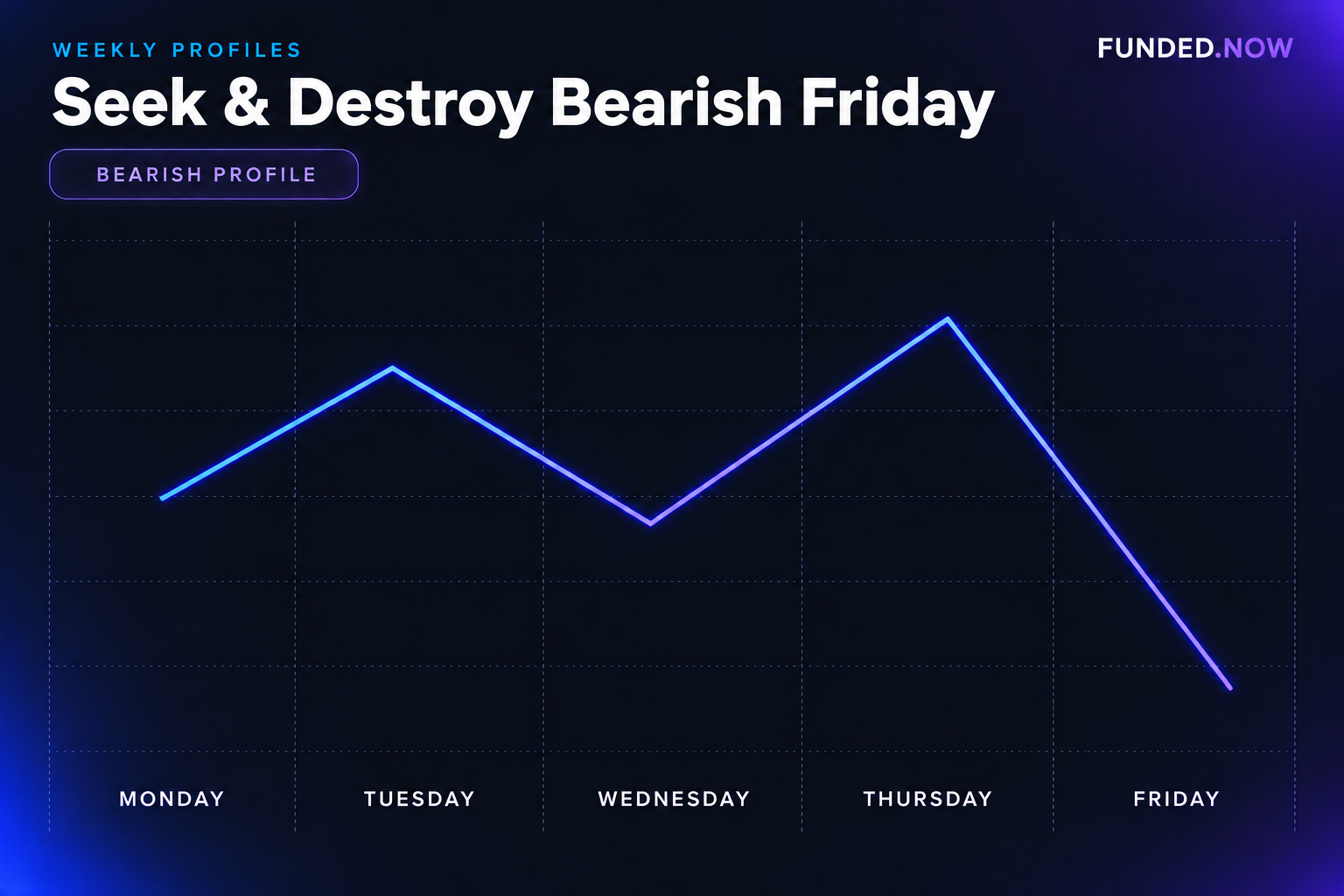
Some weeks never develop a clean early-week directional profile.
Monday through Thursday can remain messy.
Both sides of short-term liquidity may repeatedly be attacked.
If Friday arrives and no clear weekly delivery has developed, Friday can produce a Seek & Destroy profile.
This is very different from TGIF.
TGIF
The week already trended.
Friday creates the final weekly extreme.
Then price retraces.
Seek & Destroy Friday
The week did not establish a clean directional range.
Friday is still searching for liquidity and may produce sharp movements on both sides.
Do Not Confuse Friday Reversal With TGIF
This is worth its own rule.
A Friday reversal is not automatically TGIF.
For classic TGIF, ask:
Did Friday create a NEW High of Week or NEW Low of Week?
If no:
It may simply be a Friday reversal, retracement, or continuation of a Thursday turn.
If yes:
Now ask:
Has the weekly move already expanded significantly?
Did price reach the HTF objective?
Do I have LTF reversal confirmation?
If yes:
Now we have the proper context for TGIF.
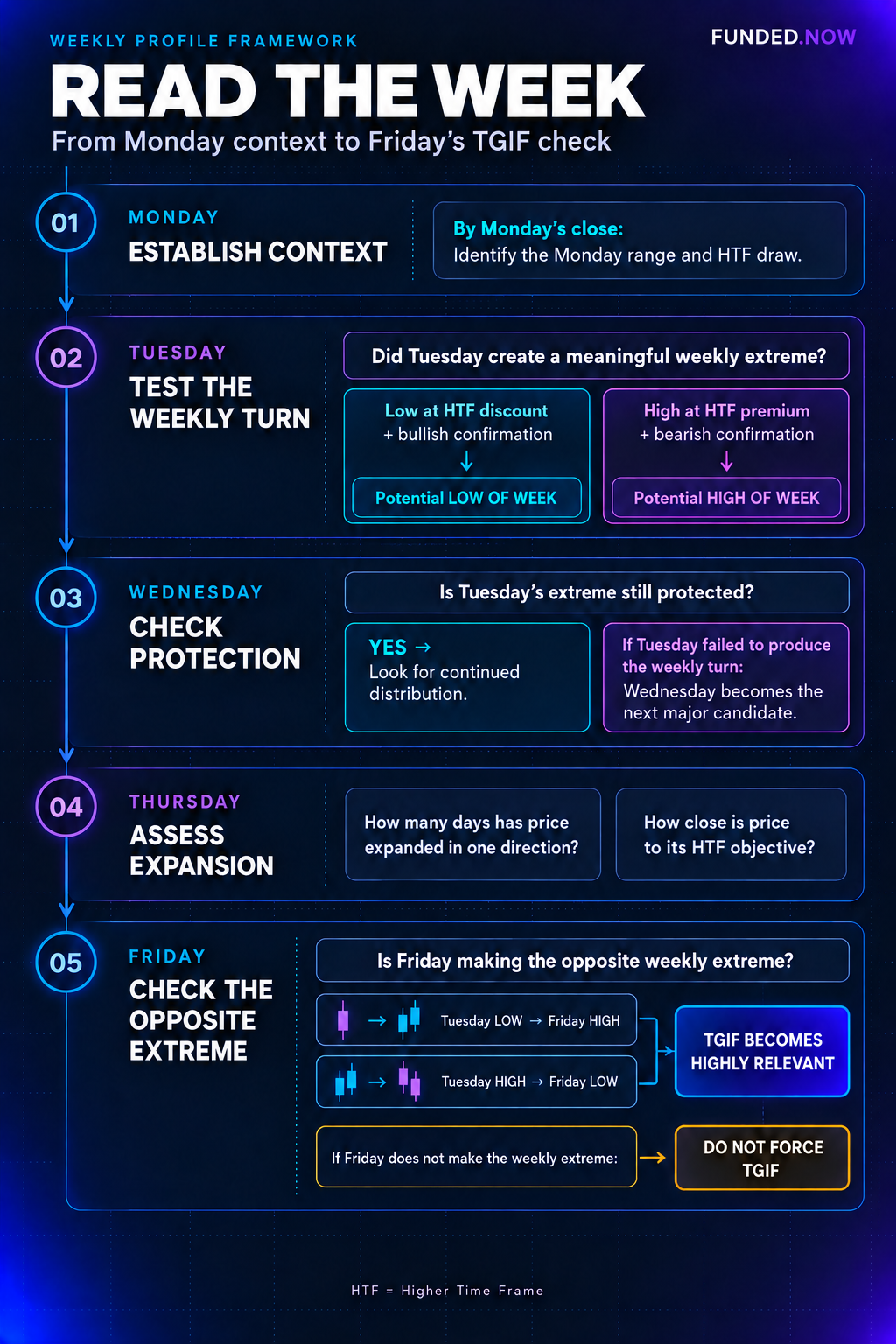
How I Would Read the Week in Real Time
By the end of Monday, identify the Monday range and HTF draw.
On Tuesday, the main question becomes:
Did Tuesday create a meaningful weekly extreme?
If Tuesday forms the low at HTF discount and confirms bullishly, begin treating that as potential Low of Week.
If Tuesday forms the high at HTF premium and confirms bearishly, treat it as potential High of Week.
By Wednesday, ask whether Tuesday's extreme is still protected.
If yes, look for continued distribution.
If Tuesday failed to produce the weekly turn, Wednesday becomes the next major candidate.
By Thursday, ask how many days the market has already expanded in one direction and how close price is to its HTF objective.
By Friday, the most important question is:
Is Friday making the opposite weekly extreme?
If Tuesday made the low and Friday now makes the high:
TGIF becomes highly relevant.
If Tuesday made the high and Friday now makes the low:
TGIF becomes highly relevant.
If Friday does not make the weekly extreme:
Do not force the TGIF label.
The Most Important Weekly Relationships
The easiest framework to remember is:
Classic Bullish Week
Tuesday LOW → Wednesday/Thursday expansion → Friday HIGH → TGIF retracement
Classic Bearish Week
Tuesday HIGH → Wednesday/Thursday decline → Friday LOW → TGIF retracement
Delayed Bullish Week
Monday/Tuesday lower → Wednesday LOW → Thursday/Friday expansion
Delayed Bearish Week
Monday/Tuesday higher → Wednesday HIGH → Thursday/Friday decline
Extended Bullish Week
Mon–Wed/Thu bullish closes → watch Thu/Fri for HTF target + weekly high + retracement
Extended Bearish Week
Mon–Wed/Thu bearish closes → watch Thu/Fri for HTF target + weekly low + retracement